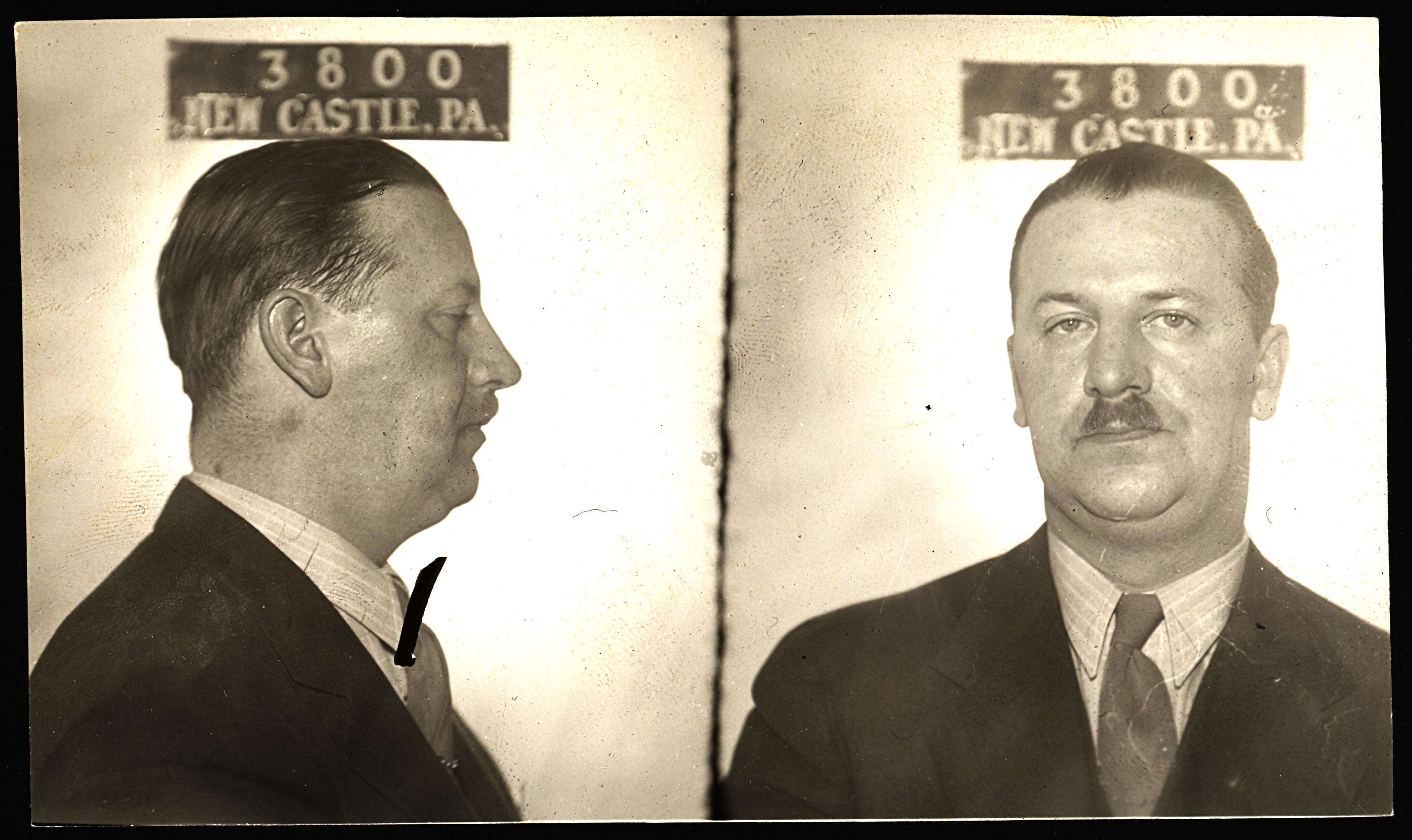
Anderson Wise, “Numbers Racket”, 29 November 1948

comments 3
Uncategorized

The police had been investigating a numbers racket for a month when Anderson Wise was arrested at the end of November, 1948, his pockets full of lottery slips and small change. He was released on $300 bail, which was confiscated in lieu of a fine when he failed to appear in court.

Anderson worked in a locomotive crane plant and lived in a small house on Levine way, near the Moravia street rail yards, with his wife, Dorothy, and seven children. In 1939, when Dorothy was six months pregnant—the child, Roosevelt, died before its first birthday—Anderson came home drunk, with only a small portion of his week’s pay. They argued, and Dorothy stabbed Anderson in the chest with a paring knife, just missing his heart. At her trial, Anderson said he had no hard feelings about the stabbing and did not hold it against her. She was a nervous type, he said, but had always been a good wife and mother. The court paroled her for two years.

In 1964, the police raided Anderson’s house and found a large quantity of current numbers plays. He claimed the tickets and slips belonged to someone else. He got ten days in jail and a $500 fine.

Anderson died in 1992, at the age of eighty-four.

Sources: New Castle News (18 Nov 1939, “Pleas Are Entered; Sentences Passed”; 17 Sep 1941, “Deaths Of The Day”; 29 Nov 1948, “Numbers Arrest”; 30 Nov 1948, “Fails To Appear”; 6 June 1963, “Drops Casting On Foot”; 18 April 1964, “1 Arrested In Police Numbers Raid”; 20 June 1964, “34 Draw Court Sentences”).
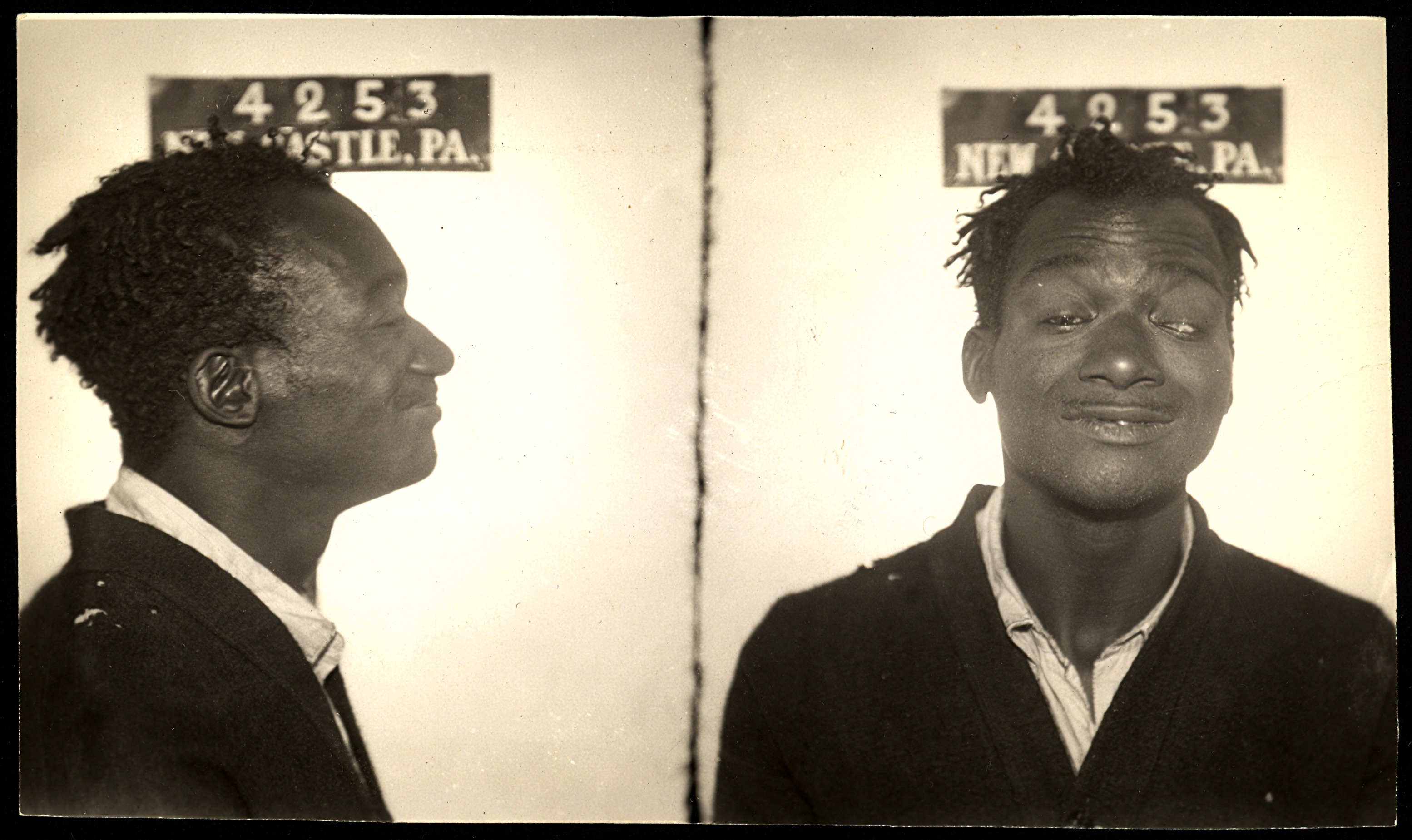
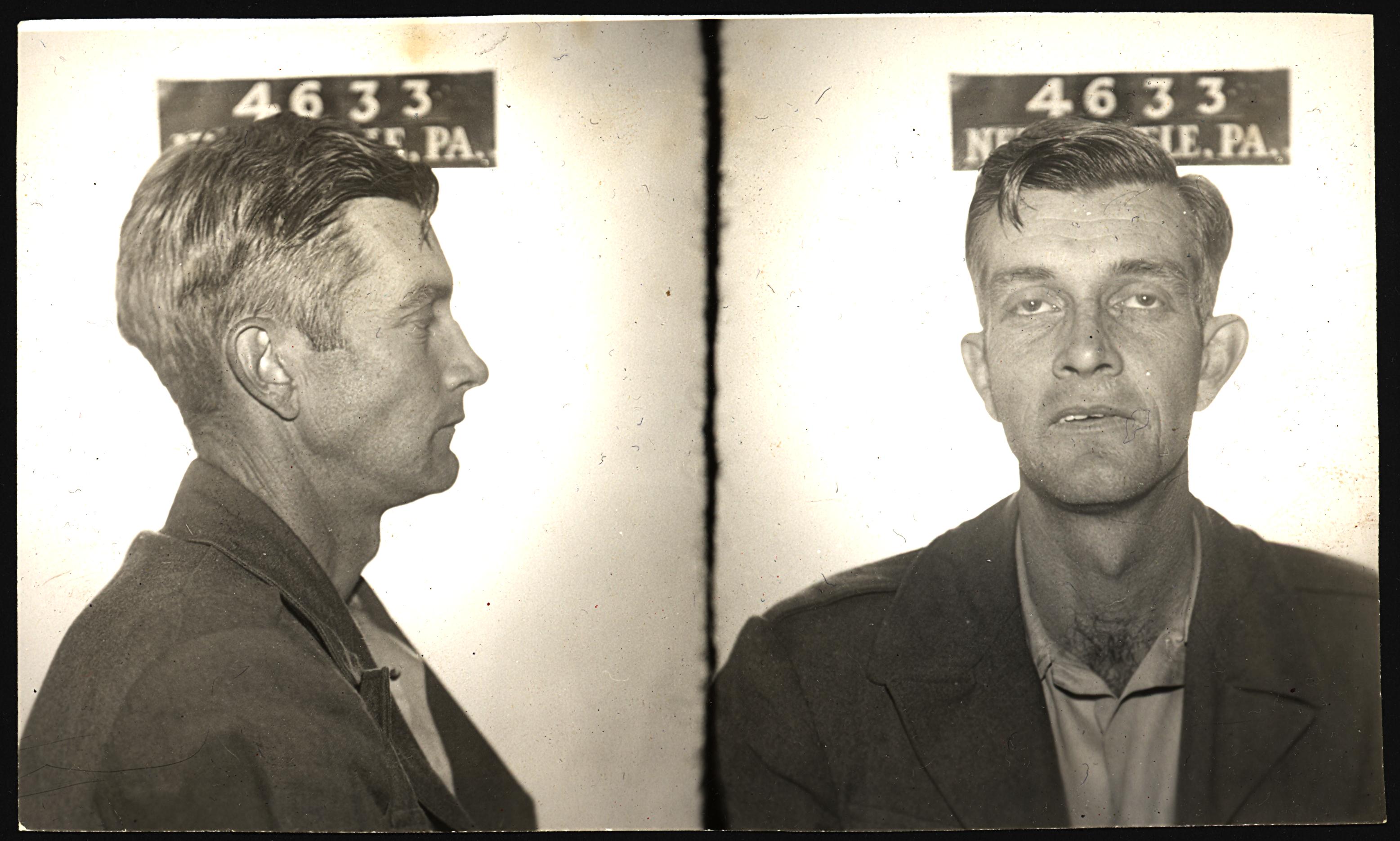
Braily Muse, “Drunk, Disorderly”, 21 May 1945

comments 2
Uncategorized

Braily Muse was fifty-two years old when, in the early hours of Monday, the twenty-first of May, 1945, he was arrested for being drunk and disorderly. There is no record of his life before or after the event.

Braily’s picture is one of the hundred or so New Castle mug shots for which I haven’t been able to find a story, but I love it anyway—his torn cardigan; his ratty dreadlocks; the cataract in his left eye; the too-drunk-to-care grin. It’s hard to believe this was his only entanglement with the police, but, if there were more, they weren’t reported.

There are thousands of old American mug shots in circulation. (Why didn’t American law enforcement authorities send them to city or state archives, as happened everywhere else in the world? I have no idea.) Although reading Small Town Noir might lead you to think otherwise, it’s impossible to find out much about the lives of the people in most of them.

Probably the foremost collector of mug shots in the world is Mark Michaelson, who published a book called Least Wanted, which features hundreds of the best pictures from his collection. It’s an endlessly fascinating book, although hardly any facts are known about any of the people in the photographs. Such faces! After I bought it, I spent hours looking through it and wondering about the lives of the ordinary men and women he’d saved from total oblivion. That—and the excellent research work in Arne Svenson’s Prisoners, which reprints the newspaper stories associated with a collection of beautiful glass-plate mug shots from one small Californian town—was what sent me down the road that led to Small Town Noir.

Now, Mark and a documentary filmmaker named Dennis Mohr are making a film called American Mugshot, which explores the genre of mug shot photography and its impact on contemporary culture. I’d be excited about it anyway—because of the subject, obviously, but also because Dennis’s previous film, Disfarmer: A Portrait of America, was just great—but what’s particularly exciting (for me) is that they want a portion of the film to deal with Small Town Noir and my attempts to present an odd sort of social history of a particular place through the mug shots of its citizens, the idea being that they’ll film an interview with me on the streets of New Castle itself.

(There’s an interview with Mark Michaelson here, in which he talks about his obsession with mug shots and the documentary project.)

Of course, the film will happen only if they get funding. Which is why I’m writing this.

They’ve set up a Kickstarter campaign to raise cash to make the film. It will be active until the end of July, so head on over to check it out, and, more importantly, bring it to the attention of your weird, obscenely rich uncle who’s into vintage photography and documentary films and is desperate to do something with his masses of excess money. He’ll love it.

Benjamin Deiger, “Dis Conduct”, 12 March 1947

comments 6
Uncategorized

Benjamin Deiger’s father delivered candy for J B Nessie’s confectionery for more than fifty years. He started in 1904, making deliveries across Lawrence County by horse-drawn wagon. He switched to a truck in 1918, a year after Benjamin’s birth and a few months before his wife’s death from pneumonia. The truck was a great help, although he missed the horses.

When Benjamin grew up and left school, he got a job in the Red and White restaurant on Jefferson street—spaghetti ravioli a specialty—where he met a waitress named Julia Marsh. They were married when Benjamin was twenty. Benjamin got work in the East Brook quarry and served in the army during world war two. Julia took a job in a school cafeteria in Union township. They set up home in a good-sized family house off Croton avenue, but never had children to fill it.

In June, 1952—the month Julia turned forty—Benjamin got drunk and crashed his car into a factory wall. He walked home and reported it stolen. The police discovered it by the factory. On the dashboard, they found Benjamin’s false teeth, lying where they had landed when they had been knocked out of his mouth. When they expressed doubt that the thief had stolen Benjamin’s dentures as well as his car, Benjamin admitted his ruse. The story was reported by a news syndicate and appeared as a novelty item in papers across America under headlines like “Teeth Play Him False” and “False Teeth Talk Driver Into Trouble”. The New Castle News chose to ignore it entirely, just as it had ignored Benjamin’s arrest for disorderly conduct in 1947. He was a volunteer fireman, a Sunday school teacher, a cub scout leader, a youth counsellor and a war veteran. No one needed to read that kind of thing about him.

Benjamin spent the last years of his life as a trackman with the Penn-Central railroad. In 1968, when he was fifty-one, he had a heart attack while driving a track maintenance truck. He was able to pull off the road, out of the way of traffic, before he died. Julia was killed in a car crash four years later. She was buried beside Benjamin in Castle View cemetery.

Sources: New Castle News (28 Oct 1918, “Deaths Of The Day”; 30 April 1937, “Red And White Restaurant”, advert; 21 Dec 1937, “Marsh-Deiger Wedding Takes Place Monday”; 18 Jan 1939, “Personal Mention”; 4 June 1943, “City Board One Men Are Listed”; 13 Feb 1947, “Delivers Candy For Same Company For 43 Years”; 3 April 1947, “Mayor Makes Police Report”; 3 Dec 1947, “Local Veterans Receive Medals”; 21 April 1952, “Cub Pack 21 Now Registered Here”; 24 Dec 1952, “Wesley Youth Sing Carols Over City”; 16 March 1965, “Deaths Of The Day”; 17 Sep 1968, “Deaths Of The Day”; 7 Oct 1972, “Deaths Of The Day”, “Two From City Killed In Crash”); Lowell Sun, 26 June 1952, “Teeth Play Him False”; Baytown Sun, 27 June 1952, “False Teeth Talk Driver Into Trouble”.

Everett Eakin, “Intox driver”, 11 October 1946

comments 3
Uncategorized

Before the war, Everett Eakin was the assistant superintendent of the Jordan game farm, east of New Castle, one of dozens of game farms that kept the woods stocked with birds for small-game season in the fall. Each year, Everett would release around twenty thousand birds into the wild, and Lawrence County’s twelve thousand licensed hunters would kill their share of the quarter of a million pheasants, woodcocks, doves, wild turkeys and Hungarian partridges that were shot in Pennsylvania between November and January, along with two million or so rabbits, squirrels, woodchucks and raccoons.

On the eleventh of October, 1946, not long after he had come home from the army, Everett was driving down South Jefferson street on the first rainy evening in weeks when Dominick Ross stepped out in front of him as the lights changed to green. Ross was a seventy-two-year-old retired carpenter. He had lived in New Castle since he left Italy in 1891, and had worked at the Pennsylvania Engineering plant for most of his life. When he was younger, he had earned some money on the side from selling bootlegged liquor. In 1900, he had founded the first Italian fraternal organisation in the city, the Casa Savoia. He was knocked to the ground by Everett’s car, breaking both of his arms and cracking his skull. He died in hospital a few hours later.

Everett was charged with driving while intoxicated. He pled not guilty to the charge, which no one had done since the thirties, and spoke vigorously in his own defence at the trial. The jury found him innocent.

By the time Everett retired, he had left the game farm and was working on an assembly line in south New Castle. He lived long enough to see his son become a professor of mathematics in Ohio and a chancellor of a university in North Carolina. He died in 1995, at the age of eighty-two.

Sources: Sources: New Castle News (5 March 1941, “Men’s Club Hears Kenneth Brenneman”; 23 July 1943, “Collect 70,000 Pheasant Eggs”; 12 Oct 1946, “Man Is Fatally Injured When Struck By Auto”; 12 Dec 1946, “Copple Case Is Now With Jury”; 13 Dec 1946, “Joseph Copple Freed By Jury”; 28 April 1947, “Kill 35,519 Deer And 325 Black Bears”; 3 Nov 1950, “Outdoor Rambles”; 19 Sept 1973, “County Report”); media.lib.ecu.edu, “President/Chancellor Bios”.

George Marousis, “No.s Lottery” 19 Feb 1942

comments 2
Uncategorized

The Marousis brothers James, William and Speer, left the Greek village of Lyrkeia for America in 1906 when Speer, the oldest, was just eighteen. They arrived in New York and headed straight for New Castle, where they shone shoes and cleaned hats until they had enough money to open a cigar store on East Washington street. In 1912, James returned to Europe to join the Greek army, fighting in the Balkan wars and the first world war. He sent out their cousin, George, to replace him in New Castle. The brothers made George manager of their new store on the Diamond, while they concerned themselves with other businesses—a confectionary called Candy Land, run by William, and a cinema called the Dome, run by Speer.

By 1921, Speer had taken over four more cinemas—the Penn, the Regent, the Capitol and the Star. The Capitol burned down in 1930 and he lost all but the Regent in the depression. In 1940, Speer and William bought the Fountain Inn, the grandest hotel in New Castle. They ran it for ten years until their partnership dissolved. William retained the hotel. Five years later, Speer closed the Regent, blaming television for falling audiences. He bought the old Coliseum theater and had it razed and the ground cemented over for a parking lot. The rent from that and his other properties paid for his retirement. William ran the Fountain Inn until it burned down on Christmas eve, 1968. It, too, became a parking lot.

While his cousins’ businesses thrived, failed, rose and fell, George went to work day after day in the cigar store on the Diamond, changing its name from Marousis Cigars to the American News Stand not long after he was arrested for running a lottery on the premises, during the county detective’s crackdown on numbers operations in the city.

George worked at the store for fifty years, until he died in 1969, at the age of seventy-two. Two years after his death, Pennsylvania established a state lottery. The American News Stand was the only ticket agent in downtown New Castle.

10 May 1912, “Mercantile Appraisement”; 3 March 1913, “Local Greek Guards Turks”; 22 Feb 1915, “Youth Fails At First Job Of Burglary”; 13 Aug 1920, “New Candy Shop To Be Opened Here”; 7 Oct 1920, “Fine Art Work On Decorations For New Store”; 28 June 1921, “Big Theatrical Business Deal Is Consumated”; 16 March 1925, “Boyhood Ambitions”; 19 Feb 1942, “Arrest Four As Numbers Operators”; 24 April 1951, “Father Of George Marousis Is Dead At Home In Greece”; 31 July 1969, “Deaths Of The Day”; 16 Oct 1972, “Speer Marousis Dies In Hospital”; 28 Feb 1977, Pennsylvania Lottery advert.

John Whitten, “Intox Driver”, 20 Oct 1942

Leave a comment
Uncategorized

The Warner brothers opened their first cinema in a converted room on the ground floor of the old Knox hotel on South Mill street in 1905, when John Whitten was six years old. Harry Warner bought the fixtures and fittings from Whitten’s hardware store on East Washington street, which was owned by John’s father, who helped the Warners install the chairs that they rented from a nearby funeral parlour. The cinema did well, and the Warners were able to open sixteen others across Pennsylvania. In 1910, they sold their business for $52,000 and opened a film production company in New York. They never returned to New Castle.

In 1918, the year the Warners established a studio in Hollywood, a motion picture director named Henry Belmar suffered a nervous breakdown when the film biography of Lincoln that he was working on collapsed, leaving him heavily in debt and pursued for thousands of dollars by creditors. He fled to New Castle, a town he had never visited before, and took a room in the Henry hotel, where he lived in seclusion for the rest of his life, earning a little money selling Stay-Prest trouser presses. From time to time he would tell acquaintances about his ambition to one day finish his Lincoln picture, but nothing ever came of it.

Henry Belmar died in New Castle in 1931, the year John Whitten—who had by then taken over the management of his father’s hardware store—married a nurse from Youngstown. The store went bankrupt a few years later and John became a refrigerator repairman, fixing and maintaining the same appliances he had previously sold. His arrest in 1942 for driving under the influence of liquor was noteworthy only insofar as it made him one of the first drivers to be convicted through the use of the city’s newly purchased drunkometer, a machine in the office of the chief of police that could detect alcohol on a person’s breath. Other than the subsequent fine of $100, there is no further record of his life.

By the end of the century, the South Mill street block that had housed the Warners’ first cinema was largely derelict. In recognition of its historical and cultural significance, the city bought the property and transformed it into a shopping and entertainment complex, which, it was hoped, would help to regenerate the downtown area. Unable to attract sufficient tenants, it closed down after four years. In 2011, it was sold to a west Pennsylvania bank to cover its accumulated debt of $4,500,000.

Sources: New Castle News (24 March 1922, “Tomatoes And Beans Lead Here”; 23 Sep 1926, Classified Ad, “Male”; 23 March 1931, “Widow Of Stage Actor Writes Husband’s Life”; 30 April 1931, “John Whitten Weds Youngstown Girl”; 9 Jan 1936, Advert, “Bankrupt Stocks”; 15 Sep 1938, Classified Ad, “Repairing”; 21 Dec 1938, “News Briefs From City Hall”; 4 Oct 1941, “Recalls Opening Of Warner Bros Nickelodeon Here”;21 Oct 1942, “Around City Hall”; 5 Dec 1942, “On Court House Hill”; 10 July 2010, “Editorial”; 6 Jan 2011, “Three Commercial Properties Sold At Sheriff Sale”); The Bridgeport Telegram, “3 Oct 1918”, “Lincoln Cabin In Cran’s Woods May Be Auctioned”. 

Sam Wilson, “B&E Larceny”, 6 February 1937

comments 18
Uncategorized

Sam Wilson was arrested for burglary in 1937, but there is no record of the case. At the time, he was living in an apartment above the Davis Coal and Supply Company store on Moravia street with his wife and five children. A decade earlier, he had a place above the Gloria Tire and Rubber Works, two blocks away, and made money working in a limestone quarry and selling bootleg wine. It was a wild time. He stabbed Cryp Williams in the chest with a penknife during an argument over a game of cards. He was mauled by a guard dog that had to be shot by the police. He was almost killed when—for a reason that no one was prepared to tell—a drinking companion emptied his revolver at him and some other men who were gathered in an alley behind the old Shearer barn.

Sam’s wife divorced him in the forties. He moved to Wampum, a few miles south of New Castle, and married a woman who died from complications of diabetes a few years later. He married his next wife, Edna Hicks, only a short while before he too was diagnosed with diabetes and a heart condition.

On the third of April 1960, a week after he had been released from a stay in hospital, Sam stayed up all night drinking in his kitchen. Around five in the morning, he said to Edna, “I know that I have to die, and you are going with me,” and attacked her with a pair of scissors. She called the police. Sam was taken to the county jail. Nevertheless, they remained married until Sam’s death, eighteen years later.

Sources: New Castle News: 19 May 1924, “Quartette Promises To Pay Fines Later”; 18 Oct 1926, “Dog Bites Man; Shot By Officer”; 15 Dec 1928, “Grabs For Knife; Cut Beneath Heart”; 17 Dec 1928, “Charges Wilson With Felonious Cutting”; 17 April 1931, “Negro Turns Gun On Companions In Shooting Spree”; 6 Dec 1934, “Tells Police He Was Assaulted”; 27 July 1939, “Hospital Notes”; 25 April 1956, “Deaths Of The Day”; 14 Jan 1957, “Two Persons Injured In Two-Car Collision”; 4 April 1960, “Man Is Charged With Assault, Intent To Kill”.

Time Off For Good Behavior

comments 7
Uncategorized

Small Town Noir will not be updated for the next couple of weeks, as I’ll be out of the country and hopefully nowhere near a computer.

In the meantime, you might want to revisit a few of the earlier posts, as I’ve rewritten a lot of them as I found out more about the lives of the subjects. For example, I came across the interesting story behind the first arrest, at the age of sixteen, of Walter Jamison, who would go on to become an expert forger and doughnut baker. I was able to fill in a little more of the life of John Hutchison, a rather less expert forger, after I received an e-mail from his son, who had never heard of the criminal episode in his father’s life until he read about it here. I’ve also been able to shed a little more light on the crimes of William Fabian, Warren Dewyer and others as I’ve learned more about their context and what New Castle was like back then.

What I’m saying is, I’m sorry there will be no new stories until the middle of March, but there’s plenty of old ones in the archives, and some of them have changed so much that they might as well be new, so dig in.

Dick Hitchcock, “Intox Driver”, 22 Feb 1942

comments 5
Uncategorized

Dick Hitchcock grew up working in his father’s butcher shop by the Grant street bridge and playing football for New Castle High. After he left school, he switched his game to golf. Throughout his twenties, he won tournaments for Trinity Episcopal in the church golfing league and for the independent grocers in the small business league. He organised charity golf matches, gave and received toasts at golf club dinners and helped with the annual banquet for aged local golfers. His arrest in February, 1942, for driving while intoxicated, was uncharacteristic; the sole transgression in an otherwise blameless life.

The golf leagues had closed for the winter in October and the courses had been shut due to heavy snow since the new year. America had been at war since the beginning of December, and the third draft lottery was scheduled for March. By the time the golf courses reopened in spring, Dick was in the army. He was sent to Camp Blanding in Florida for training, then to north Africa to join the 5th army. He earned a good conduct ribbon and was promoted to corporal.

Dick saw his first fighting in September, 1943, when the 5th army invaded Italy. He landed at Salerno and took part in the battle to liberate the town. Five thousand men died in the first week as the army pushed north towards Naples. After twelve days, they reached Pompeii, where Dick was shot by a sniper. The bullet hit him in his hip, passing through the flesh without hitting the bone. He recovered quickly and rejoined his unit near San Pietro, where he was promoted again, to sergeant. A month later, a mortar shell exploded close by him. He was struck by a shower of rocks. His arm was broken; his elbow smashed to splinters. He made his way to the rear, where he was transported to the coast along with other wounded soldiers—a lieutenant who had been shot in the jaw; a Korean private from California who had lost an eye when a bullet had gone through his skull; a soldier whose feet had been shot through by machine gun fire—and sent back to America.

Dick was in the Valley Forge hospital in Pennsylvania until the summer of 1944. He visited New Castle when he got out. The summer golf fixtures were well underway. The First Presbyterians led the church league, with the First Baptists five points behind. In the small business league, New Castle Moose were eight points ahead of Universal Sanitary and Manufacturing. Mixed foursome tourneys were being held every Sunday. Dick was the guest of honor at a dinner at the Castle Hills golf club. He was unable to play, of course.

Dick spent the rest of the war at Camp Butner, in North Carolina. After he was released from service, he returned to New Castle. When his father retired a few years later, Dick moved away, first to Washington, DC, then to Big Bear City, California. He died in the veterans hospital in Santa Monica in 1970, at the age of sixty. He was buried in the Los Angeles national cemetery.

Sources: New Castle News (7 Sep 1904, “List Of Meats For Saturday”; 13 April 1926, “Grid Candidates Start Training”; 11 June 1934, “Dick Hitchcock Tourney Winner”; 20 March 1935, “Church Golfers Enthusiastic At Meeting Tuesday”; 14 April 1936, “Golf Captains Meet Wednesday”; 4 Aug 1936, “Golfing Events On Local Links”; 24 Oct 1938, “Fish For Trout”; 17 June 1939, “Swinging Along Local Fairways”; 29 May 1940, “First Methodists Still Lead League”; 26 Sep 1941, “Church Bowlers Organize Loop”; 7 May 1942, “Local Board One Announces List”; 28 July 1942, “With Men In US Service”; 1 Sep 1943, “In US Armed Service”; 30 Sep 1943, “Troops Moving Through Pompeii”; 23 Nov 1943, “Dick Hitchcock Wounded In Italy”; 3 Jan 1944, “Sgt Hitchcock Wounded Again”; 13 June 1944, “Dick Hitchcock On Radio Program”; 20 June 1944,”Senior Committee Has Fine Dinner”; 13 July 1944, “Hitchcock Out Of Army Hospital”; 18 April 1945, “Sgt Dick Hitchcock Gets purple heart”; 15 Aug 1948, 13 May 1952; 19 June 1970, “Deaths Of The Day”).

Youtha Beverly, “Drunk, Disorderly”, 23 September 1934

comments 7
Uncategorized

Youtha Beverly arrived in New Castle from Covington, Virginia, in 1920. He turned eighteen in 1927, the year when a car in which he was a passenger broke the neck of a four-year-old girl who ran out into the street. The following year, he was arrested in connection with a disturbance during a whoopee party at a house in Sciota street that resulted in a man named John Sears being shot in the head. During the thirties, he was arrested on various occasions for the possession of liquor, disorderly conduct and assault and battery.

Youtha’s mug shot was taken in September 1934, after an arrest for drunkenness. He died six years later, in 1940, at the age of thirty-three, from what his obituary called a lingering illness. His only family was his sister’s daughter, Dorthula, who would be hospitalised several times during her married life following unexplained domestic accidents, until the day in 1973 when she shot her husband.

Sources: New Castle News (8 Aug 1927, “Ran Into Auto Of John Fulmore In Rear Of Home”; 25 Nov 1929, “Colored Man Shot In Head”; 1 Feb 1930, “Pleas Are Entered; Sentences Passed”; 19 July 1930, “Charge Withdrawn By Prosecutor”; 26 May 1938, “Arrests Driver After Accident”; 5 Jan 1940, “Deaths Of The Day”; 14 May 1958, “Woman Breaks Arm”; 26 Nov 1960, “Woman Fined”; 1 April 1964, “Hand Hurt”; 8 March 1966, “Patton Service”; 15 Dec 1973, “City man Is Shot In Home”).