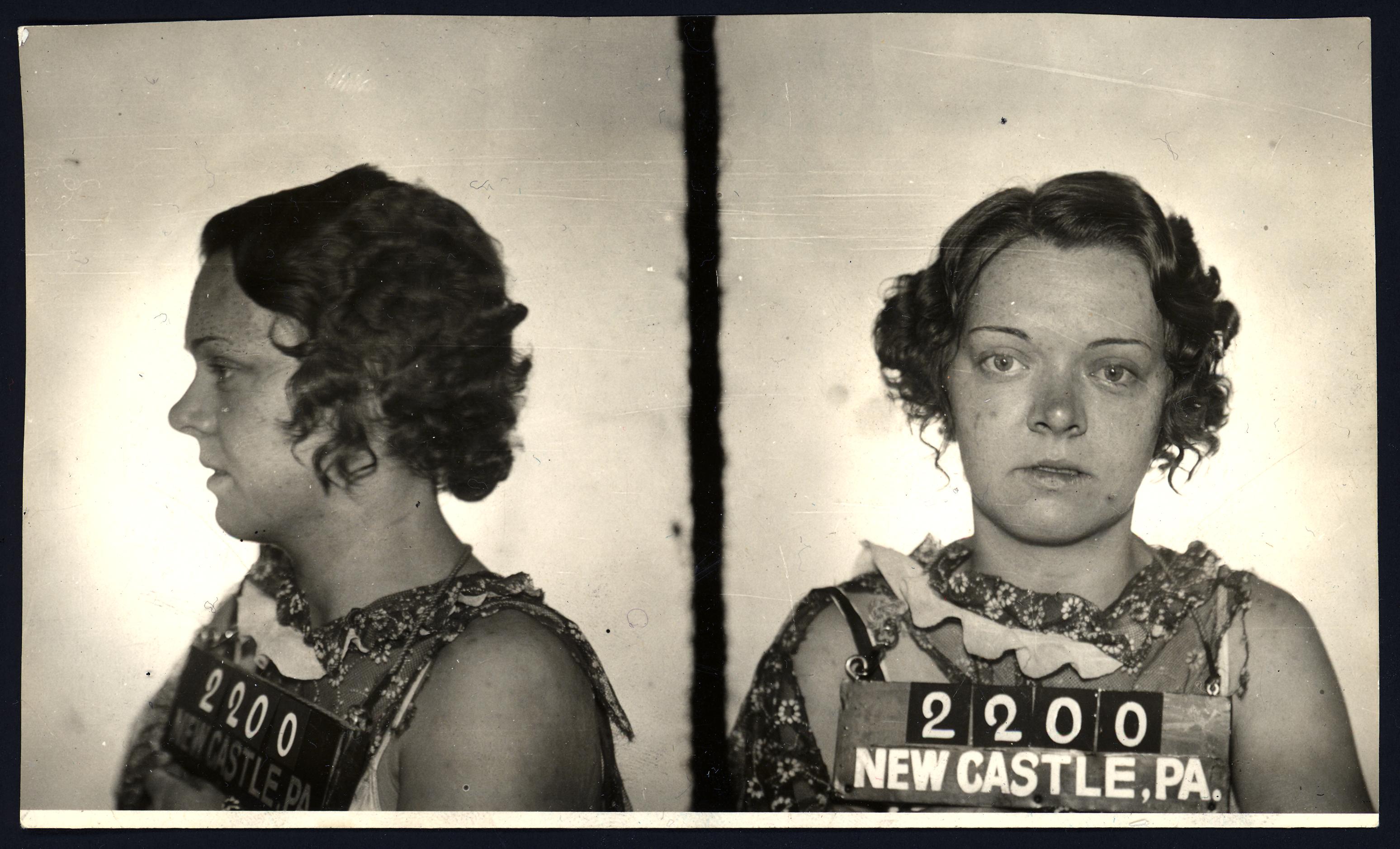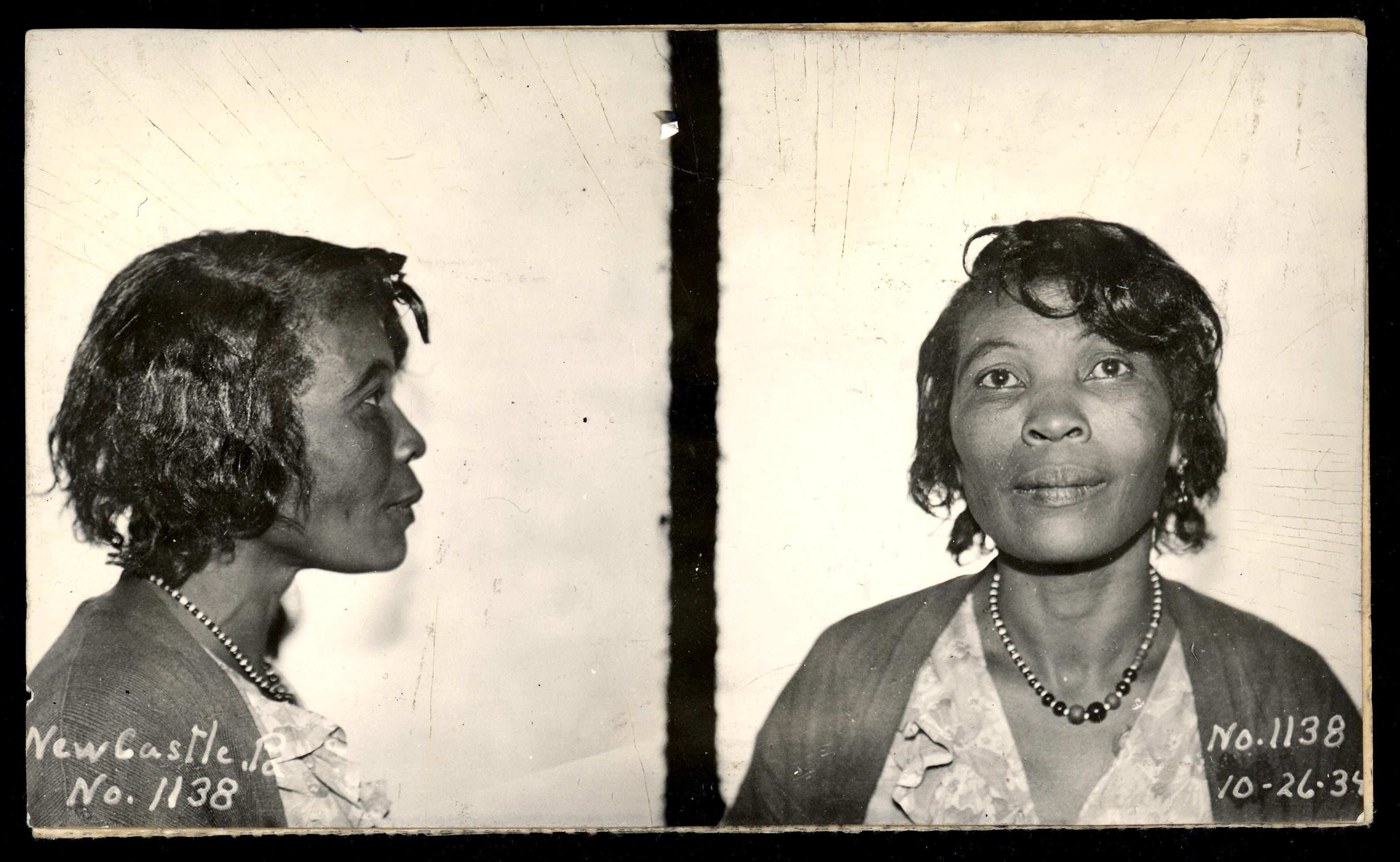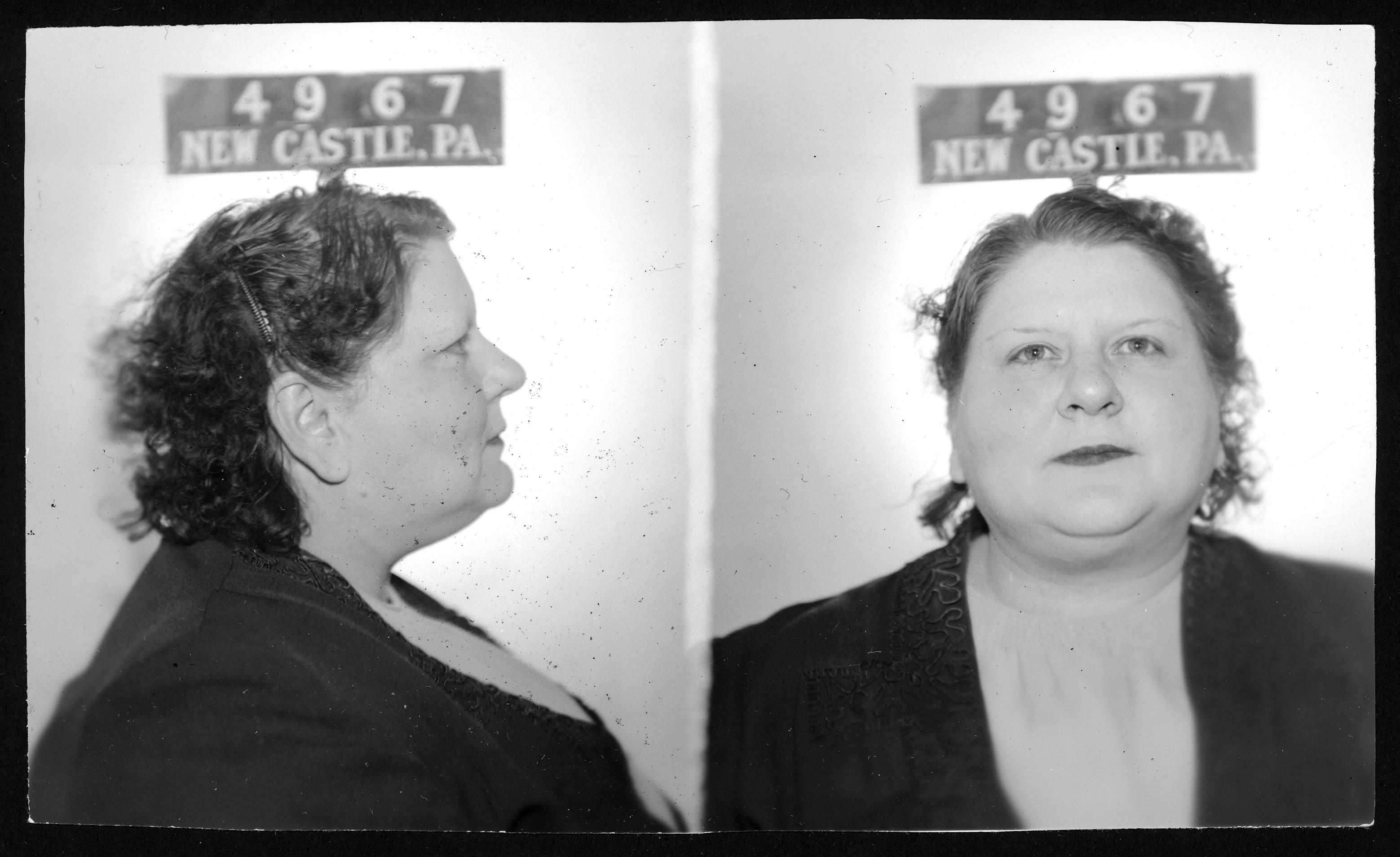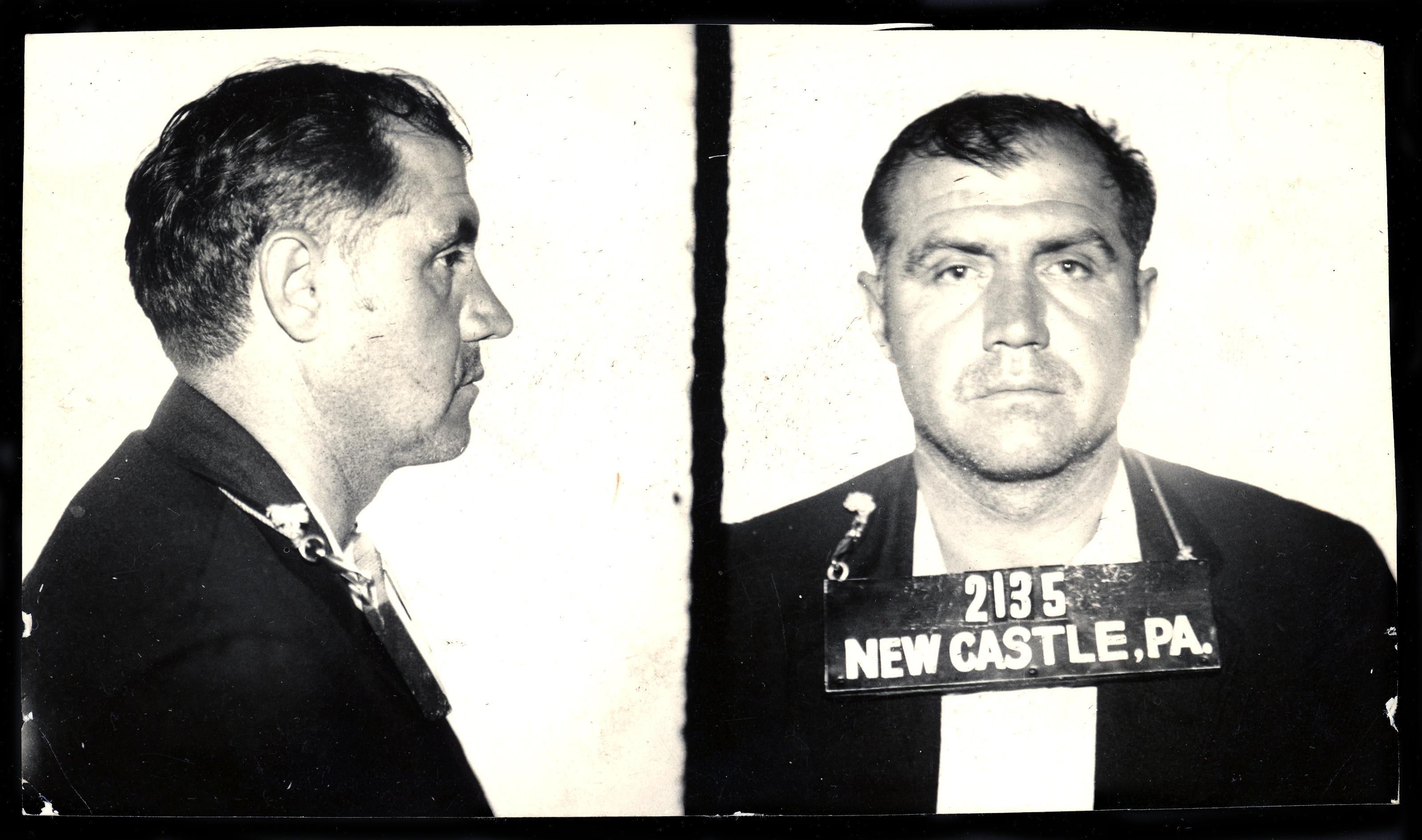
Thomas Herovich, “Robbery Armed”, 30 June 1936

comment 1
Uncategorized

Prohibition was repealed on 5 December, 1933, but not one legal drop of liquor was served in New Castle that night. Private celebrations involved bathtub gin, bootlegged whisky from Canada or the moonshine that was locally referred to as Moravia Street bourbon, as nowhere in town was licensed to sell alcohol.

That week, the state bought the old C Ed Smith Furnace Company workshop on Produce street, on the east side, and commissioned workmen to convert it into New Castle’s first state liquor store. A month later, the building had been transformed into an edifice with “the neat appearance of a well kept penitentiary.” The windows were protected with steel bars, five-eighths of an inch thick; the glass was wired to set off an alarm if broken; and entry to the establishment could be prevented by the formidable, reinforced door. Plain gold letters across the front of the building read simply, “Liquor Store Pennsylvania Liquor Control Board”.

The state had decided to tolerate the sale of liquor, not encourage it, and the liquor store was not supposed to be a pleasant place to visit. Nevertheless, in the two hours for which it was open on its first night of business—Saturday, 6 January, 1934—it sold more than $1,000-worth of liquor to around two hundred and fifty customers, serving one customer every thirty seconds. Soon, sales settled down to a healthy rate of around $1,100 a day—all in cash, as it was illegal to buy liquor on any sort of credit.

The store was robbed for the first time less than two years after it opened.

Thomas Herovich had been sent to jail for eight years in the twenties for an armed robbery in Springfield, Ohio. He was released in the middle of the depression, not long after the Wall street crash—a middle-aged ex-convict with no trade. Naturally, he returned to his previous profession and was soon wanted by the police in connection with the robberies of a bank in Columbiana, a theater in Sharon and a club in Farrell.

On October 19, 1935, Thomas entered the liquor store with two young associates, Eugene “Slim” Doyle and Frank Bydo. He grabbed a customer and shoved a pistol against his stomach, saying he’d shoot if the clerks didn’t hand over all the money. Doyle and Bydo collected the cash and ran out to the stolen car they’d parked outside. Thomas followed once they got the engine running, leaving his hostage on the street.

The gang got away with $375. They would have discovered when they read the papers the next day that the clerks had held back $700, but there was nothing that they could do about it by that point.

A few months later, Thomas was arrested in Struthers, Ohio, on suspicion of being a finger man in a robbery there. The Pennsylvania state police asked that he be loaned out to them so witnesses in New Castle could have a look at him, and the liquor store hostage identified him as the man who’d held him at gunpoint. Thomas made a full confession that night. He was sentenced to six to twelve years in the Western penitentiary. Slim Doyle and Frank Bydo, who were picked up within the month, each got two to four.

The liquor store was robbed several more times in the years that followed. The biggest haul was taken in 1947, when two masked bandits armed with pistols escaped with $1,263.

By the end of the thirties, three more state liquor stores had opened in New Castle, all in far better locations. The Produce street store eventually became the area’s liquor warehouse and was closed down in 1973, with all operations being transferred to Pittsburgh. All the buildings on the street were demolished not long after, and the area is a now a parking lot.

Sources: New Castle News (23 Dec 1933 “State Liquor Store Being Made Ready”; 8 Jan 1934 “State Liquor Store Is Open”; 20 April 1936 “New State Store Will be Opened”; 1 July 1936 “Suspect Admits He’s Liquor Store Robber”; 13 July 1936 “Liquor Store Bandit Surrenders”; 20 July 1936 “Third Suspect In Liquor Store Robbery Taken”; 29 July 1936 “Liquor Store Bandits Given Prison Terms”; 1947 April 14 “State Liquor Store Held Up”; 22 Jan 1973 “State Liquor Warehouse Will Close”).
David Clemons, “Dis. Cond”, 20 Sep 1936

comments 4
Uncategorized

Wilson Clemons, a minister in the Church of God in Christ, was found in his front yard at 405 Mahoning avenue, his head split in two by the axe that lay by his side. No one had seen the murder take place, but the neighbours told the police to look for the reverend’s twenty-eight-year-old son, David, who lived with him and worked in a steel mill twenty miles away in Farrell.

David was known to the police. Their files held his mug shot, taken one Saturday night in 1936 when he had been arrested for disorderly behaviour. He had the mental capacity of a nine-year-old, and had recently returned to New Castle after being discharged from the army, just before the build-up to D-Day.

The police drove out to Farrell and arrested David as he was waiting to draw his wages, having informed his company he was leaving town. He confessed immediately.

He told the police his father had reprimanded him for running around. They had argued, and David had gone to bed angry. On the morning of the murder, David’s alarm clock went off at five o’clock. He woke his father and accused him of tampering with it to play a trick on him. They argued again, then David went downstairs, where he sat in silence for the next three hours.

When David’s father came downstairs at eight o’clock, David took up an axe and chased him into the yard. The old man tripped and fell, and David sunk the axe into his skull as he lay on the ground.

It was April fool’s day, 1944. That year, the occasion went largely unobserved in town. The New Castle News remarked, “Wartime conditions eliminate much of the desire for April 1 foolishness.”

David was given a life sentence for first degree murder. After a psychiatric examination, he was sent to Fairview state hospital for the criminally insane, where he joined other hopelessly disturbed inmates such as Frank Palanzo, who had wrapped his shack in bails of barbed wire and shot a state trooper on the orders of witches; Albert Yohoda, who had been told by invisible things to cut down his brother-in-law with an axe; William Jackson, who stabbed his mother to death with a carving knife and suffered hideous third-degree burns while trying to incinerate her body; Clair Young, a Charleroi miner who shot his nineteen-month-old daughter as a sacrifice so that he might go directly to heaven when he died; and Albert Shinsky, who murdered a sixty-four year old woman whom he believed to have sent a black cat down from the sky to tear his side.

David remained in Fairview for the rest of his life.

Sources: New Castle News (1 April 1944 “Man Is Killed By Blow Of Axe”, “Pa Newc Observes”; 3 April 1944 “Clemons Is Held For Hearing On Murder Charge”; 22 Sep 1944 “Life Sentence Given Clemons”; 28 Feb 1962 “Felix Clemons”, obituary), Clearfield Progress, 15 June 1936 “Morann Man Taken To Jail Following A Vicious Attack”; Altoona Mirror 20 June 1939 “Fanatic Tries To Kill Child As Sacrifice”; Charleroi Mail, 25 Aug 1939 “Sanity Commission Sends Slayer of Trooper To Insane Asylum”; Dunkirk Evening Observer, 26 March 1934 “Insane Asylum Doors Open To Receive Albert Shinsky”; Gettysburg Times, 28 Nov 1942, “Young Slayer Is Unbalanced”.


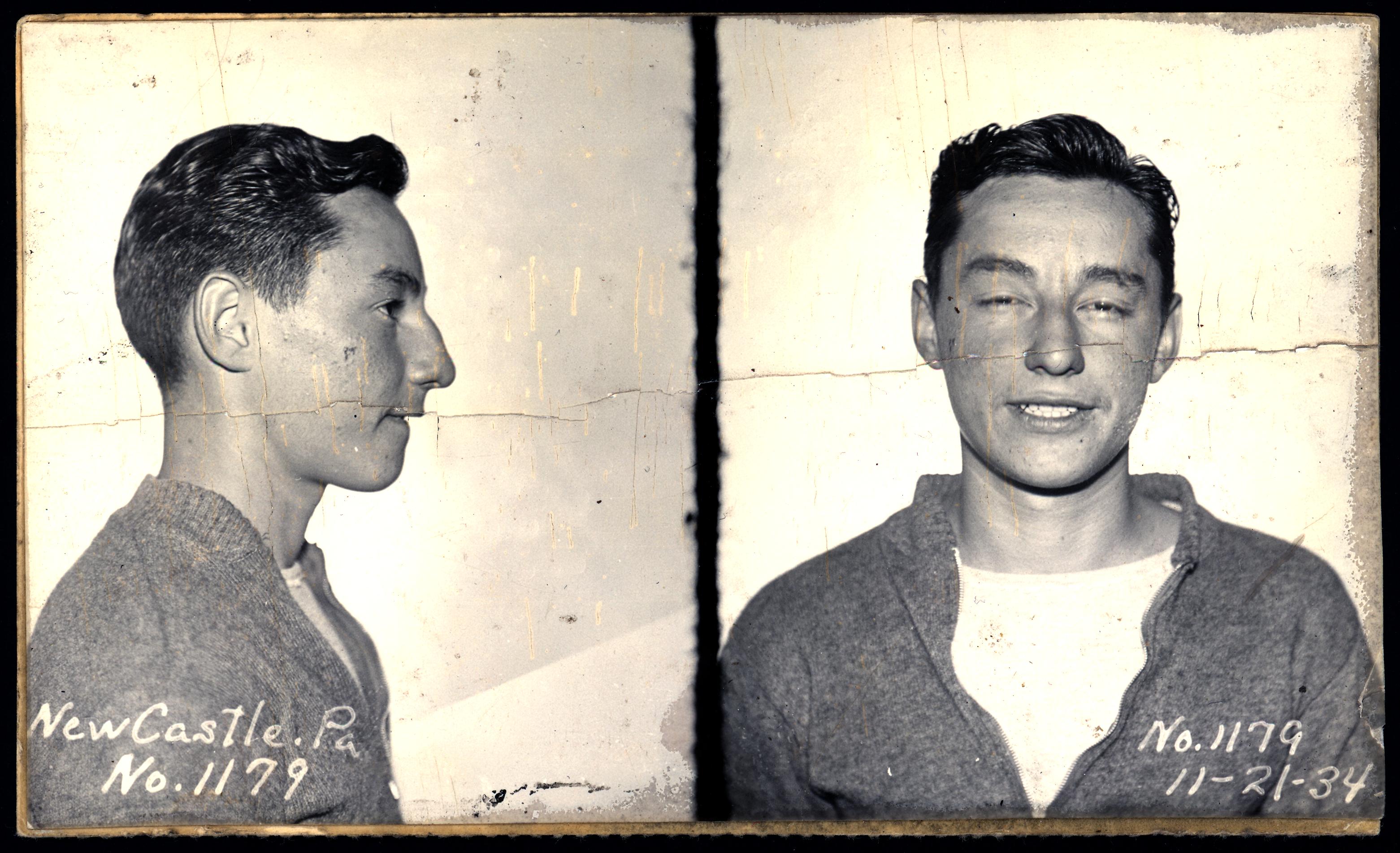
Frank Pegnato, “B-E Larc”, 21 Nov 1934

Leave a comment
Uncategorized

Frank Pegnato, sixteen years old, had been arrested for breaking and entering and larceny but found it possible to smile as he sat for his mug shot. New Castle had suffered seven auto thefts in just under two weeks, and Frank had been picked up because he was friends with Joe Fullwood and some other boys who had been stealing cars and driving them around town. Frank hadn’t been with them those nights, though. He knew he was safe.

Frank was released the next day. Joe Fullwood was the only one to be convicted, and only because he pled guilty on the first day in court.

Six years later, in 1942, Frank joined the army. After training, he was sent to the Pacific, where he fought in the six-month-long battle of Guadalcanal, in which thirty-eight thousand men died.

The week after the Japanese abandoned the island, in February 1943, Frank and eighteen other soldiers from New Castle got together and wrote the following letter to the New Castle News, to let the folks back home know they were still alive.

“Editor News—It’s been a year since a bunch of us fellows left from the Pennsylvania station on the West Side to begin our training in the Army. There were some boys that were a little sad because they had so much to leave behind, and the rest, well, they were happy, and all they wished and hoped for was to get a crack at those Japs. Well, we boys from good old New Castle have had our wish, together with all the rest of the boys from all over the country. We have met with those Yellow Slant-Eyes and are knocking hell out of them. I cannot disclose our whereabouts for military reasons, but I can say we are in fine spirits and our morale is good.

“We often get together evenings and talk about our city. There are quite a few boys from all parts of the state, and when we mention New Castle, the first thing they say is that we have a fine football team, which we all know about. We were glad to hear that the Red Hurricanes won the WPIAL this year.

“Here is another incident you folks might like to hear about. This happened while we were at Camp Wheeler, Ga. A couple of us went to town one evening and stopped at a restaurant. While we were there, Dave Greer—‘Bonehead’, as he was called by most of the boys back home—got talking to one of the waitresses and she asked him where he was from. Dave told her, and the waitress said ‘I never heard of the place’, so Dave said, ‘Pick up one of those plates from the counter and look at the back of it’. Well, she did, and there was New Castle staring her right in the face.”

The waitress would have seen a line drawing of an Indian making a pot, above the words, “Shenango China, New Castle, PA, USA”, the mark of the factory that was one of the biggest producers of dinnerware in the country and one of the main employers in the town. It ran into trouble in the fifties and spent the next few decades being traded between larger corporations. Like most of the rest of the manufacturing plants in town, it had closed down by the end of the century.

The letter concluded: “We boys are well, and hope our parents aren’t worrying too much about us, for we are members of the finest fighting army in the world.

“Here’s hoping the American Army will be marching down the streets of Tokyo in the near future.”

All of the men who signed the letter survived the war and made it back to New Castle unharmed, apart from John Yagersky, whose left leg was amputated on the island of New Caledonia following an accident during non-combat manoeuvres.

Frank died in February, 1984.

Sources: New Castle News (2 Nov 1934 “Find Stolen Car”; 8 Nov 1934 “Police Search For Stolen LaSalle Car”; 9 Nov 1934 “Find Stolen Car”; 10 Nov 1934 “Chrysler Coupe Reported Stolen”; 19 Nov 1934 “Arrest Two More In Car Vandalism”; 24 Nov 1934 “Hearing Held In Auto Thefts”; 5 March 1943 “Eighteen Local Boys Send Greetings From Undisclosed War Zone”; 18 Nov 1944 “Injured Soldier Back From Pacific”). 

Wanda and Steve Zokle, “Drunk & Disorderly Conduct”, 16 April 1950

comments 2
Uncategorized

Wanda and her husband Steve ran Teddy’s Dairy Bar at 130 West Long avenue. They were arrested twice in 1950: once in the spring for disorderly conduct (when their mug shots were taken); and once in the summer for selling liquor without a licence in the milk bar, for which they received a small fine.

A decade later, after Steve turned fifty and Wanda turned forty, they began using Steve’s family’s original name, Zoccoli, and became active in local politics. Wanda was elected head of the Progressive Democratic Women of Lawrence County and raised funds for the Kennedy campaign, while Steve ran for local office on a platform of free college education for all, low taxes and strong law enforcement.

Steve campaigned for years for the lake-to-river canal, which would provide a waterway from Lake Erie to the Gulf of Mexico and would run right by the 25th district, the area he wished to represent. His election adverts declared, “We live in one of the richest valleys in the world, but it will have to be cultivated to enable us to enjoy these riches. The Lake to River Canal is one sure way to bring this about. Without the canal our children no longer will be assured at jobs when they attain adulthood.”

None of Steve’s campaigns for elected office was successful. After failing to become the local party chairman in 1976, he retired from politics and he and Wanda spent the rest of their lives running a trailer park to the west of New Castle, on what is now called Zoccoli road. The canal was never built.

Sources: New Castle News (15 Jul 1950″ Violations Of Liquor Laws Are Charged”; 25 Jul 1950 “Six Are Held On Charge Of Liquor Violations”; 10 Aug 1950 “Appeal Dismissed”; 13 Sep 1950 “Court News”); Beaver County Times, 20 April 1966, “Steve Zoccoli” campaign ad; Youngstown Vindicator, 21 Jan 1980, “Steve Zoccoli Dies’ Operated Trailer Court”).

Alice Steel, “Dis Cond”, 24 Aug 1936

comments 7
Uncategorized

At the end of August 1936, as New Castle sweated through the hottest weekend of the summer—temperatures in the mid-nineties, with no breeze to stir the air—Alf Landon, the governor of Kansas, arrived in town to launch his presidential election campaign.

Landon, the Republican nominee for President, had been born in the nearby village of West Middlesex. On Saturday afternoon, he gave a speech at the Tam o’ Shanter golf club there, which was heard by more than a hundred thousand people who had travelled to see him from across Lawrence county and the rest of western Pennsylvania. Landon spoke of the problems of uneasy and restless labour, of the strange forces that were loose in the world and of the dangers of fascism in Europe and told his audience that the world as they knew it was about to be changed forever. The New Castle News wrote, “It was a half hour of Americanism that rang true. A half hour of speaking interspersed with applause and cheers, and the boy from West Middlesex was through. Back to the hills that gave him birth he had come, honored and respected, the product of a village, who is the hope of a nation.”

Landon’s supporters crowded the streets of New Castle that weekend; his entourage, the gentlemen of the press and every Pennsylvanian Republican with any ambition or standing filled the hotels. The downtown area was decorated with bunting, and a sunflower—the state flower of Kansas—was painted on a huge sheet of heavy muslin that was draped from the Johnson building overlooking the East Washington street bridge. Local industrialists and businessmen held a banquet in Landon’s honour, celebrating him as “the man who will rid us of the four horsemen of the new deal.”

For just under forty-eight hours, New Castle was the political centre of the nation; a makeshift convention town that ably accommodated its illustrious visitors. Crime was unusually low, and Alice Steel was among only a few people who were arrested; all, like her, for drunkenness and disorderly conduct.

The thunder storm that had threatened all weekend broke late on Sunday night, just before Alice’s arrest. The following morning, as Alice waited in court to be discharged by the mayor, Landon left New Castle by train. The decorations were removed from the city streets by nightfall.

Three months later, Franklin Delano Roosevelt won the election in a landslide. Alf Landon served out the rest of his term as governor, but did not seek elected office again.

Sources: New Castle News (22 August 1936, “Lobby Lounging At GOP Headquarters”; “Governor Landon Opens Presidential Campaign”; 24 August 1936, “Pa Newc Observes”; “Governor Landon Enjoys Week-End Stay In District”; “News Briefs From City Hall”; 15 Oct 1936, “What Kind Of A Man Is Alf M Landon?”).

Sophia Lyshooka, “Abduction”, 2 Feb 1946

comments 14
Uncategorized

NOTE: An updated version of this story can be found here.

Sophia Lyshooka was sixteen years old and married when she was admitted to hospital in 1942. Four years later, at the age of twenty, she was arrested for the crime of abduction. Those two facts, and whatever can be discerned in this photograph, are all that is known of her.

Sources: New Castle News, 24 July 1942, “Hospital Notes”. 

Betty Joan Knight, “Drunk & DC”, 27 April 1959

comments 5
Uncategorized

Betty Joan Edwards married Charles P Knight in July 1951, when she was seventeen years old. She wore a gown of slipper satin with a fitted bodice and a short net yoke trimmed with seed pearls, a fingertip veil of lace and a rhinestone tiara. At her wrist was a corsage of red roses.

Eight years later, exactly a week before her divorce came through (she was divorcing Charles on the grounds of cruel and barbarous treatment and indignities), she had her mug shot taken after she and a man called Albert Bonnetti, along with another couple, were arrested for pouring four quarts of oil over the floor of the Spur Distributing Co filling station on East Washington street while in a state of intoxication at a quarter past three in the morning. Everyone involved in the incident was fined $5 and costs. Betty didn’t bother to turn up at the courthouse to pay; she made the police come to her.

In the summer of 1961, a woman named Ingrid Zurasky decided she was sick of her husband, Frank. The year before, he had been fired from his job in the New Castle Packing Co for union-organising activities. Ingrid had stood by him then, even going so far as to picket the company owner’s house on Winter avenue, holding a sign denouncing unfair labour practices. Frank had been unable to find work since, and he and some acquaintances had decided to become safe crackers. They hit motor showrooms, markets, convenience stores and farm equipment suppliers in New Castle and the surrounding towns, making off with as much as $2,000 in cash in one night.

But that wasn’t why Ingrid Zurasky was sick of Frank. What maddened her was that the gang had started to take women along on the jobs, and that Frank was spending more time than he ought to with one of them in particular—the recently divorced Betty Joan Knight.

At the beginning of July—after the gang’s thirty-third robbery, which took the total sum of stolen cash to $15,000 and further embarrassed the seemingly impotent detective bureau—Ingrid called the police, said that her husband was the ringleader of the safe crackers, and told them where they could find him.

Frank was picked up that afternoon and questioned until late in the evening, by which time he had given up the names of his partners. The police collected Betty from her home just before midnight and Thomas Williams and Alvin Fennell turned themselves in around four o’clock in the morning, after receiving assurances from a detective over the telephone that they would not be subjected to beatings in the cells, which they understood to be the police department’s usual practice. A fourth man, William Kloss, was already in the county jail, following a sexual assault conviction the month before.

All five pled guilty to burglary and conspiracy. The men received jail terms of two to six years but Betty, who had been present at only two of the jobs, was released on one year’s probation, and seems never to have troubled the police again.

Sources: New Castle News (8 Aug 1951 “Edwards-Knight Nuptials Revealed”; 5 May 1959 “Court News”; 28 April 1959 “6 Fined On Charges of Drunk, Disorderly”; 29 April 1959 “Warrant Issued”; 2 July 1960 “NLRB Investigates Charges Brought Against Packing Co”; 3 Aug 1961 “Police Crack Burglaries, Safe Jobs Here”; 4 Aug 1961 “Plea Entered To Long List Of Burglaries”; 11 Sep 1961 “Five Plead On Burglaries”; 25 Oct 1961 “Four Sentenced 2-6 Years In Penitentiary”)

Katie Payne, “Fel. Cutting”, 26 Oct 1934

comments 5
Uncategorized

Katie Payne took a razor blade to the house at the rear of 108 South Jefferson street where her husband, John, was staying with young, pretty Ethel McGowen. She slashed Ethel McGowen across the face, twice. When Ethel fell to the floor, curling up to protect herself, Katie slashed her legs, arms and hands. Ethel wasn’t going to be pretty any more.

Katie was arrested and held in jail while Ethel was examined in hospital. If Ethel had died, Katie would have been sent away for murder, but she lived. A week after the attack, she was well enough to leave the hospital, and Katie was released from jail. The case never came to trial.

Five years later, in 1939, Katie took a knife to the house on South Mercer street where her husband was staying with another woman, Mary Smith, but this time she came off worst. When the police arrived, Katie told them that her husband had struck her and then held her while Mary Smith threatened her with a penknife and slashed her right shoulder.

John Payne got thirty days in the county jail for assault and battery. The charges against Mary Smith were thrown out after she spent a week in the lock-up.

Katie and John Payne stayed married for the rest of their lives. They had three children together—Ozzie, Lillian and Wilbur (who was killed in 1948, when his car collided with another and burst into flames)—and were in their seventies when they died, within a few months of each other, in 1963.

Sources: New Castle News (27 Oct 1934 “Jealous Colored Girl Wields Razor Blade”; 13 July 1939 “Says Husband Held Her While Another Woman Used Knife”; 14 July 1939 “Husband Gets Jail Trip For Assault; Hearing Due For Another”; 11 May 1948 “Cars Collide On Route 422 Near Ohio Line”; 13 Sep 1963 “Deaths of the Day”)

Elizabeth Miller, “liquor violation”, 5 June 1948

Leave a comment
Uncategorized

In January 1948, a young woman called Anna Grace Robertson suffered fatal brain injuries when she fell from a moving truck—or was pushed out; no one knew for sure. What was certain was that she had been drunk when her skull cracked on the road, and that the man whom she had been with, Martin Fobes, had been drunker still, as had most of the witnesses who testified that they’d seen Fobes and Anna Grace drinking until well after midnight in the Rex Café, Jim’s Place and the Square Deal Café.

There wasn’t enough evidence for a trial, and Fobes was released, but the inquest had focused attention on the lawless liquor joints in the industrial district, frequented by hard-drinking factory workers speaking a babble of old-world languages and run by management that wasn’t too particular about local liquor laws.

Something had to be done.

In the months following Anna Grace Robertson’s death, agents from the state liquor board quietly investigated the town’s bars and cafés, collecting evidence, filing reports and compiling lists of transgressions. Then, on a busy Saturday night, the police raided establishments across the centre of town—the West Side Café, the Lawrence Confectionary, the Grant Street Café, the Marathon and others—rounding up not only the drunks, but the bartenders and bar owners, who ended up in court facing heavy fines.

Elizabeth Miller worked in the Rex Café, “The Home of the Big Mug”, which had featured prominently in the inquest into Anna Grace’s death, as it was where she’d met Fobes and where Fobes had returned to get “pretty well loaded” the night after her battered body was found in the street. Elizabeth and the owner, Demetrios Proios, were arrested and charged with various breaches of the liquor laws, including serving liquor to intoxicated persons, and were fined $100 and $150, respectively.

However, perhaps because of its notoriety, the authorities seem to have gone after the Rex harder than the other places. The district attorney declared it to be a common nuisance, a haunt of undesirables and the source of much of the trouble in the area. He pointed out that, despite the fact that it was licensed only to sell liquor to accompany meals, it had done $33,808 worth of beverage business in the preceding year and only $699.80 worth of food business. State liquor board agents said they’d observed minors and men with criminal records being served alcohol and stated that the place was insanitary, that disorder was marked and that they’d seen no food ordered or served; and the city chemist testified that the whiskey glasses that he had examined were thick with “more bacteria than I could count.”

In August, the city padlocked the doors of the Rex Café, pending an appeal, which was lost. In September, the café was closed for good. Elizabeth Miller was out of a job.

Before the Rex Café opened, the building had housed Ginsberg’s kosher delicatessen on the ground floor with Faella’s barber shop—“25¢ any style any haircut”—and a Catholic boy’s club upstairs. Earlier still, in the twenties, it had been Bevan & Arthur’s magazine store and restaurant; and, at the beginning of the century, when it was still new, it was New Castle’s only kosher hotel, run by one Nathan Rabinovitz, whose annual application for a liquor licence was always refused.

The block was demolished in 1968. A Burger King sits on the site today.

Sources: New Castle News (14 Jan 1948 “Cause Of Girl’s Death Is Mystery”, and other pieces that month on Fobes; 7 June 1948, “Fifteen Facing Liquor Charges”; 3 Aug 1938 “Seeks To Revoke Café License”; 12 Aug 1948 “Café Is Nuisance, Court Declares”; 11 Sep 1948 “Court News”; 1906 piece on Nathan Rabinovitz; 1915 piece on Bevan & Arthur; 1930 piece on Ginsberg.)

Jessie Smith, “Larceny, Disord Cond”, 22 Feb 1932

Leave a comment
Uncategorized

Jessie Smith was one of the half a million black Americans who left the south during the first wave of the great migration, before and during the first world war, hoping to trade Jim Crow, klan violence and failed crops for a life of opportunity in the industrial north. However, when she arrived in New Castle from Spartanburg, South Carolina, she would have found that there was nowhere in town for her to stay. The hotels accepted only whites, and any young colored girl stepping off the train had to ask around until she found a colored family with a room to let.

Jessie found accommodation, and a job, in the Vanhorn apartments, a dilapidated three-storey frame building by the bridge over Neshannock creek on South Jefferson street, a well known and frequently raided brothel. She was arrested there one Saturday night in 1918, along with the other girls and four customers. The prostitutes were fined $15; the proprietress, Mary Armour, $50; and the customers, $10. A decent night’s profit for the city.

Three years later, the Vanhorn block was torn down to make way for a rail track along the river to the Carnegie company’s number 1 furnace, but Jessie had already moved on.

During the twenties and thirties, she worked in houses further down South Jefferson street, on Long avenue and on Lutton street, paying an occasional $10 or $15 fine for the privilege. Along the way, she married Robert Cruthers, who lived off her earnings and beat her when the mood took him. Sometimes, the beatings were so bad that she would go to the police, who would arrest him for assault and battery and give him a $10 fine, which he’d pay using money that Jessie had worked for. Once, he couldn’t pay and was sent to the county jail for ten days.

In October 1930, Robert Laughlin, a traveller who was staying at the Henry Hotel, told police that he’d been robbed by two colored women while walking down the alley behind the Fountain Inn, just off the main square. One had held him while the other had gone through his clothes and taken his pocketbook, which contained $34. The police would have known that his part in the story wasn’t as innocent as he assured them it was, but it didn’t matter. They arrested Jessie and and a woman called Mabel Smith (a sister, perhaps), who were found to have Laughlin’s pocketbook. They were fined $10.

Early on Christmas morning, 1930, three young men – with considerably less shame than Robert Laughlin – told a beat policeman on the south side that one of them had been robbed by a colored prostitute in a house on Lutton street. The police raided the place, which was owned by Charles Hudson, and found the money in Jessie Smith’s possession.

That was Jessie’s last appearance in New Castle’s recorded history. The final sentence of the story in the paper states that her penalty was – yet again – a fine of $10.

Sources: New Castle News (4 Jan 1917 “Colored Man to Seek Hotel License Here”; 30 Jul 1917 “Colored Folk To Have Hotel”; 7 Feb 1919 “JB Clark Claims He Was Insulted”; 29 Jul 1918 “Disorderly House Raid Nets $120”; 22 Aug 1930 “Given Ten Days”; 30 Sep 1930 “Robert Cruthers”; 20 Oct 1930 “Colored Women Rob Local Man”; 26 Dec 1930 “Disorderly House Raided By Police”)