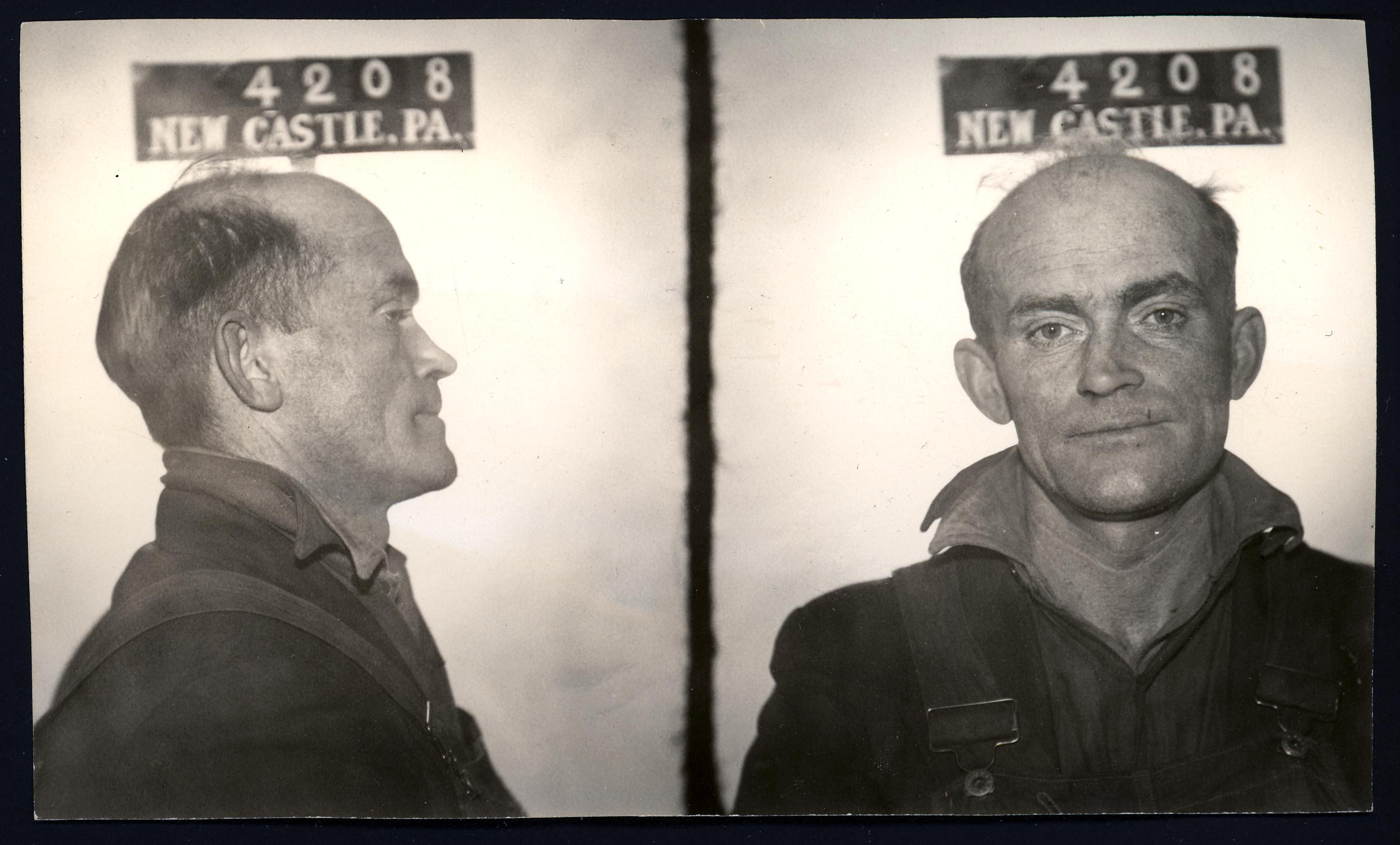
William Robert Taylor, “Attemp Rape”, 9 June 1947

Leave a comment
Uncategorized

The arresting officer typed “Attemp Rape” on William Robert Taylor’s file card; William signed a statement admitting “molestation”; and the court charged him with “intent to commit morals offense”. Each phrase, from the blunt, abbreviated police term to the expansive, lawyerly phrasing, is stronger and says more than the one that follows it. As the charge becomes formalised, the words contain less and less meaning and take us further away from the night when a terrified sixteen-year-old girl, walking home just before midnight along Moody avenue, was attacked by a greasy haired bully and had to fight and scream in order to avoid being raped in the bushes in someone’s front yard.

The court suspended William’s sentence pending a mental health examination, and the case was never reported on again. William ended the year not in jail, as might be expected, but in the marines. He signed up for a two-year stint just after his trial; a reliable way of avoiding a prison sentence.

William returned to New Castle in 1949, but stayed only long enough to divorce his wife on the grounds of cruel and barbarous treatment before re-enlisting just after the start of the Korean war. Three years later—after the deaths of thirty-seven thousand Americans and two and a half million Koreans—William came home again. It had been a long five years since he had attacked the girl on Moody avenue and escaped into the marines, and it must have occurred to him that the time he had served in the army was longer and more arduous than anything the courts would have given him in 1947. But at least he had avoided jail.

William stayed free for the rest of the ’50s, but was convicted of another molestation in 1962 and sent to the Allegheny county workhouse for six months. There is no further trace of him.

Sources: New Castle News (10 June 1947 “Hold Man For Investigation”; 11 June 1947 “Waives Hearing”; 14 June 1947 “Sentences Handed Down”; 5 Sep 1950 “Court News”; 7 Nov 1950 “Taylor Re-Enlists In Marine Corps”; 28 March 1963 “Court Grants Four Paroles”).
Helen Carter, “Inter With Officer”, 22 July 1934

comments 8
Uncategorized

The New Castle police department’s catalogue of arrests for the last weekend in July, 1934 – the weekend, incidentally, of John Dillinger’s death in Chicago – ran as follows: fighting 1; drunkenness 4; violating parking law 3; drunkenness and disorderly conduct 2; interfering with officer 1. Helen Carter’s case was the last on the list. The circumstances of her arrest are unknown but may have something to do with a man. Helen’s troubles usually did.

Helen married Jodie Carter in 1927, at the age of fifteen, and they set up home in an old shack on Bridge Street that Jodie set on fire one winter while trying to defrost a pipe. (It went up in flames again that spring, after sparks from a neighbour’s stove settled on the roof.)

In January, 1930, when she was seventeen, Helen was arrested for firing a pistol at a man called William Thompson, who had “made some proposals to her which she did not like.” Helen’s sister, Gertrude Jones, was working as a prostitute around that time (she had recently been arrested while entertaining a white customer in the bedroom of a disorderly house), so Thompson might have thought that Helen would also be open to proposals in that line. If so, it seems he was mistaken. Helen was fined $10 for shooting at him; Thompson was fined $20 for giving her cause to.

In the summer of that year, William Thompson and Helen were arrested again, this time for brawling in South Jefferson Street. Helen and a friend, Beatrice Jackson, were beating Thompson when the police arrived and arrested them all. This time, Helen couldn’t afford the $5 fine, and spent fifteen days in the county jail.

That sentence might have saved her life. A few days after she was sent away, a “New Castle negro character” called James Ossinger was arrested for carrying a four-inch blade with intent to harm. Ossinger confessed that he was looking for Helen because she had called him names, and he was prepared to kill her, and Helen’s friends told the police that he had bragged that he had cut up a woman in Cleveland for the same offence. He was fined $5 and turned loose. He never carried out his threat.

More man trouble came along in 1934, when Helen’s husband saw her talking to Otis Watt on Moravia street, which resulted in “a scrap in which a penknife, bricks, revolver and fists were displayed.” Both men were fined $10.

In 1942, after fifteen years of matrimony, Helen divorced Jodie, on grounds of desertion, cruel and barbarous treatment and indignities to person. A year later, she married Esco Owens, who had already been arrested for burglary (in 1925), for using insulting language to white women and assaulting a police officer (in 1931) and for beating his first wife (in 1933), and would go on to be imprisoned in 1952 for a shooting spree on State street in which he fired a rifle into two family homes, narrowly missing a baby and two young children, and nearly blew a police officer’s head off. He spent most of the few remaining years of his life in prison.

Helen died on February 1, 1961, at the age of forty-eight, after an extended illness.

Sources: New Castle News (19 Nov 1925 “Arrest Trio Of Negroes For Theft of Metals”; 15 Sep 1928 “Four Arrested At Bridge Street Home”; 2 Jan 1930 “Attempt To Thaw Pipes Starts Fire”; 15 Jan 1930 “Shooting Occurs On Bridge Street”; 26 May 1930 “Sparks Set Fire To Roof Of Shack”; 28 July 1930 “Woman’s Screams Attract Officer”; 31 July 1930 “Knife Toter Is Fined $5”; 30 March 1931 “Officer Battles With Colored Man”; 13 March 1933 “Assaults Wife, Held”; 27 Aug 1934 “Knife, Bricks And Gun Figure In Fight”; 25 May 1942 “On Court House Hill”; 20 Jan 1943 “On Court House Hill”; 25 Aug 1952 “Shooting Spree Puts Esco Owens In Jail”; 3 Feb 1961 “Deaths Of The Day”)

Frank Siegel, “intox driver”, 25 September 1946

Leave a comment
Uncategorized

Six years into prohibition, Frank Siegel was arrested for possessing liquor. He was a farmer who had come to America from Austria before the first world war, and he tried to explain that he was strictly teetotal and that the alcohol that had been found in his house had been meant for medical purposes – his wife was suffering from some malady that required a local application of the stuff. His attorney backed him up, stating that, in all the years that he had known Frank, he had never known him to drink.

The court didn’t care what the alcohol was for: possession was possession. Frank was fined $100 and, of course, had his liquor confiscated.

Any teetotal tendencies Frank might have had had been abandoned by the day in 1946 when he had his mug shot taken after he got drunk in town and crashed his farm truck into another truck on Pearl street. He was fined $100, again, and was sentenced to thirty days in the county jail, out in three if he paid the fine and costs.

The following year, Frank’s six-year-old daughter got polio, and was unable to walk for two years. (When she eventually took her first steps with her new waist-high leg braces, the New Castle News published a picture of the little girl grinning with excitement.) The year after that, Frank’s sixteen-year-old son was injured in a car crash that killed his friend. The medical bills were far too much for the farm to support, and the family avoided ruin only by accepting charity.

Faced with times like that, no one could blame Frank if he took a healthy drink once in a while.

In 1956, while once again drunk in town, he got in a fight with a man called Ira Walls. Walls was an elder of the Mission Church of God in Christ and Frank was a Roman Catholic, so perhaps the laceration and contusions that Frank ended up being treated for in hospital were the result of a disagreement regarding a fine point of doctrine. (Walls went on that night to assault his wife, punch a policeman in the face and beat up another drunk who had the misfortune to share a cell with him, so it could have gone worse for Frank.)

Frank retired from the farm a couple of years after that and became a naturalised US citizen a few months later. When he died in 1969, at the age of seventy-three, he left behind him twenty-four American grandchildren.

Sources: New Castle News (8 Nov 1924 “Criminal List Is Cut Down As Pleas Entered By Court”; 26 Sep 1946 “Driver Arrested”; 27 Sep 1946 “Sentence Drunken Driver”; 19 Jan 1948 “Boy Is Killed; Six Injured; In 422 Crash”; 26 Jan 1950 “Local Girl ON Road To Recovery”; 12 June 1956 “Claim Prisoner Assaulted Police”; 1958 small ads throughout the year; 6 Dec 1958 “Citizenship Is Approved”; 10 March 1969 “Deaths of the Day”)

Paul Leroy Gold, “Rape”, 27 March 1942

comments 2
Uncategorized

Hemlock street was a dead-end road on a wooded hillside to the west of the Shenango river, occupied by only a few small family homes. Paul Leroy Gold didn’t live there; he had a room a mile away in the centre of town. Yet, on a Friday afternoon in March, 1942, he just happened to be on Hemlock street when a nine-year-old girl named Eileen came by, with a younger boy.

Paul struck up a casual conversation with them. He asked the boy if he would like some sweets, and gave him 50 cents to go to the store to get some. He told the girl about a baby doll that he had, and offered to take her to see it. He led her into the woods until they were some way from the road. Then he raped her.

The little girl went home and told her mother what had happened, and her mother called the police, who picked Paul up in his room an hour later. They took him to detective headquarters, where the girl and the boy identified him. He admitted what he had done and pled guilty in court the next morning. There is no record of his sentence.

Eileen was the youngest child of four. Her father, who worked in a steel mill, had died not long after she was born, having been ill for most of the few months that she had been alive. Her mother, a Sunday school teacher, struggled to raise the three children on her own, and had to send Eileen’s oldest brother to a Government-run work camp when he was sixteen.

Paul Leroy Gold did not know any of that, of course. It would probably have made no difference if he had.

In the later forties, when she was in her teens, Eileen became an enthusiastic girl guide. Although she failed to rise to the rank of patrol leader, she was always happy to organise wiener roasts and meetings at her house. She met a boy scout troop leader called Kenneth, and they married when they were eighteen. They set up home with Eileen’s mother in Hemlock street and named their first child James, after Eileen’s brother, who was a pilot in the air force by that time. The following year, they had a daughter, but she died when she was five months old—the same age that Eileen was when her father died.

Years later, Eileen’s husband took aviation training and, in 1968, became a flight instructor at New Castle airport. His choice of career might have been influenced by Eileen’s pilot brother. The two families had, after all, grown remarkably close over the years and had ended up spending more time around each other than might have seemed likely when they had first met. That was largely due to the fact that, in 1958, Eileen’s older sister, Mina, had married Eileen’s husband’s recently widowed father, which would have meant that Kenneth’s step-mother was also his sister-in-law, and Eileen’s sister was also her step-mother-in-law.

Paul Leroy Gold would not have known about any of that either. When he thought about Eileen, he probably pictured her as a child, perhaps still in among the trees off Hemlock street. And how did she picture him, all those years later, once she had a family of her own? With any luck, she wasted no time thinking about him at all.

Sources: New Castle News (15 July 1933 “Births”; 2 Jan 1934 “Deaths of the Day”; 21 March 1938 “Personal Mention”; 28 March 1942 “Quick Arrest of Girl’s Assailant”; 10 Oct 1947 “Girl Scouts”; 10 July 1950 “Hoover-Sickels Exchange Of Vows; 10 June 1968, “Instructs Pilots”; 11 August 1958 “W H Stickels [sic] Will Reside On 4th St After Wedding Trip”)

William Shovlin, “Drunk”, 10 Feb 1945

comments 4
Uncategorized

William Shovlin had a little too much to drink one Friday after work and ended up sleeping in a cell instead of his bed. It was a bad start to his weekend, but some households in New Castle had worse ones, and all they did was open the door to the telegram delivery boy.

That weekend in 1945, news came that Henry Mateja had been killed in the south Pacific; that Chester Glenn and Louis Ferrucci, whose brother had been killed the month before, had died on the western front; that Daniel Woolcock and Albert Vanassa were missing in action; and that Carl Bowen, Joseph Gurgacz and Ray Fulkerson were all seriously wounded.

The only person in New Castle to get any good war news that weekend was Josephine Scaduto, who recognised her brother Carl in a newsreel film, among the troops landing on the Pacific island of Luzon. She hadn’t heard from him since he’d shipped out a year before, and she was thrilled to see him safe and sound, still wearing his usual grin.

That was the last time she ever saw him, though. More than ten thousand allied soldiers were killed in the battle for Luzon, and Carl was one of them. The telegram that brought that news would arrive at the end of June, just two months before the end of the war.

Sources: New Castle News (10 Feb 1945 “Services Sunday For Sgt H Mateja, Killed In Action”; “Louis Ferrucci Is Killed In France”; “Sgt Albert Vanassa Missing In Action”; “Son In War Picture”; 8 Feb 1945 “Chester Glenn Reported Missing”)

John H Hutchison, “Forgery”, 19 April 1948

comments 10
Uncategorized

A year of fighting Nazis in Europe earned John Hutchison a chestful of decorations: the ETO ribbon, the good conduct medal, a purple heart and cluster (he was injured twice), four battle stars and the Luxembourg citation. He came home to Oil City, Pennsylvania, a genuine American hero at the age of twenty-one, and proudly wore his uniform when he married his girl, Thelma, exactly six months and one day after Adolf Hitler shot himself in the head.

The army gave John an administrative job in Fort Indiantown Gap, a demobilisation camp in eastern Pennsylvania, where he and Thelma lived in married quarters. Before long, he left the army and moved back to Oil City, hoping to make his way in civilian life. That proved more difficult than he had hoped. He had been married less than two years when he got together with his older brother, Willard, and his sister-in-law, Audrey, and started to forge checks, using them to buy all the things he could not afford—fine clothes, shoes and jewellery for Thelma.

In March, 1948, John, Willard and Audrey were arrested for passing bad checks in towns across north-west Pennsylvania. In the past year, they had swindled more than $4,000 from shops in towns near Oil City. In New Castle, they hit two jewelry stores—King’s and Perelman’s—the Betty Gay clothes store, McGoun’s shoe store and Alexander Radio.

Judge Braham usually handed down sentences of one to four years in jail for multiple counts of forgery. John, Willard and Audrey fared rather better. Throughout his life, even into his old age, Judge Braham would speak with sorrow of his younger brother, Hall, telling people that he was the first American to die in world war one and allowing them to infer that he had met his death fighting Germans in the trenches. However, the truth was that Hall had died of pneumonia in an army training camp in Virginia in 1918, not long after he enlisted in the army. He was not the first American to die in the war, either; merely the first from Lawrence County. When he died, Hall had been the age that John was when he appeared in court in New Castle. Judge Braham had been Willard’s age. The parallels might explain why, instead of beng sent to jail, the Hutchisons were let off with a $100 fine, on the condition that they made efforts to pay back what they had stolen.

John and Thelma had three sons. John worked at the Worthington corporation in Oil City until the family moved to Fort Lauderdale, Florida, where he ran a motel. When he retired, he moved back to Oil City. He died in 1992, at the age of sixty-seven.

Sources: The Blizzard, (Oil City, Pa) 1 Oct 1945, “Matrimonial” column; Indiana Evening Gazette, 16 March 1948, “Hold Three In Bad Check Ring”; New Castle News (19 April 1948, “Alleged Forgers To Be Returned”; 21 April 1948, “Fine 3 Forgers, No Jail Sentence”; 10 Jan 1963, “Distinguished, Learned, Eloquent Is The Judge”; 10 Jan 1918, “Hall Braham Gives His Life For America”).

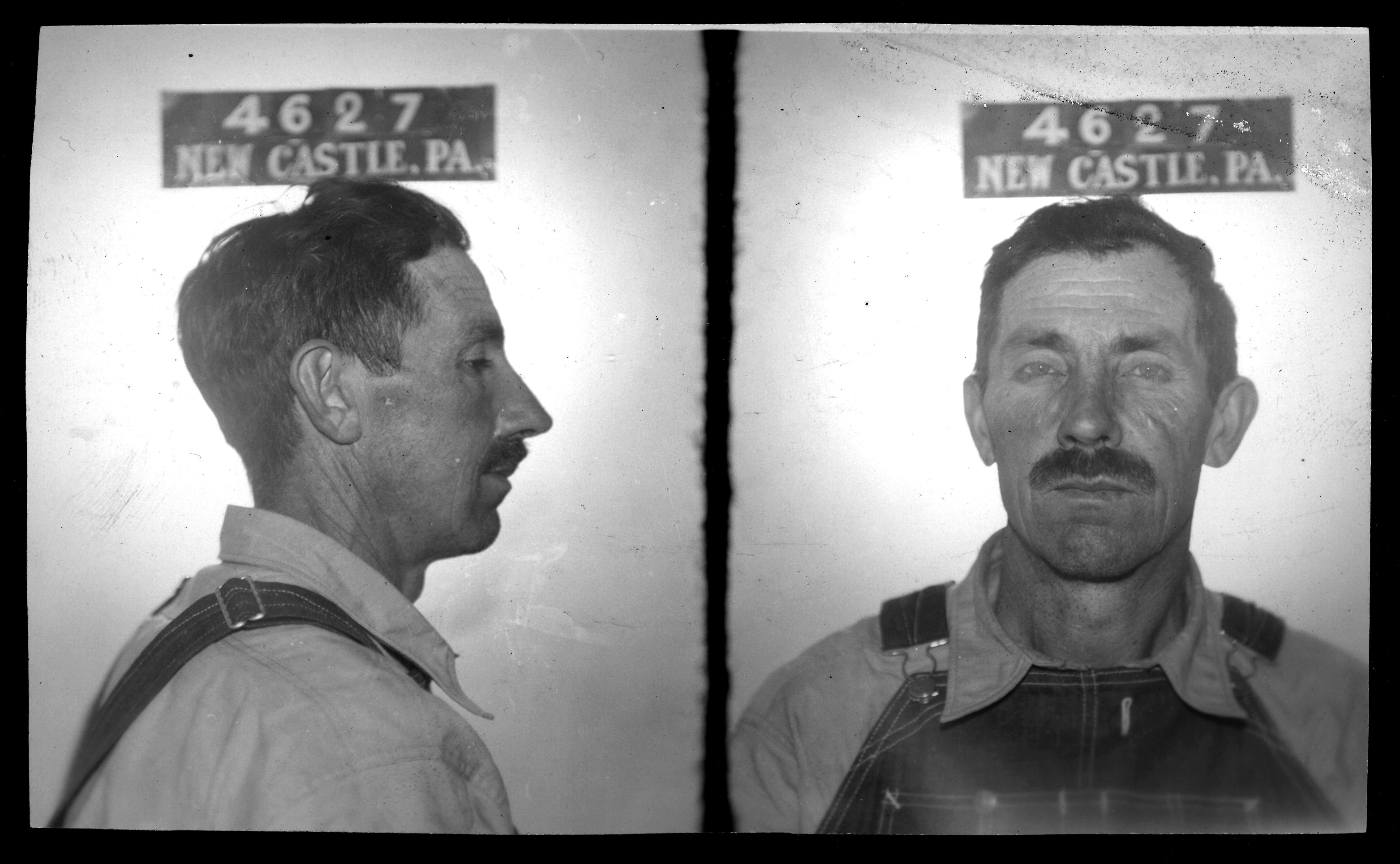
James Byers, “Rape”, 30 July 1951

comments 4
Uncategorized

In July, 1951, James Byers escaped from the hospital in Ohio where he’d been sent after being badly injured during his arrest for rape, and the Youngstown police alerted nearby towns that he might be headed their way.

On the last day of the month, residents of Cascade Street, on the eastern edge of New Castle, informed the police that a suspicious couple had “slept all night in the weeds” nearby. When Officers Bartoshek and Richards went to investigate, they identified the man as James and arrested him. They placed the couple in separate cells in city hall, holding James on a rape charge (a detail that the New Castle News delicately neglected to report) and the woman – who turned out to be James’s wife, standing by her man in his hour of need – on an open charge.

After James had his photograph taken – the very mug shot on this page – he was led back down to the cells by Andy Fair, an auxiliary constable. Fair had been a prize-fighter in the twenties but he was heading for retirement now and his muscles had long since run to fat, which no doubt influenced what James did next.

As the pair walked along a corridor in the basement of the building, James made a break for it, bursting through a door that led to the police garage and fleeing up the ramp into North Jefferson Street. He took off in the direction of Falls Street, away from the centre. Perhaps he planned to keep running until he hit the woods on the edge of town, or perhaps he had no plan at all. In any case, he managed to run only two blocks before Officer D’Ambrosia, riding one of the police bicycles that he’d been testing in the street just outside city hall, caught up with him and placed him under arrest for the second time that day.

James was sent back to Ohio. There’s no record of what happened to his wife.

Sources: New Castle News (“Freedom Dash Unsuccessful”, 31 July, 1951; Andy Fair’s boxing history and later weight gain, untitled stub, page 7, 5 November 1958.)

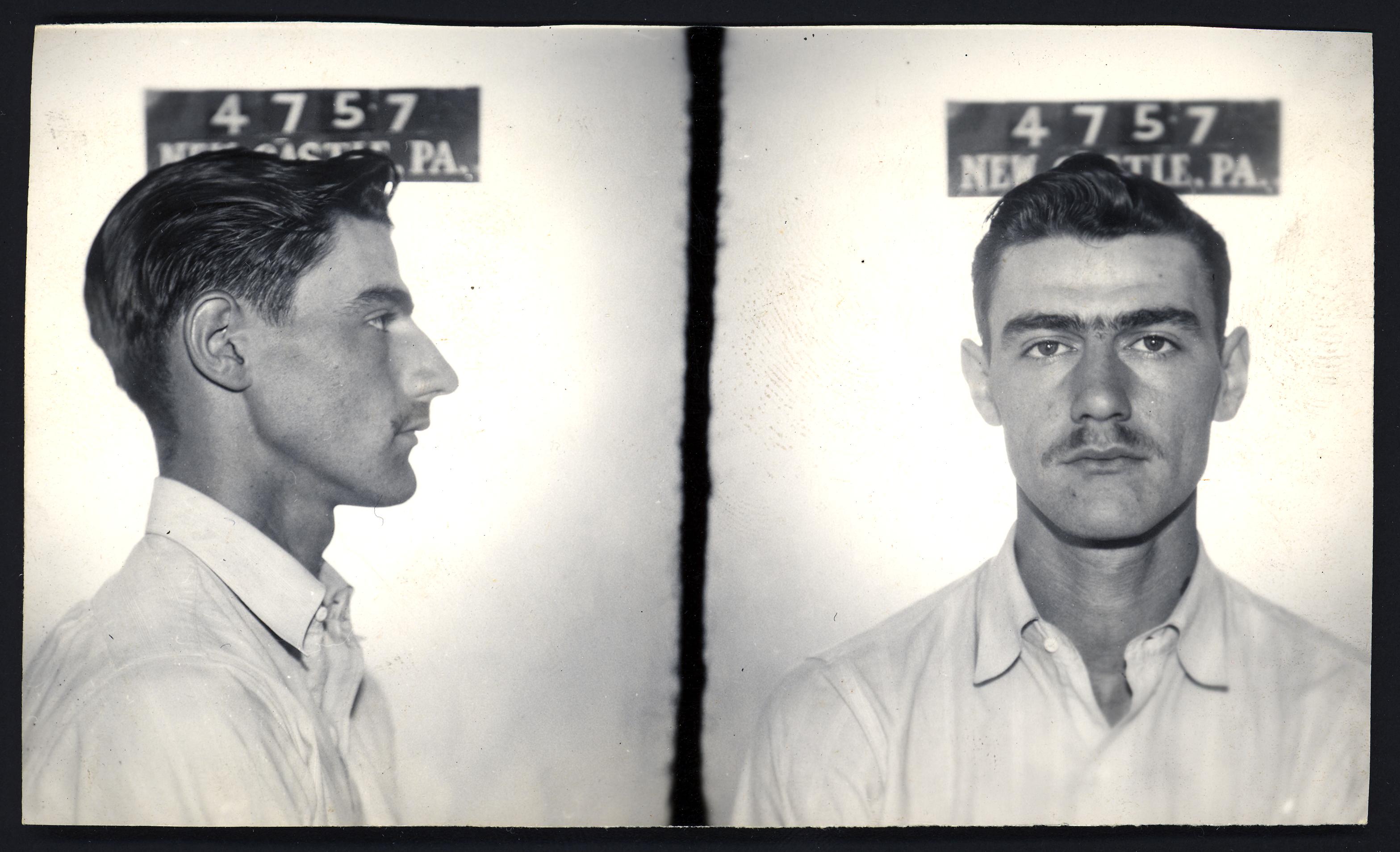
Frank Soda, “Adultery, Bastardy”, 5 March 1946

Leave a comment
Uncategorized

In 1937, when he was eighteen, Frank Soda and a couple of his friends were arrested after a high-speed chase through Lancaster, Ohio, which started when they filled up their stolen car at a gas station and drove off without paying. The police shot out their tires. Frank’s friend, Pete Polinsky, threatened the police with a shotgun. They had only been trying to impress a girl who had accepted their offer of a ride. The girl was sent home; the boys were sent to jail.

Frank was twenty-six years old, with a wife in Warren, Ohio, when he got a New Castle girl pregnant. She went to the police when he refused to support the child, and Frank was charged with adultery and bastardy. Before his case could be heard, he was returned to Warren, which had a prior claim on him in connection with a burglary charge. The mother of his child, who had expected the court to order Frank to pay her around $3 a week, the usual outcome of a bastardy case, was told she would have to wait until Ohio had done with him.

The court in Warren found Frank guilty and sent him to Trumbull County jail for two to four years. He escaped a month later. Every Wednesday afternoon, a local church group visited the prison to conduct services. After observing their routine, Frank and three other convicts simply followed them as they left through the double doors of the cell block. When the turnkey opened the outer door, the men pushed past him and ran off into the back streets of the town.

The men Frank had chosen to break out of jail with were much younger than he was and were all serving sentences for armed robbery and attempted murder. When they were caught a week later, holding up a filling station in New Jersey, Frank was not with them. Shortly before the police had arrived, he had stolen a car and quietly left the scene. There is no further record of his life.

Sources: “Police Bullets Halt Flight Of Niles, O., Youths”, Circleville Herald, 29 Nov 1937; “Grand Jury To Take Up Youths’ Cases”, Piqua Daily Call, 3 Dec 1937; “Jail Escapees Seized In East”, Lima News, 1 May 1946.

Floyd M Armstrong, “Loitering”, 28 June 1957

Leave a comment
Uncategorized

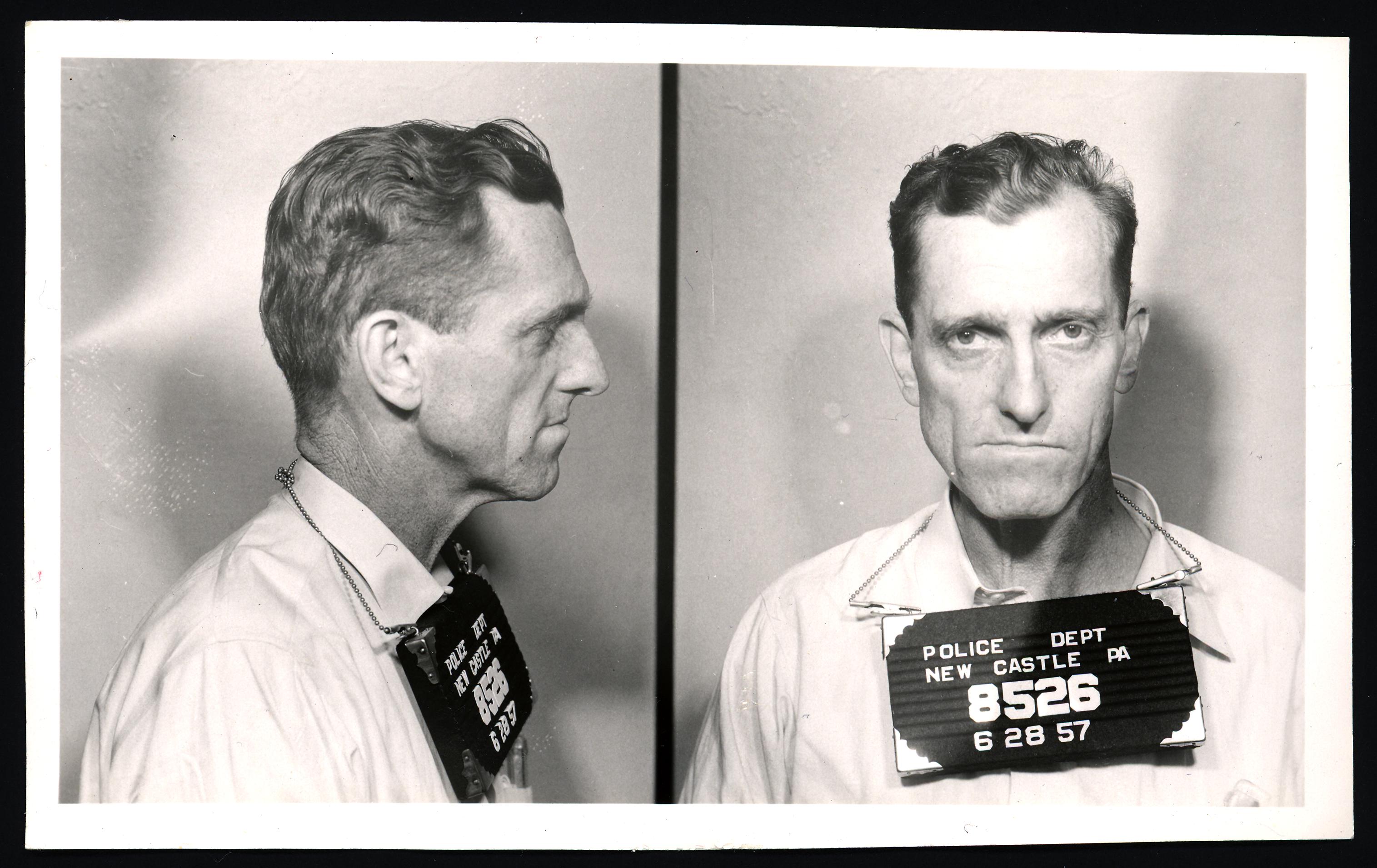
Floyd Armstrong, a fifty-five-year-old drifter who gave his profession as dish-washer, was one of several suspicious characters—including Charlie Tilden—who were arrested on the 27th and 28th of June, 1957, for loitering and various other minor infractions, pending further charges that might be brought against them.

In the early hours of the twenty-seventh of June, someone had broken into two cars in the Castleton parking lot and tried, but failed, to hot-wire them. Little damage was done, and nothing was stolen. Later that day, thieves entered the home of Charles Gallagher on Willard avenue, via the rear screen door, and stole a roll of pennies, an envelope containing $1.50, a jar of old coins, four boxes of .22 shells and half a box of .32 shells.

The police had nothing to go on. Floyd and the others were released. The true culprits were never apprehended.

Sources: New Castle News, 28 June 1957.

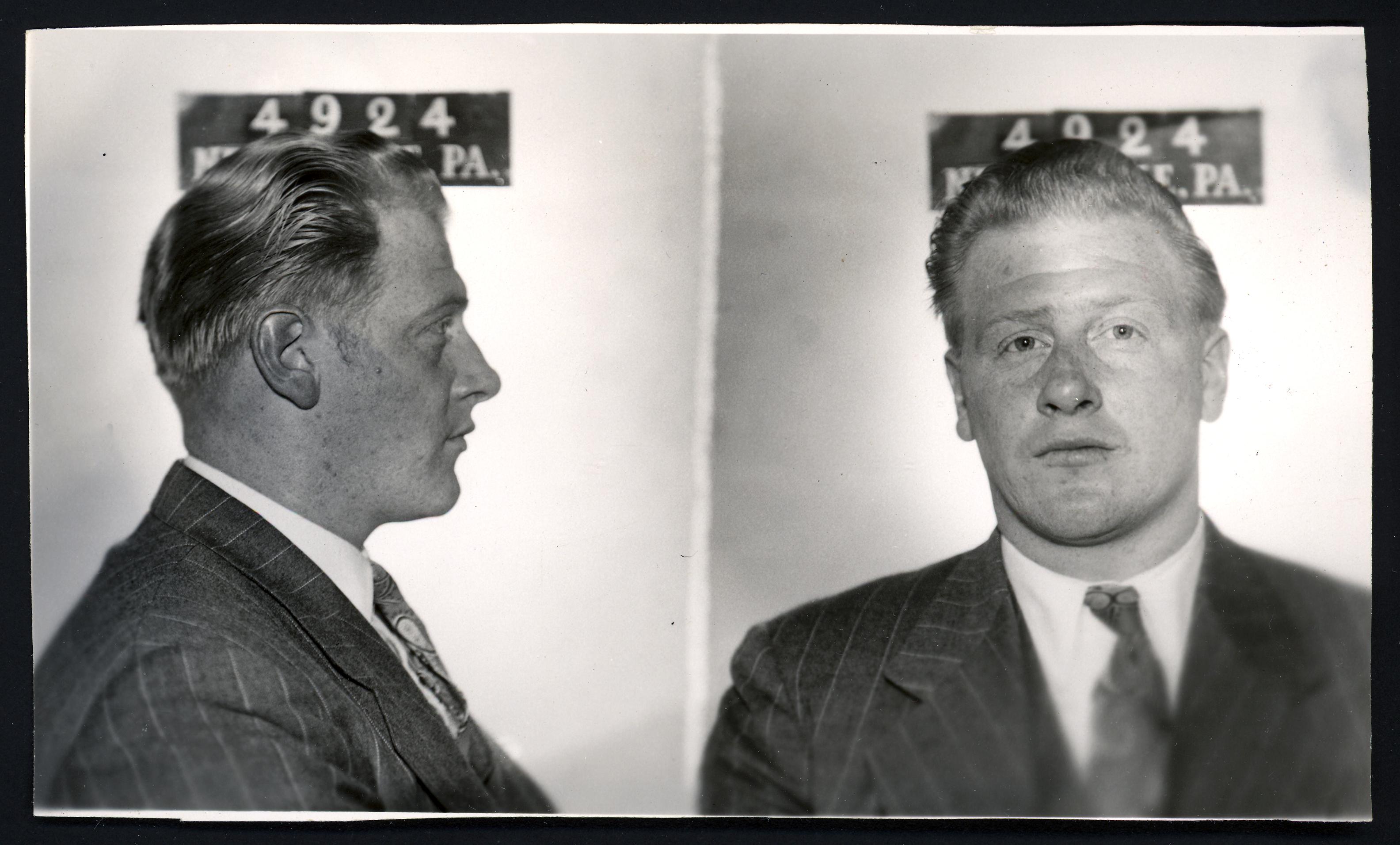
Edwin Duff, “intox driver”, 20 Dec 1942

Leave a comment
Uncategorized

There were heavy snows on the last weekend of 1942, when Edwin Duff crashed his car on East Washington street. The day of the accident, the New Castle News reported that the snow was so deep that squirrels were having difficulty getting to the feeding stations that had been set up for them in the city’s parks. “On Saturday afternoon, Owen Fox, while at Gaston Park, watched the squirrels jump from treetop to treetop en-route to one of the feeding stations. Mr Fox saw one of these nimble animals slip and fall about 25 feet to the ground. It lay buried in the deep snow which being somewhat wet and heavy, bogged the little fellow down so it could not travel. Owen went over and lifted the squirrel a couple of times with his foot, landing it atop the feeding station with a whack. Although ‘fuzzy tail’ was hungry, it turned and faced its assailant and chattered and pumped its tail up and down in an angry mood. Soon it decided to turn in and get a good feed, probably becoming reconciled to the fact that Mr Fox had done it a good turn.”

Even with the snow, there shouldn’t have been any traffic accidents that weekend. Washington had just placed an emergency ban on the sale of gas to motorists in the eastern states as all the supplies from the Atlantic coast gas depots were being sent to the army in North Africa, so traffic on the streets of New Castle was the quietest it had been in decades. No one knew when the ban would be lifted – Roosevelt would say only that he hoped that it would be a temporary measure – so people crowded onto buses or stayed home (resisting even the lure of the Christmas season church services in town, which were poorly attended).

But Edwin Duff, a forty-three year old motor mechanic, had been drinking until after midnight in a downtown bar. He hadn’t liked the idea of walking the thirteen blocks to his home on Beckford street, so he’d decided to drive home, regardless of the snow, the gas ban and the fact he was drunk, but he didn’t even make it as far as Neshannock creek before he ran into a parked car. He wasn’t hurt, but he later received the standard New Castle sentence for being intoxicated whilst in charge of a motor vehicle: $100 and thirty days in the county jail, out in three days if the fine and costs were paid.

A few years later, Edwin moved up to Pulaski, about six miles north of New Castle, where he operated Duff’s garage for fifteen years until he died, in 1963, at the age of sixty-four.

Sources: New Castle News, 21 December 1942 (“Arrested Following Automobile Accident”, “Pa Newc Observes”, “Curtail Gasoline Sales”); 1 March 1943 (“On Court House Hill”); 12 Nov 1963 (“Deaths of the Day”)