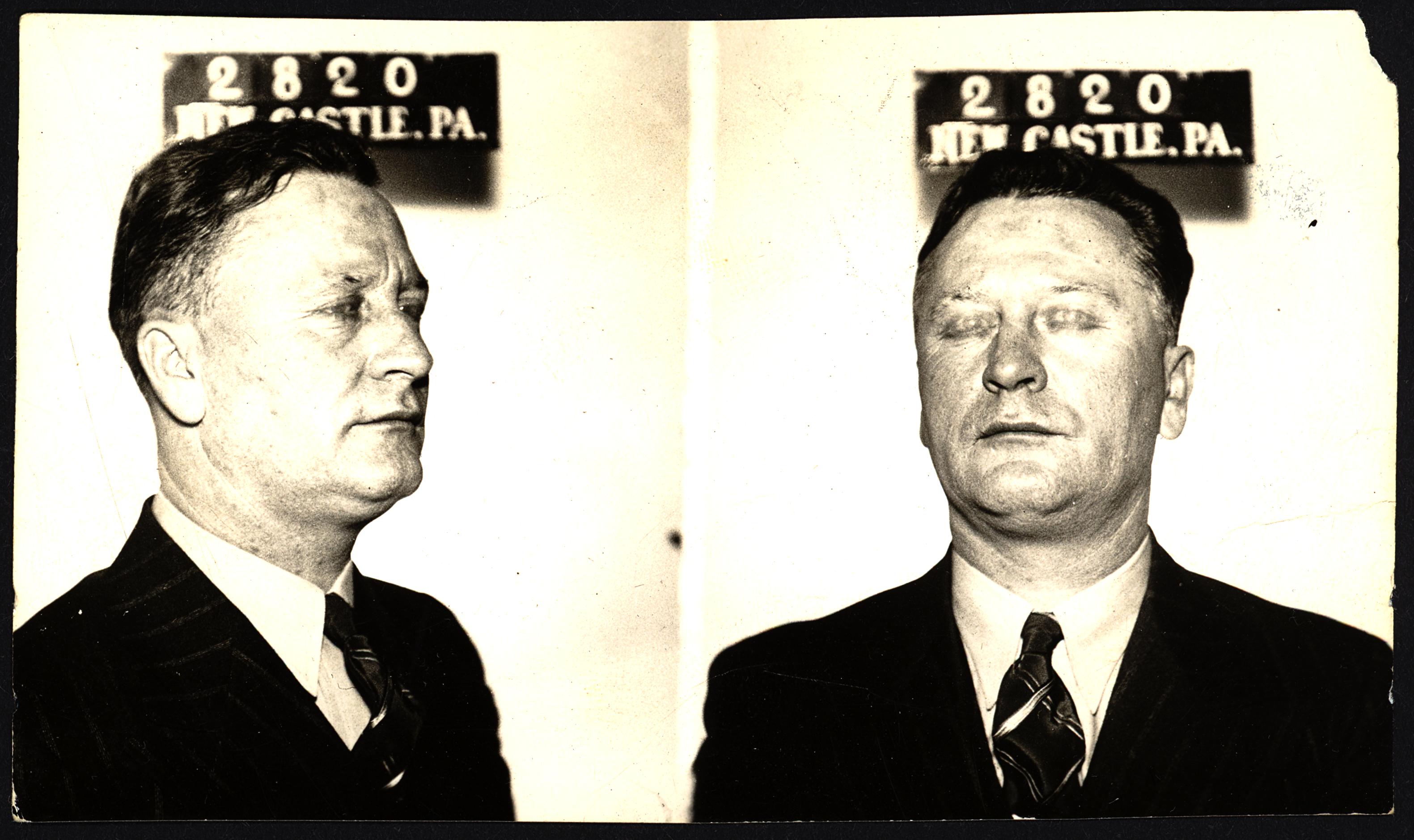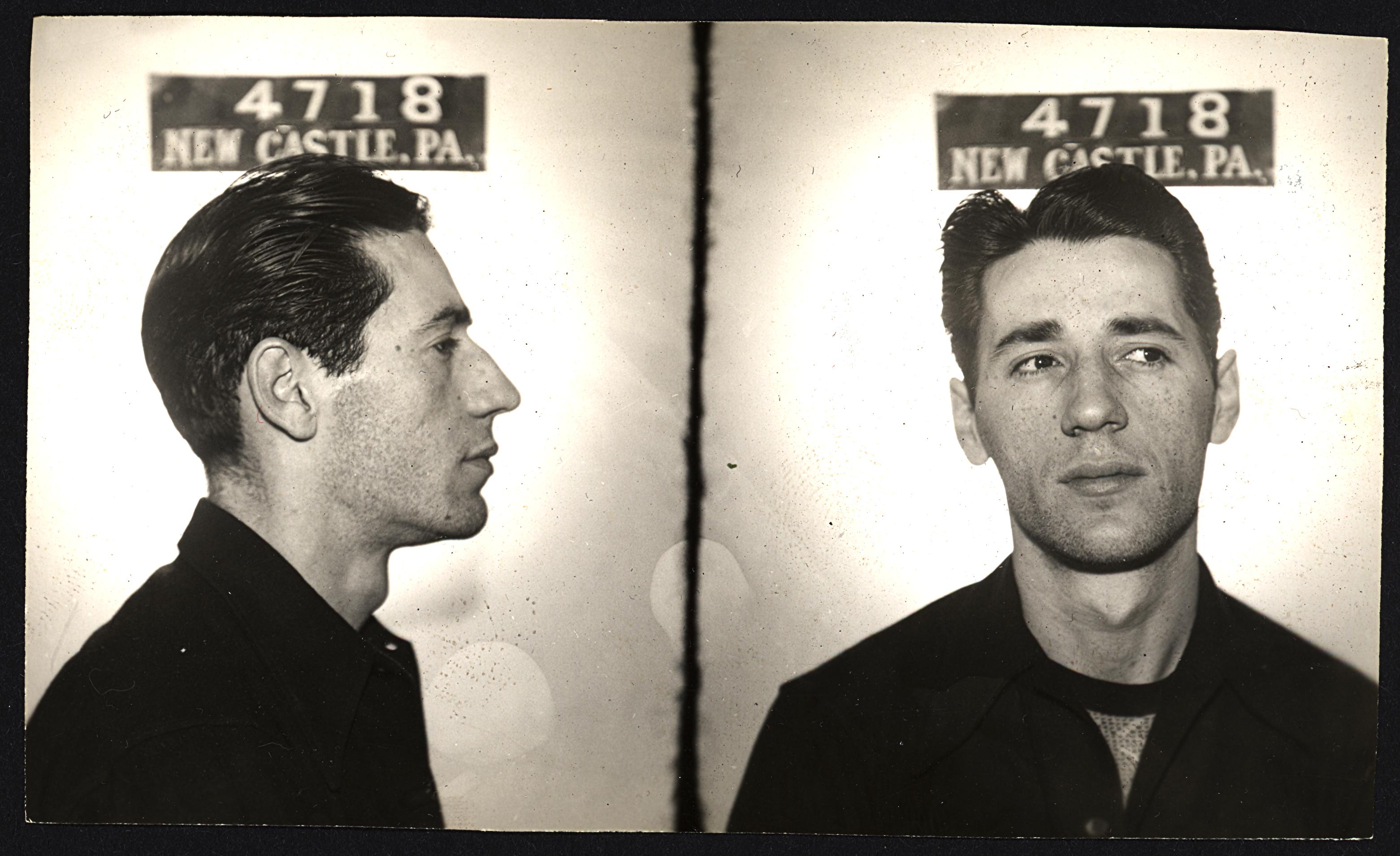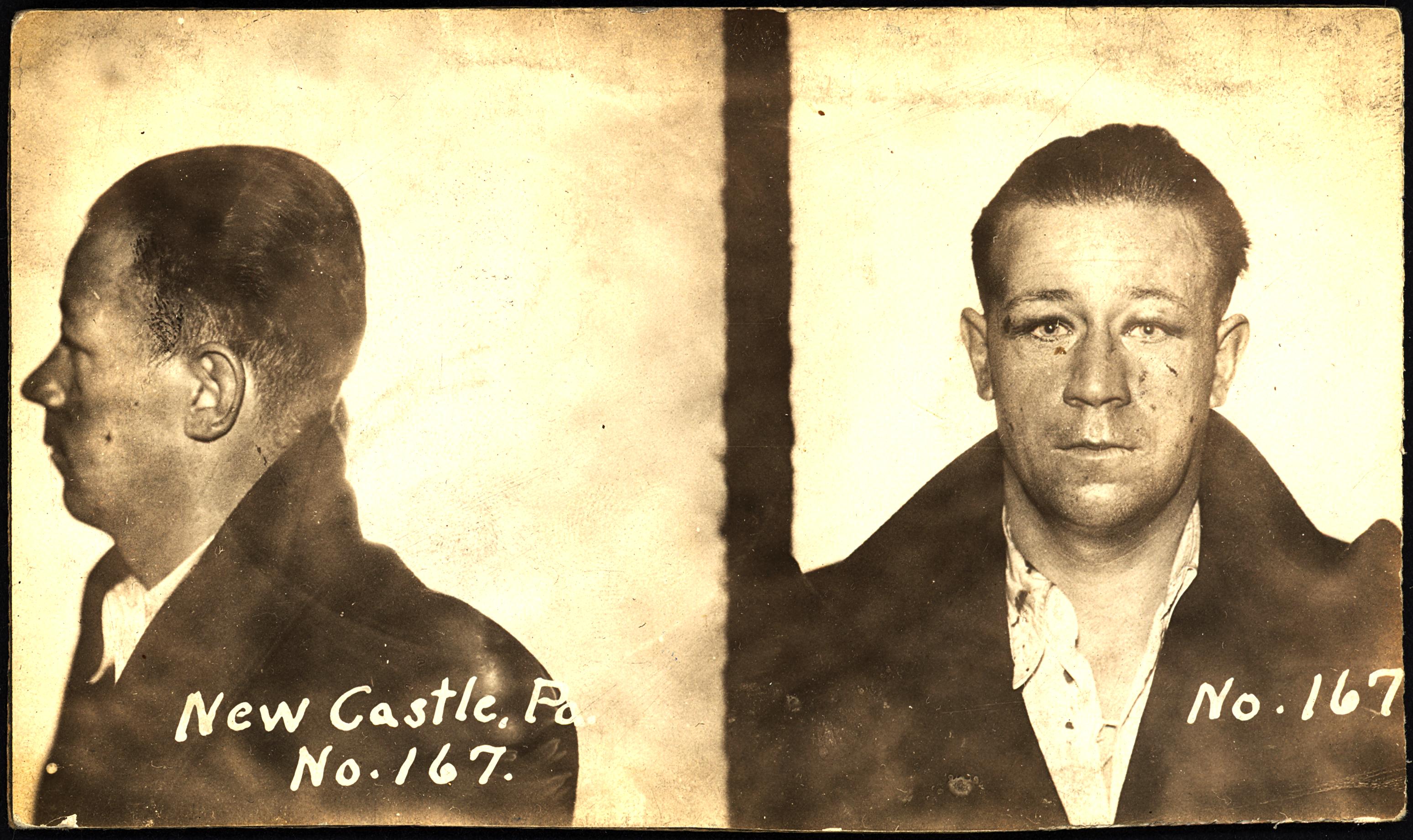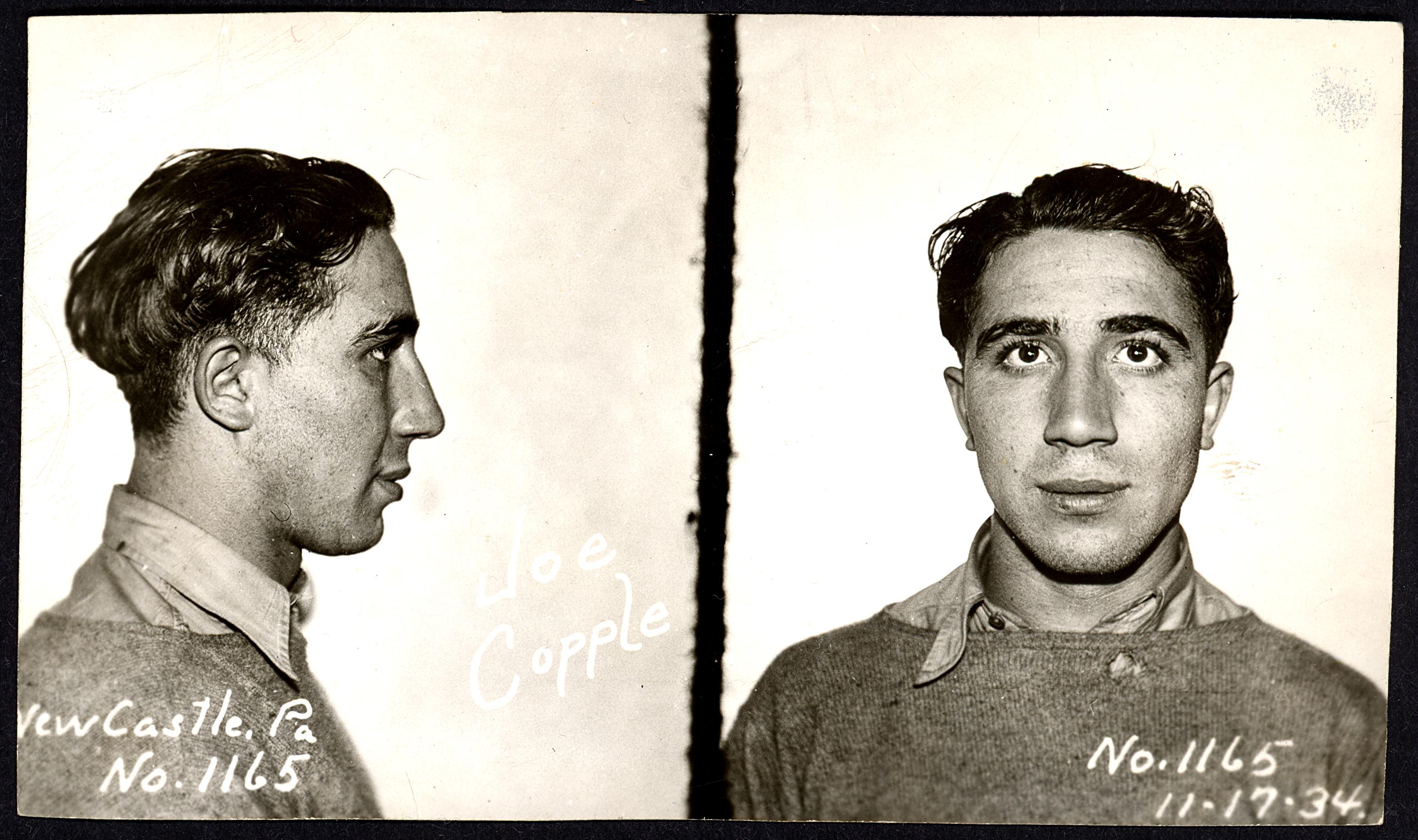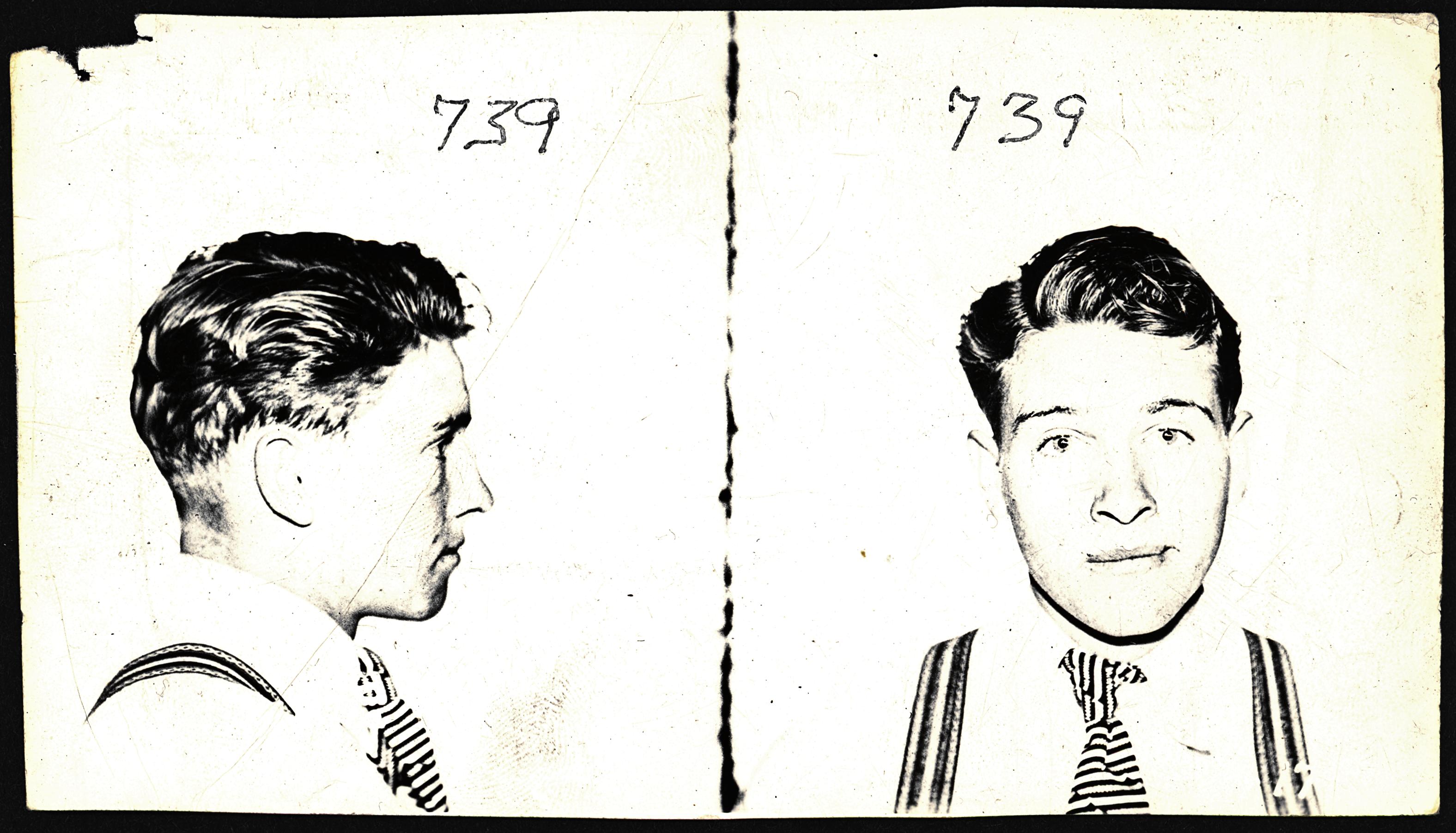
Harold Kelty, “Holdup”, 16 March 1934

comments 2
Uncategorized

Harold Kelty

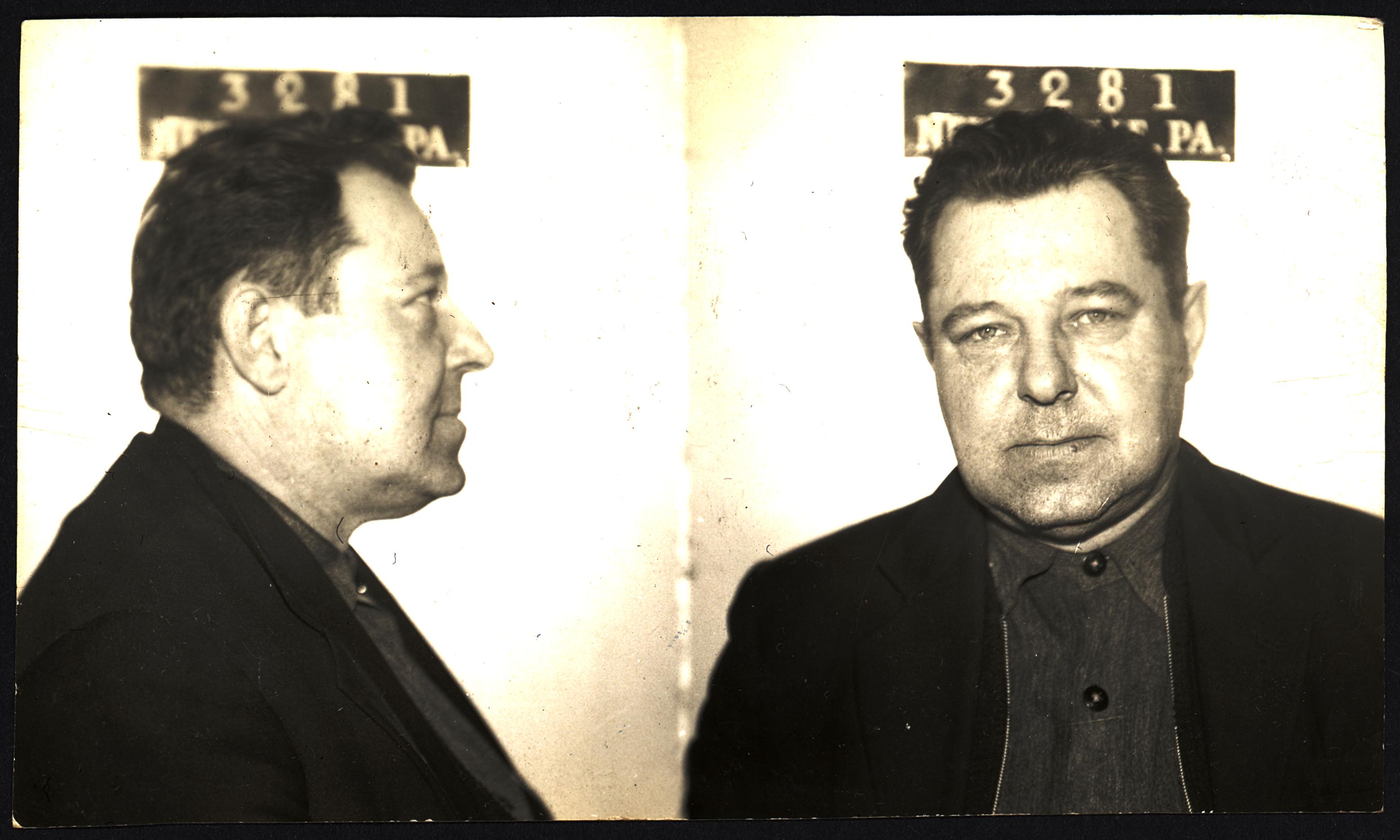
On the back of Harold Kelty’s mug shot, a police officer wrote, “With Bill Harlan and John Hawk, stuck up Hutchinson Gas Station near New Wilmington, Pa.” The ink growing thin, he dipped his fountain pen in the ink pot, and continued a moment later, in darker script: “Age 17 at time. Married Capt Smith’s daughter—Golf Course. Much family trouble.”

Harold’s family trouble began early in his life. His mother and father lived with his paternal grandmother in a big house on Quest street. He was the last child in the family, with three older sisters. His father, a telegraph operator, beat his mother, knocked her down and abused her. When Harold was seven—just before his father secured a patent on an automobile carburetor mechanism designed to inject water, alcohol and heated air into the manifold—his mother left the family and married another man. Harold set fire to the lace curtains in his parents’ bedroom. A few years later, he set fire to the shingles on the side of the house. That same year—the year after one of his older sisters ran away, either to Youngstown, Cleveland or Detroit—Harold and a couple of friends were arrested for throwing stones through the glass front of the new sign in front of the Trinity Episcopal church. They had broken it several times already. A few months later, Harold and some other boys were arrested for robbing lard from a Boyles avenue home and smearing it over someone’s front porch, and for stealing dozens of eggs from the East street market and pelting North street junior high and Campbell’s undertakers.

In the midst of all this, when he was nine, Harold went to admire the Christmas tree that had been placed beside the bench in the police court—the first to be displayed in the city’s police station. He told the officers it was pretty. He liked the lights, which had been rigged so that they would twinkle on and off in a gentle rhythm. He asked to be allowed to leave a note with his name and address under the tree. He said that he hoped Santa Claus or the police department would remember him and that he would return on Christmas morning. There is no record of any such appearance.

At the age of eleven, Harold ran away. His father had to drive to Cleveland, Ohio, to pick him up. That summer, his father worked ceaselessly in his front yard. His neighbors noted that he spent every spare moment keeping his part of Quest street looking like the driveway through some private estate. They told the local paper that he deserved a medal for civic pride, not that New Castle had such a thing.

When he was seventeen—as the inscription on his mug shot notes—Harold and two other boys from the north hill held up a gas station eight miles north of town. They separated and fled the state. Harold was the last to be caught, in March, 1934, when he walked into the sheriff’s office and announced that he had been roaming the country for months since the robbery and wanted to get it over with. While on the run, he had married one of the young daughters of the golf pro at the New Castle field club, Captain V Arthur Smith. Evidently, they had recently separated. (Captain Smith, formerly of a Scottish regiment of the British army, shot himself in the head in a cubicle of the clubhouse toilets a few years later. The burden of wounds received at Gallipoli during the first world war was said to be to blame.)

Harold received no custodial sentence. He went back to school, graduating later than planned. When he was twenty, he married for the second time. He and his wife, Dora Mae, became involved in the Mahoningtown Methodist church, holding regular bible classes for young people in their home. They had no children of their own.

Harold died in 1995, at the age of seventy-seven.

Sources: New Castle News (26 September 1906, “Kelty-Watkins”;28 July 1922, “Two Small Fires Caused Last Night”; 10 May 1926, “Four Divorces Are Handed Down By Judge Hildebrand”; 20 December 1926, “Police Department Has Christmas Tree”; 18 April 1927, “Three Boys Damage Trinity Church Sign”; 12 September 1927, “Shingle Fire ON Sunday Afternoon”; 23 November 1927, “Boys Arrested For Hurling Eggs”; 24 September 1928, “Cleveland Gets Local Runaways”; 16 March 1934, “Youth Surrenders To County Sheriff”; 29 August 1934, “Pa Newc Observes”; 10 July 1937, “Morning Wedding In Third Church”; 11 April 1938, “Wound Fatal To Captain Smith”; 1 June 1939, “Here And There In Sports Land”; 21 September 1967, “Deaths Of The Day”; 28 August 1975, “News Flashback”).
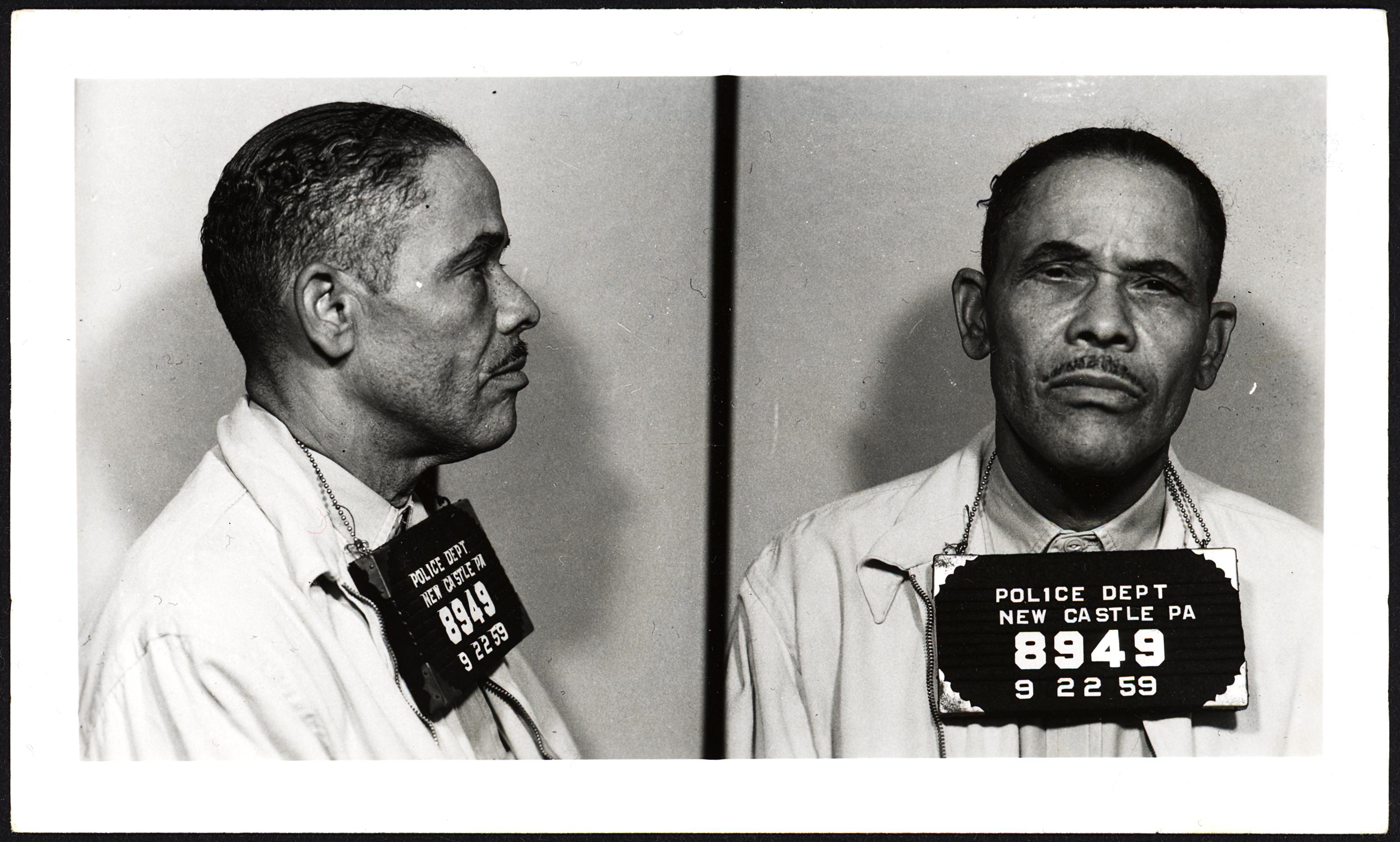
Oakey Jackson, “Larceny by Trick”, 22 September 1959

comments 4
Uncategorized

Oakey Jackson

A sixty-five-year-old woman named Margaret Ashby was standing near the cab stand on Washington street one afternoon when a young woman she had never met before struck up a conversation with her. After they had spoken for a while—the woman was excited about the money she stood to get from a new job in Pittsburgh and Margaret had somehow found herself talking about how much money she had saved up—they noticed a man picking up a wallet from the sidewalk. The man—Oakey Jackson—stopped and showed the wallet to the women. It contained a bundle of large bills, along with bookie slips and gambling receipts. Oakey was well dressed, neat and polite. He spoke eloquently but quickly. Clearly, the wallet belonged to a criminal, so there was no point giving it to the police, as nobody would go to collect it. Oakey said he would give the women $80 each if they told no one that he had found it. First, though, he had to go to a bank to ask his boss’s advice. His boss was fond of him, as he had saved his son from drowning.

While Oakey was gone, the woman kept telling Margaret how lucky they were to have happened to meet the man. When Oakey returned, he said his boss had said they should keep the money and split it three ways, but that he should make sure that the women were reliable, respectable people who would use the money wisely by getting them to put up some money of their own, to show good faith. The young woman said that was fine by her, and handed over $90. Margaret was about to volunteer to get her savings from the bank when Oakey was arrested by a police officer who had been watching the group since Oakey had approached the women.

Oakey turned out to be an infamous underworld figure, known from Ohio to New York as the flim-flam king; the young woman his accomplice. Oakey’s record stretched back to 1921, with arrests every few years since for picking pockets, petty larceny, grand larceny, larceny by trickery, swindling, robbery, carrying a concealed weapon, escaping from prison and driving while under the influence of alcohol. He had spent only five years in jail, paying fines instead of serving time. In 1951, his testimony that he had paid a quarter of his illegal earnings to the police in Cleveland in return for protection sent two officers to jail for six years. He was notorious enough to be summoned to appear before a Senate subcommittee on delinquency to explain how young people get into the flim-flam trade, and he was successful enough to be able to buy a twenty-room hotel in Cleveland, in which, people said, he ran a school for confidence men.

The New Castle police let him go. He had been arrested before a crime had been committed.

The following year, the police in Boonville, Missouri, filed charges against him for swindling $3,050 from a plumber. He was not apprehended. There is no further record of Oakey’s criminal activities. In 1965, at the age of sixty-one, he appeared in the news for the last time when he was abducted at knifepoint and forced to drive to a deserted parking lot where his hands were tied behind his back with his necktie and he was robbed of $281.

Oakey died in Cleveland in 1977, at the age of seventy-three.

Sources: New Castle News ( 23 September 1959, “2 From Cleveland Face Charges Here”; 26 September 1974, “Death Record”); Baltimore African-American (1 December 1951, “Swindlers Talk; Tell Of Bribing Cops To Operate”; 24 November 1956, “”Oakey Jackson Arrested Again”; 18 December 1956, “Oakie Jackson, Who Blew Whistle On Local Cops, On Trial In PA”; 25 November 1964, “How ‘White Collar’ Criminals Operate Here”); Cleveland Plain Dealer (27 September 1965, “Man Abducted At Knifepoint, Robbed of $281”; 13 April 1977, “Death Notices”); “Juvenile delinquency: exploitation of minors in interstate confidence racket. Hearings before the Subcommittee to Investigate Juvenile Delinquency of the Committee on the Judiciary, United States Senate, Eighty-fourth Congress, second session. December 11, 12, and 17, 1956”.

Robert Grim, “Worthless Check”, 26 February 1940

comments 4
Uncategorized

Robert Grim

Volant, about ten miles up the Neshannock creek from New Castle, was a little market town that had grown up around an old grist mill. Robert Grim’s family had owned land there since before the civil war and was among the most respected in the borough. By the time he was twenty-five, with a wife and three children, Robert was the town tax collector, local auditor and high constable, and served as the catcher on Volant’s baseball team.

Robert and his wife divorced a few years later. He remarried, but the year his youngest child—his son, Francis—turned eighteen, his second wife began divorce proceedings on the grounds of cruel and barbarous treatment, indignities to her person and desertion.

When Robert was forty, he performed an abortion on Martha Thompson, the twenty-one-year-old daughter of a family friend. She died. Robert was arrested the day after her funeral and given three to six years in the Western penitentiary. He declined the opportunity to make a statement to the court.

Robert served his minimum sentence and returned to Volant. He was appointed a justice of the peace the following year. He spent all his money building an electric chicken-brooding facility, which enabled him to produce full-grown broilers in half the usual time. It was the first battery farm in Lawrence County and attracted large crowds the year it started up.

A few years later, Robert was broke. He was arrested in 1940 for passing a check while knowingly being without the funds to support it, following which he resigned from his post of justice of the peace. His finances had not improved by 1942, when he was arrested for forging a check.

Robert passed the rest of his life as a house painter in Volant. He died of a heart attack in 1953, at the age of sixty-one.

Sources: New Castle News: (15 June 1898, “Mrs Adam Grim”; 8 June 1915, “Grim Resigns One Of His Offices”; 1 September 1915, “Prohibs Left Free To Vote On Judgeship”; 27 July 1921, “Lawrence County Championship Is Sought By Clays” 7 September 1921, “Volant”; 6 November 1928, “Legal Notices”; 8 February 1932, “Deaths Of The Day”; 12 February 1932, “Alderman Remands Volant Man To Jail”; 31 March 1932, “Grim Sentenced To Penitentiary”; 19 May 1933, “Volant”; 15 January 1936, “On Court House Hill”; 29 July 1936, “Speeds Up Growth Of Young Chickens”; 29 July 1940, “On Court House Hill”; 17 December 1942, “Around City Hall”; 11 April 1953, “Deaths Of The Day”).

Francis Grim, “Burglary”, 24 August 1940

comments 7
Uncategorized

Francis Grim

No record remains of the incident of burglary for which Francis Grim was arrested in 1940—six months after the arrest of his father, Robert, for passing a worthless check—or of the circumstances around his 1937 conviction for adultery, fornication and bastardy, other than the fact that he was ordered to pay the mother of his illegitimate child $2 a week for the care of the baby. He died in 1990, at the age of seventy-eight.

Sources: New Castle News (8 Dec 1937,”True Bills Found Against Defendants”; 29 Dec 1937, “Prisoners Are Before Court”).

Small Town Technicolor

comments 5
Uncategorized

There has been a huge decline in the artistic quality of mug shots over the past hundred years, from the beautiful studio portraits that can be seen in the collection of Arne Svenson, for example, to the flat, poorly lit snapshots you can find on sites like The Smoking Gun.

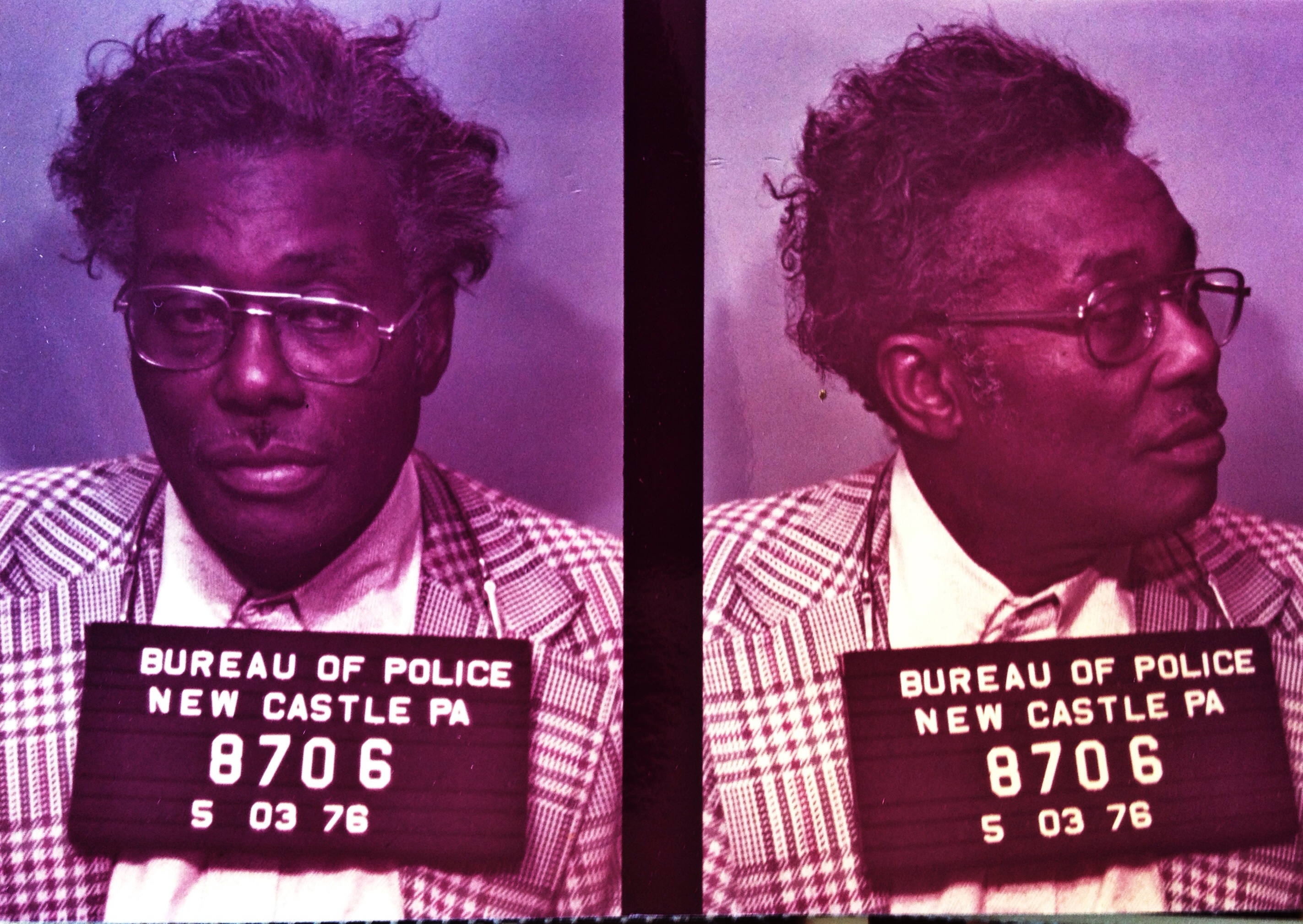
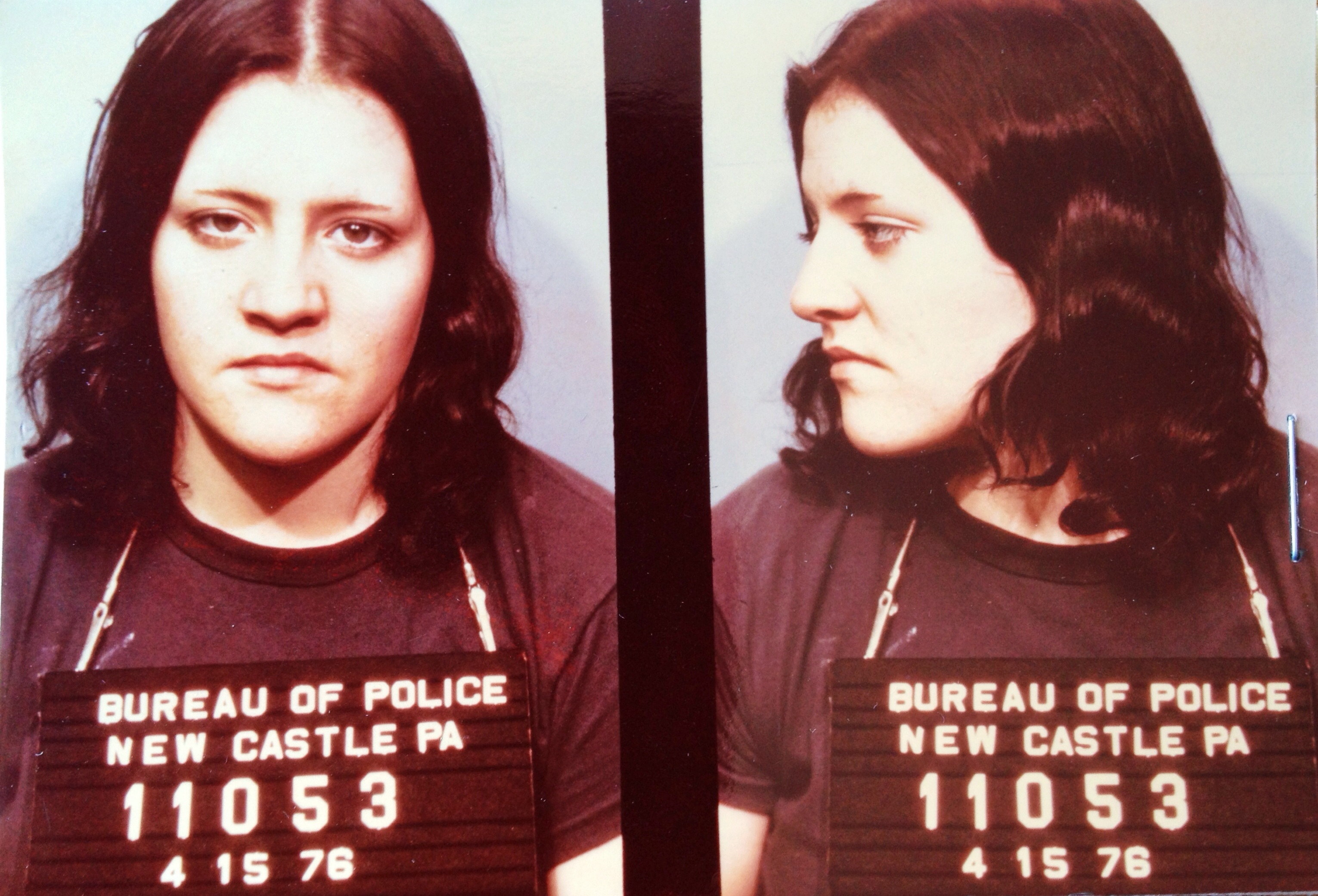
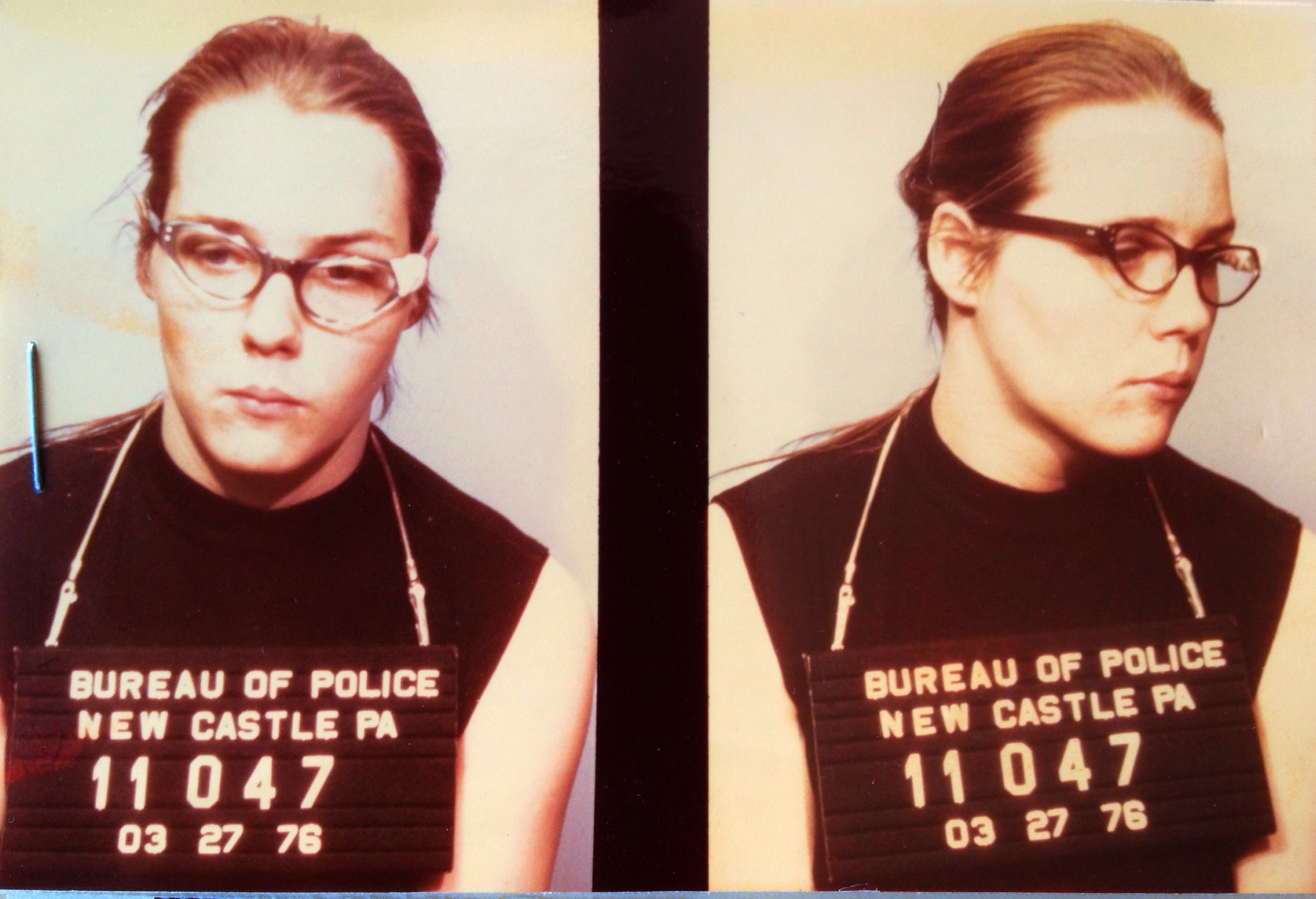
The four pictures below, taken just after the New Castle police department switched to color film, represent a mid-point in the decline of the art form. They’re outside the chronological scope of the Small Town Noir project but I thought I’d post them anyway, as they’re the only color mug shots from New Castle that I’ve ever found.

Both men are dead, so I’ve used their full names. The women may well still be alive, so I’ve withheld their last names. Unhappy souls, all of them.

Benjamin McClinton, “Drunk”, 5 July 1978

Image

In 1962, when he was nineteen, Benjamin pleaded guilty to the statutory rape of a fourteen-year-old mother of two. The girl said Benjamin was the father of her second child. Her first had been born when she was thirteen.

The following year, Benjamin was charged with the burglary of Welch’s business school. He was arrested several times throughout the sixties for driving without a license and drunk driving. In 1967, he was charged with the armed robbery of a liquor store in Farrell.

In the seventies, Benjamin was involved in a long-running feud between his family and the family of James Lane, which featured multiple disturbances of the peace and fights involving machetes, butcher knives, blackjacks and, on one occasion, a 28-inch sword.

He stole a wallet from an 81-year-old man in 1977; got picked up for being drunk in 1978; and died in May, 1979, at the age of thirty-five.

Isaac Washington, “Shooting”, 3 May 1976

Image

Other than brief reports of his involvement in a knife fight in Ellwood City in 1962 and various arrests for driving without a license, there is only one mention of Isaac in the New Castle News, in a story published the day after his mug shot was taken.

“Police arrested Isaac Washington, 53, of 224 Mahoning Avenue late yesterday afternoon in connection with a shooting incident at the home of a girlfriend. Washington was held on charges of aggravated assault and recklessly endangering the life of another … He drew a handgun at the home of Robin Wise on Sciota street and shot at both her and her mother, injuring the older woman in the thigh.”

Isaac died in July, 1995, at the age of seventy-nine.

Pamela XXXX, “Recklessly Endangering Another Person and Unlawful Restraint”, 15 April 1976

Image

Pamela lived with her boyfriend, Sam Copple, in an apartment on Shaw street. She was 18; he was 29. In April, 1976, they drove to Sharpsville and abducted Sam’s estranged wife, Nellie, at gunpoint, and brought her back to New Castle. Someone alerted the police, who followed their car through the city streets for part of the afternoon before managing to make it pull over. Pamela and Sam were arrested and waived bond. There is no further record of the case or of Pamela.

Carol Mae XXXX, “Aggravated Assault”, 14 April 1976

Image

Carol Mae and her two youngest children—her oldest, a four-year-old boy, was in foster care—lived in a squalid, unsafe and unsanitary house on Court street, which they shared with a couple and their six children. She was arrested when she went to the St Frances hospital with her unconscious two-year-old son, David, who was covered in black and blue marks and had a laceration on his forehead. Some injuries were recent, some old. Carol Mae said the injuries were due to a fight between David and his older brother and an accident when he fell against a television. She also said that David would black out from time to time and that she would throw cold water on him to revive him. That was why he was cold and unconscious.

She was charged with aggravated assault and jailed for one to two years.

Two other child abuse cases were dealt with by the court that month: one involving an eleven-year-old boy struck on the head with a hammer by his father; and another involving a three-year-old boy beaten to death by his mother’s insane boyfriend.

There is no further record of Carol Mae.

Sources:
Benjamin McClinton: 21 September 1962, “Youth Pleads Guilty To Morals Charges”; 11 March 1963, “County Court Trials Open”; 1 June 1967, “Two More Suspects Linked With Robbery In Farrell”; 1 March 1969, “Jury Suggests Study On New Courthouse”; 12 July 1972, “Disturbance On West Side Blamed On Two-Family Feud”; 1 August 1977, “Two Arrested For Theft”.

Isaac Washington:20 April 1962, “Two Plead Innocent To Police Charges”; 3 May 1976, “County Report”.

Pamela XXXX: 16 April 1976, “Couple In Jail”.

Carol Mae XXXX: 14 April 1976, “Possible Abuse Case Will Be Considered”; 15 April 1976, “City Woman Faces Child Abuse Count”; 29 April 1976, “Man Faces Child Abuse Charges”; 22 June 1976, “Child Abuse Hearing Held”; 27 July 1976, “Woman To Be Jailed In Beating Case”.

Jimmy Pasta, “Gambling”, 14 March 1940

comments 11
Uncategorized

Jimmy Pasta

Jimmy Pasta made his money running illegal numbers games. He called himself a bill collector. He was arrested from time to time on gambling-related charges, staying out of jail by paying hundreds of dollars in fines. Just after three o’clock on the nineteenth of September, 1940, he was sitting in his car in Ellwood City when he saw the chief of police, Ernest Hartman, stop a car on the bridge over the Connoquenessing creek and open fire with his Tommy-gun when three men got out holding revolvers. One of the men fell to the ground and was dragged back into the car by the other two. They drove off while Hartman was re-loading his gun.

An off-duty police officer, Ed Shaffer, got into Jimmy’s car and told him to follow the men. He did what he was told.

Earlier that month, three ex-convicts who had met in Rockview penitentiary—Virgil Evarts, Albert Feelo and Kenneth Palmer—broke into Rohrer’s gun store in New Castle and stole twenty revolvers, five rifles and dozens of boxes of ammunition. They had already robbed an insurance office in Farrel of $400, and planned to use the guns in a series of heists in small banks across western Pennsylvania.

On the day Jimmy saw them, they had held up a bank in Harrisville, twenty miles east of New Castle, making off with around $2,300. Police in the surrounding towns had been told to look out for their car, a black 1939 Buick club coupe. They had driven south through Ellwood City, where the chief of police had been waiting with his Tommy-gun. All three were wounded by Hartman. Evarts was the least badly hurt, with just two bullets in his chest. Palmer was wounded in both legs. Feelo’s spine was shattered and his lungs were punctured. His legs were torn up.

Fifteen miles out of town, their car ran off the road. Evarts stopped a passing car and forced the driver and his passenger out. Feelo and Palmer were being moved into the new car when Jimmy and Shaffer, both unarmed, drew up. Evarts ordered them at gunpoint to help them carry the wounded men.

Later that day, Jimmy told a reporter what happened next. “They said all seven of us couldn’t ride in that old car. I’ve read enough gangster stories to be plenty scared by that.” He saw Evarts put the rifle on Palmer’s lap and walk around to the driver’s side. “The car was between us and I figured it was now or never. I grabbed the gun from Palmer and pointed it at Evarts. He made a move like he was going for a gun and I fired through the window at him. He fell over the hill. Then I climbed down the hill where Evarts was moving, trying to get up. I hit him over the head with the gun and he passed out.”

He returned to the road to find that Shaffer had found a wrench and had beaten Palmer over the head until he was unconscious. The chief of police arrived in time to disarm Feelo, who was weakly trying to raise a revolver to shoot.

Evarts died when Jimmy hit him. His skull caved in. Feelo died in the hospital a day later. Palmer was sent back to Rockview penitentiary.

Jimmy was given a plaque and a gold Gruen wristwatch, which never ran. He took it to the jewelers to be repaired, but they said there was nothing wrong with it. He kept the plaque, but got rid of the watch.

Jimmy eventually quit running numbers. He became a sales manager for a furniture store and was elected head of Ellwood City’s Sons of Italy lodge, a post he held for most of the sixties. He died in 1991, at the age of seventy-five.

Sources: New Castle News (17 August 1933, “Virigela To Box New Kensington Boy”; 8 October 1938, “Sentences Passed At Court Session”; 15 march 1940, “’Numbers’ Cause Arrest Of Two”; 1 April 1940, “On Court House Hill”; 16 September 1942, “Police Hunt Bandit Pair In Downtown Holdup”; 20 September 1942, “Second Bank Bandit Dies”; 22 September 1942, “Palmer Under Special Guard”; 24 August 1955, “Area Optimists Will Meet Here”; 21 March 1961, “Pasta heads SOI”; 25 February 1963, “James Pasta SOI Venerable”).

Sylvester Newton, “Malicious Mischief”, 9 July 1938

comments 4
Uncategorized

Sylvester Newton

Sylvester Newton’s family farmed land by the Shenango for a century until it was sold for industrial development. Sylvester’s father went to work in the new tinplate mill. He stayed there almost forty years, until the depression shut it down.

Sylvester worked in the tinplate mill, too, except when he was sent to Europe in the first world war. He divorced his first wife on the grounds of cruel and barbarous treatment. The following year, he married someone else. They had a son; Sylvester’s only child.

In 1938, when he was forty-three, Sylvester was arrested for malicious mischief and eventually sentenced to three to six years in the Western penitentiary for statutory rape. It was an unusually long sentence for the crime, but no newspaper reported the details of the trial. He received a pardon after two years.

Sylvester’s second wife divorced him in 1947 and his son died ten years later, crushed to death in a press machine that started up when he was making adjustments inside it.

In the early hours of a November morning in 1970, Sylvester parked his truck on the side of the highway that passes through South Beaver township and had just started to cross the road when he was hit by a car driven by a teenage girl and killed instantly. He was seventy-five years old.

Sources: New Castle News (2 November 1918 , “Twenty Men Are Called”; 28 July 1922, “Large Number Of Local Persons On Same Job Over 20 Years”; 20 October 1924, “Divorce Is Granted To Sylvester Newton”; 22 March 1932, “Deaths Of The Day”; 27 May 1939, “Sentences Passed In County Court”; 24 July 1941, “Paroles Granted Four Lawrence County Youths”; 17 November 1947, “Divorce Notice”; 30 April 1957 , “Mesta Worker Dies Instantly In Accident”; 23 November 1970, “Ex-Local Man Killed by Auto”).

Angelo Pegnato, “Burglary”, 24 March 1947

comments 2
Uncategorized

Angelo Pegnato

Angelo Pegnato was one of a gang of safe-crackers and burglars—most of whom, like Angelo’s brother, Frank, had fought in the war—who were arrested in March, 1947, after stealing thousands of dollars from businesses in town.

They took almost $4,000 from the Strouss-Hirshberg department store, and $3,360 in cash and $6,250 in war bonds from the Rick’s Motor Car office. Smaller sums were taken from Lebo’s clothing store, the Lincoln-Garfield school, the Lawrence laundry, Exide Battery and Star Lumber. They broke into safes in Fisher’s furniture store and Marchaletta’s hardware store, but found no money.

One of the gang, Sammy Sams, implicated an apparently innocent man—Leonard D’Antonio—in the crimes, which led to a lengthy series of court appearances and legal complications. Angelo avoided all that by pleading guilty at once. He got a year in jail.

Six years later, he was charged with unlawful participation in a riot and aggravated assault and battery after he and five companions beat a police officer at a roadside café. (The fight had come to an end when the officer shot one of the men in the foot, amputating a toe.)

There is no further record of Angelo’s life. He died, at the age of sixty-three, in 1983.

Sources: New Castle News (7 June 1947, “Enter Pleas In Safe Cracking”; 22 September 1953, “Bartoshek Waives Case Into Court”; 23 September 1953, “Indictments Are Returned”).

Eugene Sullivan, “Murder”, 24 July 1930

comments 8
Uncategorized

Eugene Sullivan

The Commodore Grill on East Washington street stayed open all night serving food and alcohol to shift workers at the mills. After prohibition, it switched to coffee but those who wanted a real drink could still get one as long as they spoke to Elmo Clarke, who boarded in the rooms above the restaurant.

On 24 July 1930, Eugene Sullivan entered, shouting loudly that he wanted a pencil to write a check. It was 2.30 in the morning. There were four customers in the bar. Eugene had been thrown out of the Commodore a few times for fighting, and had been sent to jail twice in the previous year: once for brawling in the hot-dog place down the block; and once for stealing chickens.

He went upstairs to the toilet, which was where customers went to buy liquor. Elmo Clarke, sitting at a table with a couple of men from the travelling carnival, saw Eugene go upstairs but didn’t follow him. He and Eugene had had a falling out over money.

Eugene waited in the toilet for twenty minutes, then came downstairs. He cursed at the carnival men and tried to pick a fight with another customer.

Abraham Nader, the owner of the bar, took Eugene by the arm and said, “You can’t start trouble in my place.” He led him to the door.

When they stepped outside, Eugene punched Abraham in the mouth. Abraham grabbed the window frame to steady himself and Eugene punched him again. His head hit the brick wall and he fell across the doorway of the pet shop next door, cracking his skull on the sidewalk. He would die in the hospital a few hours later. He had left his home in Mount Lebanon, Syria, when he was a young man and had run the Commodore for twenty years. He was fifty-one years old.

Eugene ran off towards the YMCA. Johnny Nader, Abraham’s son, caught him and knocked him to the ground. He took hold of his throat and punched him in the face until Elmo Clarke pulled him off.

Eugene was charged with murder. It turned out that, for over a month, a warrant had been out for his arrest in connection with the rape of an underage girl in Neshannock township, resulting in pregnancy, but the constables in New Castle had made no great effort to serve the papers. The parents of the girl told the police that, if Eugene had been arrested on that charge, Abraham Nader would not have been killed.

Eugene was indicted for murder and found guilty of manslaughter. He served two years. Three months after his release, he and another man were arrested following some trouble in the old Post Office building on South Mercer street. They were charged with being drunk and suspicious.

There is no further record of Eugene’s life. He died at the age of seventy-five, in 1979.

Sources: New Castle News (24 July 1930, “Fight In Lunch Room Early Today Ends In Death Of A J Nader”; 25 July 1930, “Says Constables Derelict To Duty In Sullivan Case”; 28 July 1930, “Coroner’s Jury Finds Sullivan Cause Of Death”; 24 September 1930, “Sullivan Is Found Guilty”; 11 January 1933, “Two Men Arrested Following Trouble”).

Joseph Copple, “Armed Robbery”, 15 November 1946

comments 3
Uncategorized

Joseph Copple

Joseph Copple left school just as the depression hit New Castle. In 1934, after years without a job, he was arrested for stealing and stripping automobiles and spent a short time in jail. In 1942, when the war reopened some of the factories, he got work in Johnson Bronze. Later that year, he was sentenced to three months for failure to support his wife. As he was led from the courtroom, he looked back and said, “Someone will pay for this.” The judge had him brought back in and added three months to the sentence. When he got out, he was drafted. He spent the next three years in the army.

A few months after he came home from the war, Joseph was picked up for the armed robbery of the R M Barnes clothing store on Liberty street. The day before, two men had entered the store and asked to look at some socks. When Barnes turned to get them down from the shelf, one of the men pressed a pistol into his back and said, “This is a stick-up.” They forced him into his office at the rear of the store and held him at gun point while they rifled his cash drawer and pockets. They left with $862, driving off in a dark sedan.

Barnes said Joseph had been the man with the gun. Joseph said he had nothing to do with it. He spent a month in jail before his trial. The jury spent two days trying to reach a verdict before finding him innocent.

Two years later, Joseph was arrested for robbery, assault and battery and receiving stolen goods. Wilbert German, a former soldier who worked in Youngstown Sheet and Tube, had been out drinking and had accepted the offer of a ride home from a man named Gerald Hanna. On the outskirts of town, Hanna stopped the car and a man who had been hiding in the back seat—identified in court as Joseph—attacked German and took his wallet, which contained his weekly pay.

At the trial, the DA told the jury that Joseph was a criminal type who had never been able to hold a steady job because he was simply too lazy to work. Joseph lost his head. The sheriff took him back to his cell. Joseph told the sheriff that the DA had made him mad when he called him lazy. He wasn’t lazy. He had robbed Wilbert German. That proved that the DA was wrong, as no one who was as lazy as the DA said he was would have gone through with the job.

The sheriff took the confession to the DA. Joseph was sentenced to two to four years in the Alleghenny workhouse.

After his release, Joseph moved to Weirton, West Virginia. He died there in 1984, at the age of sixty-nine.

Sources: New Castle News (3 March 1926, “Missing Boy Found”; 3 August 1934, “Sixty Eight Go To CCC Camp”; 19 November 1934, “Arrest Two More In Car Vandalism”; 20 November 1934, “Not This Copple”; 29 October 1937, “Accept 63 for CCC Service”; 10 October 1942, “Sentence Court”; 6 July 1943, “More City Men Enter Service”; 25 September 1943, “Information Please”; 18 November 1946, “Charge Is Made Against Man In Daylight Holdup”; 19 November 1946, “Copple Pleads Innocent Today”; 25 November 1946, “Copple Ordered Held For Court”; 11 December 1946, “Copple On Trial In Robbery Case”; 12 December 1946, “Copple Case Is Now With Jury”; 13 December 1946, “Joseph Copple Freed By Jury”; 26 February 1948, “Charge Pair Robbed Man In Auto; Then Dumped Him Out”; 13 March 1948, “Copple Admits Jury Was Right”; 16 March 1948, “Court Adds Time To Sam Sentence”).