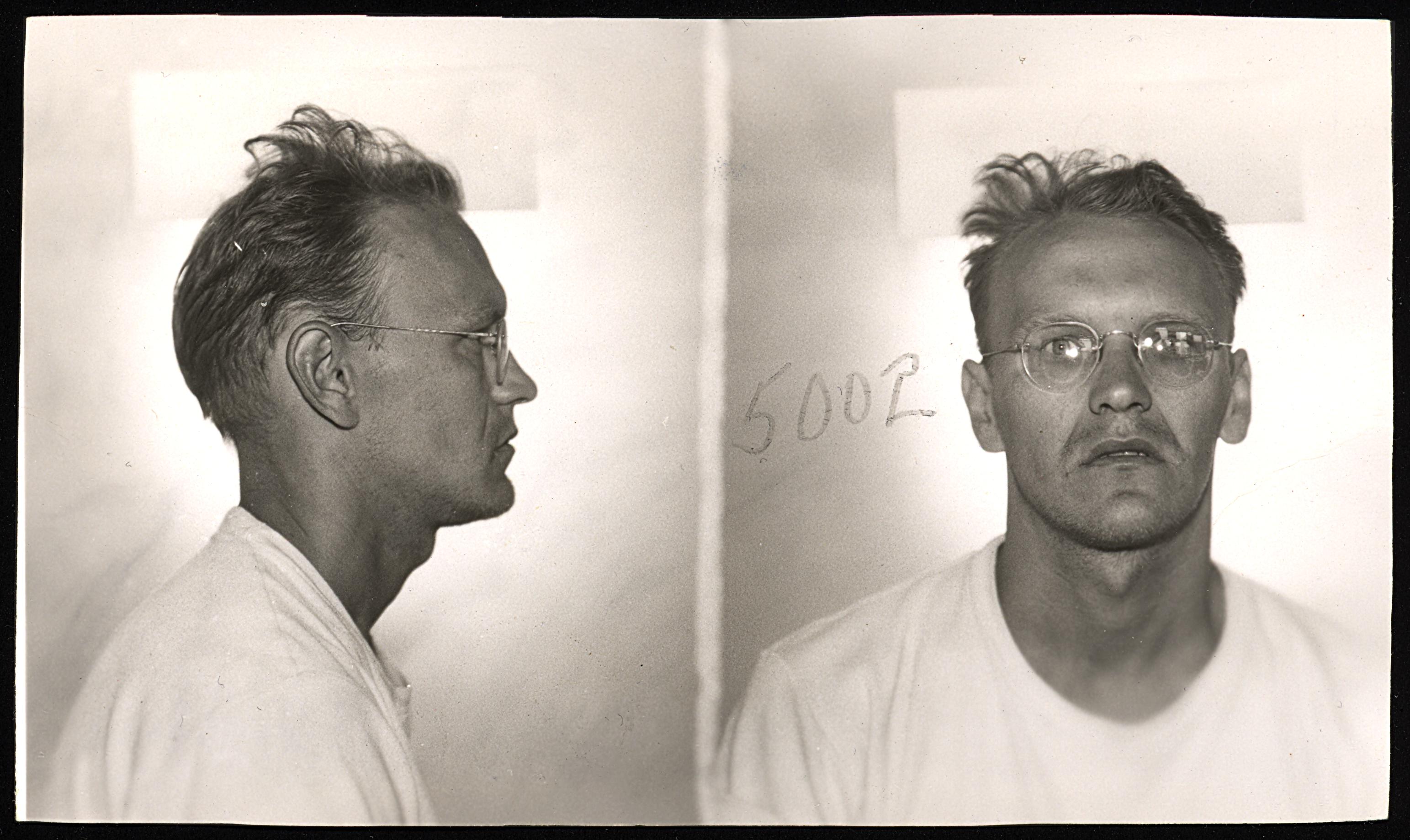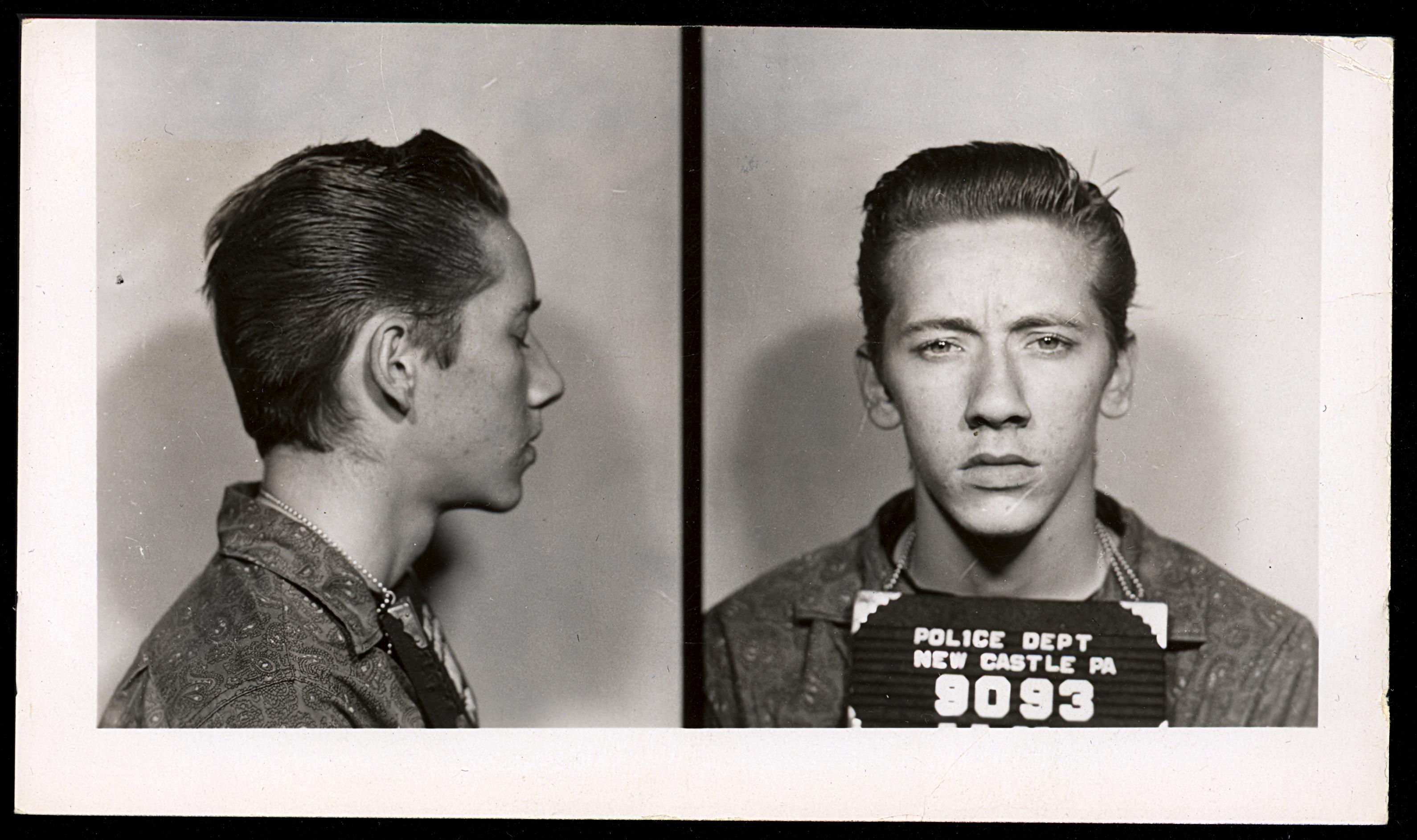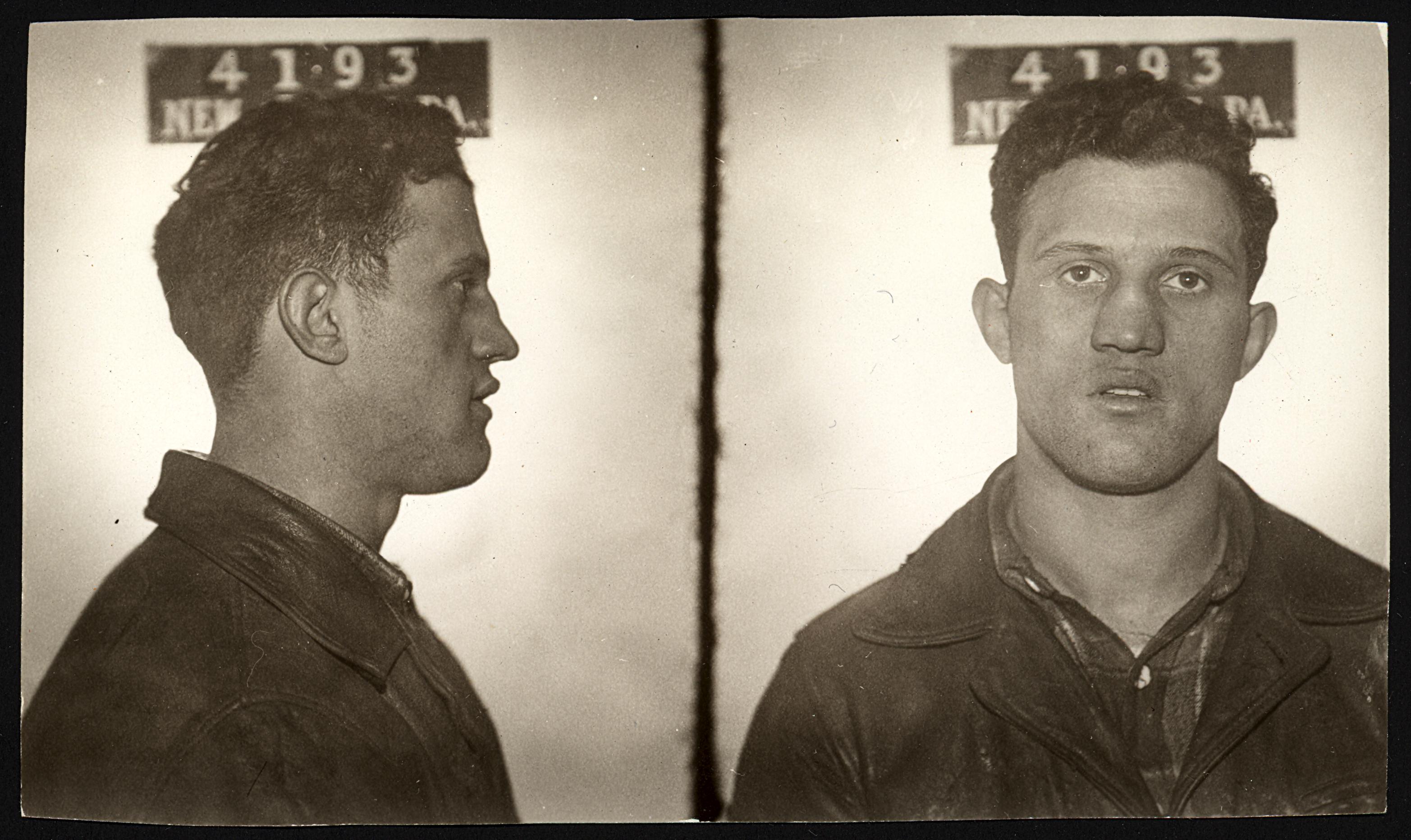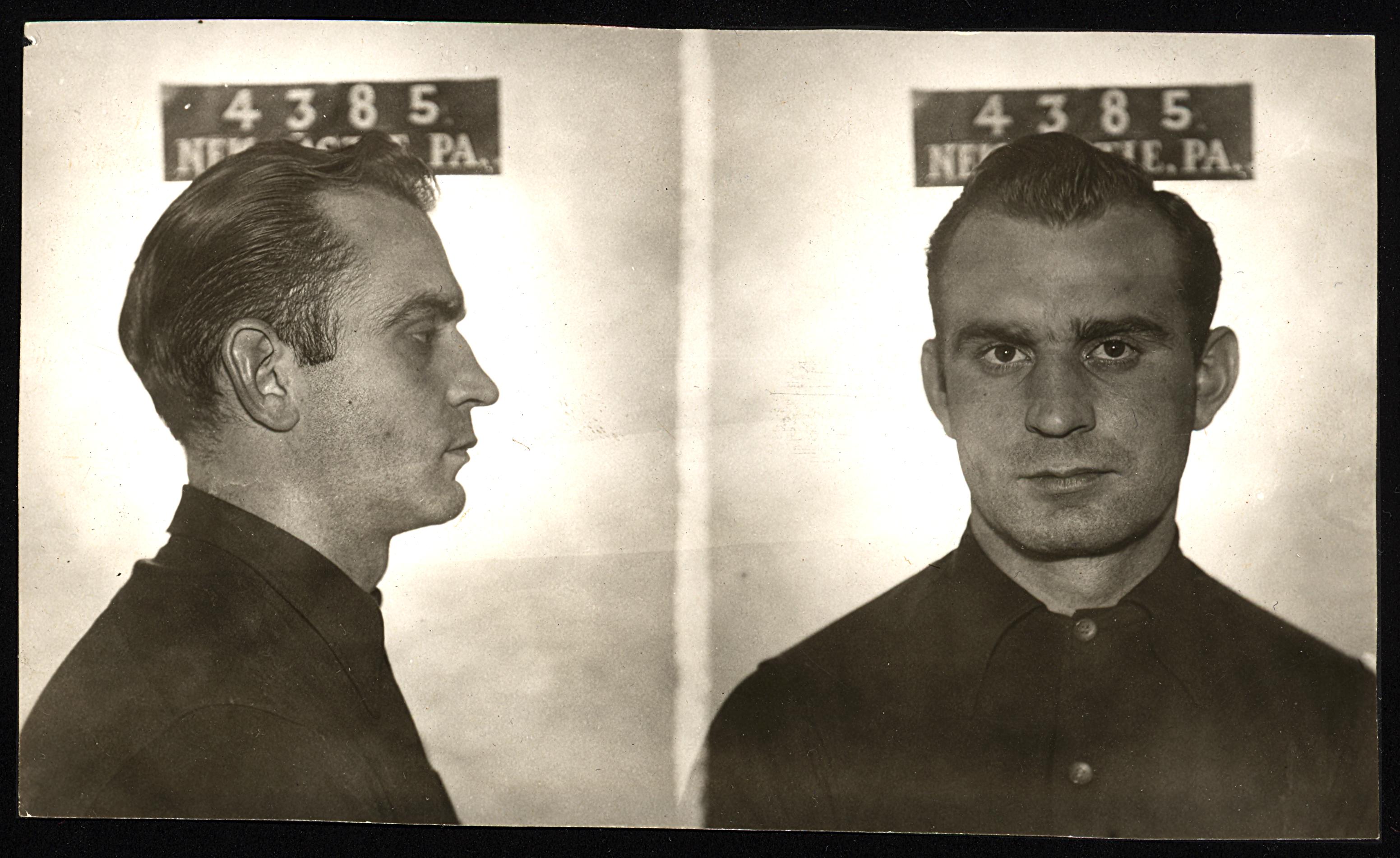
Charles Cialella, “Lottery”, 27 October 1945

comments 6
Uncategorized

Charles Cialella played football for New Castle High and worked for his family’s florist business until he joined the army air service, immediately after the attack on Pearl harbor. Two months after the end of the war, he was arrested for playing a numbers game. He was released without being charged.

He went to work with New Castle’s parks department and became supervisor of the Cascade park swimming pool when it reopened in 1952, offering a pledge that, following a programme of improvements, it would now be impossible for bathers to contract skin diseases or sinus trouble through use of the facility.

In 1968, Charles’s cousin, Carl Cialella, became mayor and appointed Charles superintendent of all the city’s parks. By the seventies, the administration had changed and Charles was made foreman of the city’s sewers. In 1976, he was working in a sewer in Winter avenue when he found a 1942 class ring inscribed with the initials MAS hanging on a broken tree branch. He called New Castle High, whose staff checked their records and told him that it must have belonged to Mary Agnes Schetrom. Charles’s friend, Frank Gagliardo, had been the Schetrom’s paper boy and still knew some friends of the family, who told Charles that Mary Agnes was living on Kenneth street. Two hours after he had found the ring, Charles returned it to Mary Agnes, who told him she had accidentally dropped it down her toilet in 1946 and had not expected to see it again.

Charles was a Republican committeeman and president of the local lodge of the Sons of Italy. He played golf, went bowling and raised funds for charity. His wife bred exotic plants and worked as an Avon representative for fifty years. They raised five children and were both over eighty when they died.

Sources: New Castle News (4 Nov 1938, “New Castle And Monessen Play Here Tonight”; 17 Feb 1942, “With Men In US Service”; 3 May 1952, “Cascade Pool Repairs Near Completion”; 14 June 1952, “Bathers Crowd Cascade Park Pool Friday”; 12 Oct 1959, “Bowling”; 28 Aug 1963, “11-Year Rarity”;15 April 1968, “Observe Construction”;10 Sep 1968, “Cialella Shifts Personnel”; 27 May 1975, “Believe It Or Not, People Still Care”; 12 Sep 1977, “Honored For Participation”); obitsforlife.com, Mary E Cialella obituary via obitsforlife.com.
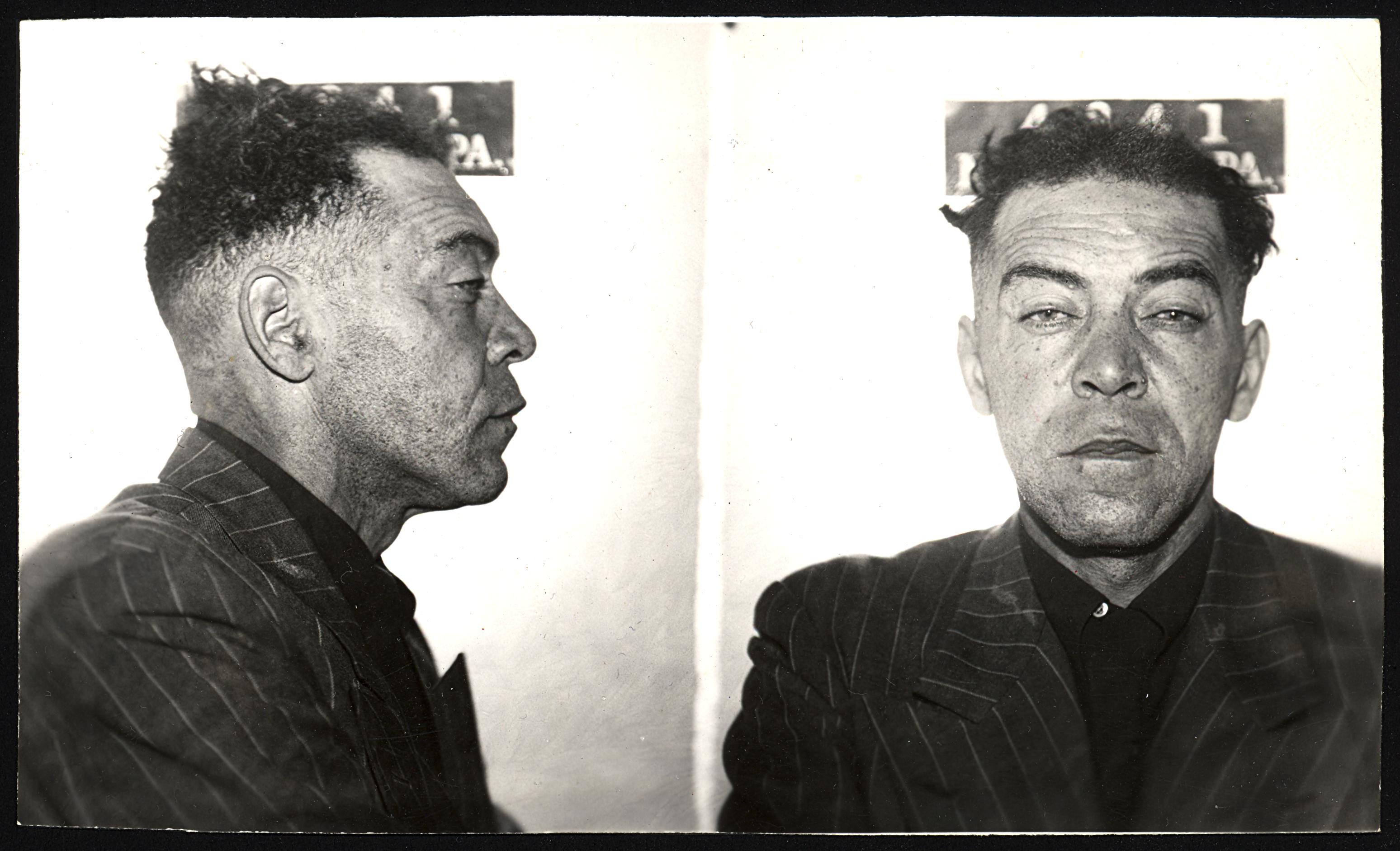
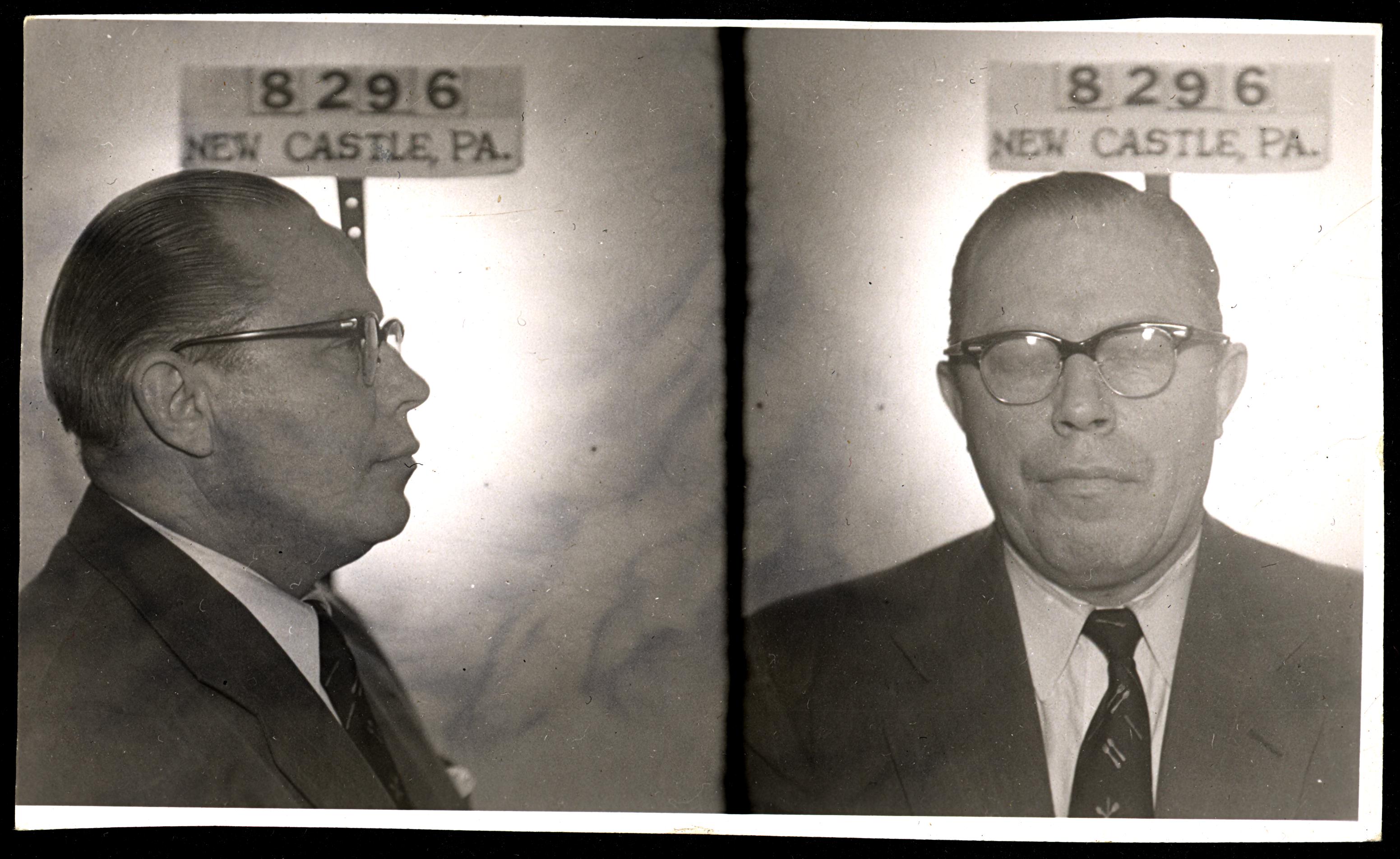
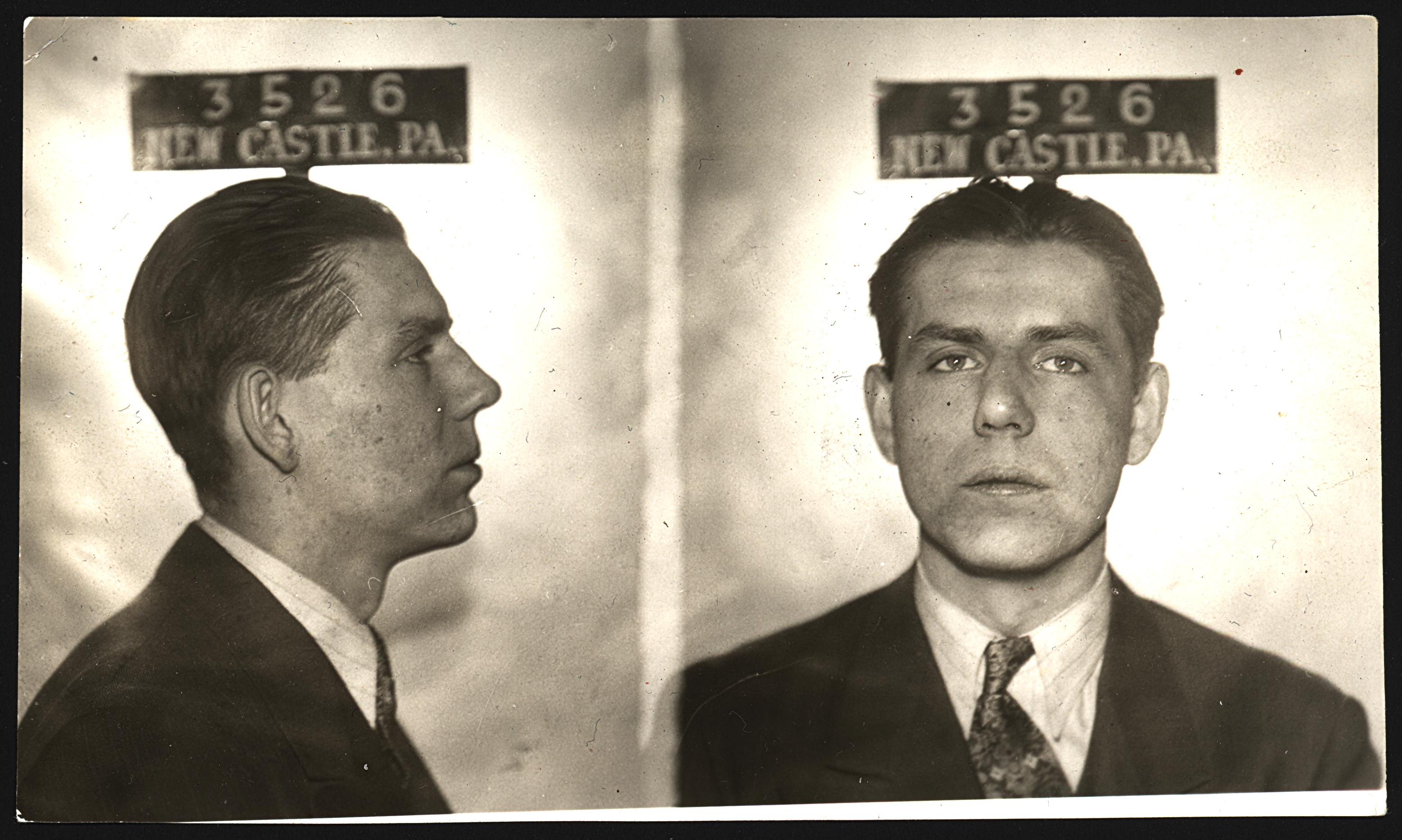
Fred Weir, “Dis Conduct”, 3 November 1947

comments 4
Uncategorized

Fred Weir came to New Castle from the south as a young man, just before prohibition began, and spent the twenties drinking and gambling in backroom establishments downtown and on the south side.

A woman named Mattie McKisson ran a Negro club in her home on the corner of Cochran way and South street, where she allowed dice, cards and liquor. On a spring night in 1922, Fred hired a taxi to take him there and told the driver to wait while he fetched Mattie. He called her out, but she refused to come with him. Fred drew a pistol and fired three bullets through the bolted door. He told the taxi driver to take him to the Mahoningtown district and waved the gun at him when he said he would rather not. Once they were on their way, the driver objected again and Fred fired three shots through the roof and the windshield. The driver stopped the car and Fred ran into Dieterlee’s lumber yard to hide. Mattie McKisson called the police. They found Fred on top of a tall pile of lumber, his pistol under some logs nearby. He was fined $25 for disorderly conduct and $5 for drunkenness.

In those years, Fred was often in court on charges of possessing liquor, gambling or being drunk. He was ordered to leave the city each time he was found in a raid on a disorderly house, but he never did. Around the time he turned thirty, he changed his ways. He stopped getting into trouble with the police, found himself a wife and concentrated on establishing a few quiet gambling operations in the south of the city. His arrest in 1947 for disorderly conduct—using a knife and a blackjack to threaten a numbers player who owed him money—was an uncharacteristic relapse, after which he returned to running his affairs in a manner that was less likely to draw the attention of the authorities. There is no further record of his life.

Sources: New Castle News (22 Feb 1922, “Twenty-Four Are Arrested”; 25 May 1922, “Revolver Shots Bring The Police”; 21 April 1924, Noise Attracts City Officers; Arrests Made”; 24 April 1924, “Pay Heavy Fines”; 21 Aug 1924, “Held On Suspicion”; 22 Aug 1924, “Sentence Suspended”; 27 June 1944, “Hold Trio On Burglary Charge”; 4 Nov 1947, “Two Are Held”; 29 Sep 1948, “Two To Receive Hearing”).

Paul Conner, “Rec Money FP”, 17 Jan 1956

comments 5
Uncategorized

On Saturday, the fourteenth of January, 1956, many people throughout New Castle stopped to admire an unusual circular rainbow that hung around the sun above Lawrence County, a creation of the cold and frosty air. Fewer noticed Paul Conner as he drove south from Sharon through New Castle and onward, stopping at every department store and supermarket on the way to cash hundreds of dollars-worth of bad checks in the name of Joe Garrett.

Paul was heading for his home in Bellevue, in Allegheny County, but his trip was cut short when the manager of the Montgomery Ward store in Beaver Falls recognised him from a previous visit and called the police. He ran out of the shop but was chased and caught.

Paul waited in Beaver Falls jail while the various jurisdictions discussed where he should be dealt with first. New Castle won the argument, and he was taken there on the seventeenth of January. There is no further record of his case or of Paul himself.

Sources: New Castle News (14 Jan 1956, “Pa Newc Observes”; 17 Jan 1956, “Alleged Forger Taken To Sharon”; 18 Jan 1956, “Spurious Check Charge Placed Against Connor”).

Stanley Balin, “Dis Cond”, 26 Jan 1941

comments 2
Uncategorized

Stanley Balin’s mother died when he was six. His father, a Polish immigrant who worked in the Farrell Steel works, sent him to the Margaret Henry home for orphans, which occupied an old mansion on Friendship street.

The house had been built by R W Cunningham, who had come to New Castle in 1836 and established a business forwarding wool, glass, iron and steel to the west. He grew prosperous and built a foundry, turning out ploughs, stoves, mill gears and, after the civil war, cast iron pipes for the new oil wells and machinery for industrial plants. He backed the New Castle and Beaver railway, which secured New Castle’s future as a steel town, and was one of the founders of the International Bank of Lawrence County, which gave the town control of its finances. After he died, close to the end of the nineteenth century, his family sold his iron manufactories to US Steel, which soon came to own almost every industrial concern in the city, and gave his house, with twenty-seven rooms and acres of land, to a Catholic society to use as New Castle’s only orphanage.

The home had been open for over twenty years by 1929, when Stanley enrolled. It had a good reputation. Its children were clean and educated and were known to be able to secure decent employment and do well later in life. Very few ever troubled the police.

By the winter of 1936, just before his eighteenth birthday, Stanley and a group of southside boys—none from the orphanage—had begun to rob drunks and old men walking home late at night from the bars on Long avenue. Most of the victims were easy marks, but they had beaten a few badly enough to put them in hospital. Just before midnight on the seventh of March, they saw a drunk staggering down Jefferson street. When he stopped to lean against a telephone pole by an alley, they crossed over to him. They cursed at him and he answered back. When they attacked him, the drunk grabbed Stanley by his shirt, drew a blackjack and struck another boy on the shoulder, then pulled out a gun and said, “Someone’s going to get hurt, and it won’t be me.” A plainclothes detective ran out of the alley. Someone shouted, “Here comes the law.” The group fled, leaving Stanley behind.

The drunk was the chief of police, John Haven, setting himself out as bait. Stanley was taken to the station, where he co-operated and signed a confession naming the other members of the gang, who were arrested a few hours later. Four boys, including Stanley, were found guilty of assault and battery with intent to rob. Only three were sentenced to jail, each receiving one to three years in the Western penitentiary. Stanley was not among them.

Stanley went to work with a furniture manufacturer and trained as an upholsterer. In January 1941, he was arrested in South Mercer street for disorderly conduct and fined $10. That spring, he joined the army. Japan attacked Pearl harbour seven months later.

After the war, Stanley moved to Uniontown, south of Pittsburgh. His father, who had remarried, died in 1948. Stanley eventually retired to Florida, where he died in 1997, at the age of seventy-nine.

Sources: New Castle News (30 March 1904, “Has Removed To Cunningham Place”; 18 April 1906, “Transfer Made”; 18 Dec 1922; “JPH Cunningham Dies At Home Here”; 18 Aug 1924, “Deaths Of The Day”; 21 Aug 1928, “Rotarian Guests Enjoy Scout Camp”; 29 Aug 1934, “SS Board Of Trade Junior Team Victors”; 9 March 1936, “Posing As Drunk, Police Chief Haven Makes Arrest”; 10 March 1936, “Hearing Thursday For Quartet In Police Chief Case”; 13 March 1936, “Four Are Held After Testimony By Police Chief”; 9 June 1936, “Haven Tells How He Fooled Gang Out To Get Him”; 11 June 1936, “Haven Assailants Are Found Guilty”; 20 Feb 1937, “Three Sent To Penitentiary”; 11 Nov 1936, “Seventy Three Take test To Operate Auto”; 27 Jan 1941, “Pool Room Arrests”; 7 Sep 1948, “Deaths Of The Day”).

Norman Ross, “Intox Driver”, 7 July 1948

comments 5
Uncategorized

Parades were held almost every day throughout New Castle’s sesquicentennial week—the veterans parade, the youth parade, the agricultural parade, the old-timers parade, the fraternal parade. Tuesday, set aside for the celebration of industrial labour, was a quieter day. Nevertheless, the carnival midway on the city parking grounds by the central fire station was open and busy until after midnight.

No alcohol was sold at the midway, but much was consumed. While driving home at twenty to two in the morning, Norman Ross—who had earned a purple heart when he was shot on Christmas eve, 1944, during the battle of the bulge—was stopped by police and arrested for driving a motor vehicle while under the influence of intoxicating liquor. He was fined $100 and jailed for three days. When he got out, sesqui week was over.

(More on the sesquicentennial here.)

Sources: New Castle News (23 Jan 1945, “Pvt Norman Ross Wounded In Belgium”; 20 April 1945, “In US Armed Service”; 3 July 1948, “Week’s Celebration of City’s Sesqui To Start Sunday”; 8 July 1948, “Driver Is Held”).

Robert Modrak, “Burglary”, 10 July 1948

comments 4
Uncategorized

The last day of New Castle’s week-long sesquicentennial celebrations (more on them here) started with a golf tournament at Sylvan Heights, followed by a parade of the city’s fraternal organisations—the Elks, the Sons of Italy, the Eintracht singing society—through the downtown and southside streets, accompanied by floats and high school marching bands. Thousands of people packed the sidewalks. The sun blazed down all afternoon.

Robert Modrak and three of his friends avoided all of that. They drove out of the city and spent the day walking along Slippery Rock creek, a shady gorge to the east of New Castle. When they got hungry, they broke into a cottage—the owner, Earl Dufford, was in town, watching the parade—and stole a little food and some blankets. Nearby, they found an unattended picnic hamper. They carried it off up the creek and had eaten most of its contents when they were disturbed by Clair Shaner, a brass worker at Johnson Bronze, who shouted at them to give him his hamper back. They threw it in the water and Robert pulled out a pistol. Shaner backed off and the men ran back to their car.

They were arrested later that day. In light of their previous good records, the judge gave them light sentences—$100 fines and a year’s probation.

Some years later, Robert moved to Arizona, where he died in 1988, at the age of sixty-nine.

Sources: New Castle News (10 July 1948, “Arrest Four On Burglary Charge”; 12 July 1948, “Huge Crowd Sees Sesqui Parade”; 14 July 1948, “Beaver County Men Paroled”; 17 Dec 1965, “Deaths Of The Day”).

William Brest, “Larceny”, 10 June 1960

comments 4
Uncategorized

A seventy-seven-year-old widow named Alice Johnson opened her door to William Brest, whom she mistook for a neighbor’s son. She let him in, leaving him alone in her living room for a minute. He took her wallet and left. After he removed the $16 that it contained, he threw it into the weed patch behind the United Presbyterian church on Countyline street, where it was recovered by police once William had been arrested and signed a confession. William returned the money, including the $2 that he had already spent, and Mrs Johnson withdrew the charges against him.

William had just turned eighteen. Within three years, he was married with two sons. He found a job at Rockwell’s auto and truck spring plant on Furnace street and got a place on its bowling team, which met with reasonable success in the town’s industrial league. In 1977, William was treated for smoke inhalation when the Rockwell plant was struck by lightning, which started a fire in the duct work. There is no further record of his life.

Sources: New Castle News (11 June 1960, “Faces Larceny Charge”; 28 July 1962, “Births Reported”; 7 Aug 1963, “Births”; 8 Sep 1969, “Deaths Of The Day”; 16 Oct 1972, “Bowling Results”; 21 Dec 1976, “Bullish Rockwell Charges Into $6.5 Million Project”; 18 June 1977, “Wind, Rain, Lightning Hits Area Hard”).

Anagnostis Sakelliadis, “Liquor Violation”, 5 June 1948

Leave a comment
Uncategorized

On the summer evening in 1948 when the police raided liquor establishments across New Castle following the death of Anna Grace Robertson earlier in the year, fifteen people were arrested. Among them were Elizabeth Miller, a bartender at the Rex café, and Anagnostis Sakelliadis, who ran the Square Deal café on West Washington street, which was the last place that Anna Grace was seen the night she died. Anna Grace’s mother worked there, but was elsewhere on the night of the raid.

Anagnostis—who eventually changed his name to James Sakelson—had come to New Castle in 1910, from the Aegean island of Karpathos, and had run restaurants in town ever since. He bought the premises for the Square Deal in 1941, taking over from an unsuccessful grocery store, the Orange Car, which had sold nothing but fruit from the proprietor’s own citrus groves in Florida. He installed modern kitchen equipment, two thirty-foot-long formica-topped bars and all-new fixtures and fittings. By the time it was raided, the Square Deal was one of the most popular lunch counters in the city.

The police charged Anagnostis with selling liquor to visibly intoxicated persons and to persons of known intemperate habits, and the State Liquor Control Board shut the café down for seventy-five days. It survived the temporary closure, but nothing could save it from the decline of downtown New Castle.

From the middle of the fifties, the Square Deal suffered regular robberies—crates of liquor taken from behind the bar; hundreds of dollars lifted from the till. Fights—with knives, razors and guns—became quite common. In 1964, the year before Anagnostis’s wife died, there were three break-ins and a stabbing. The streets around the café had become dilapidated, most of the stores abandoned. Anagnostis sold the Square Deal to Buzz Panella, who ran it for only a few years until 1967, when the building was condemned. It was torn down the following year, along with every block in the surrounding nineteen acres, to make way for the Towne Mall indoor shopping plaza and a Sears, Roebuck store.

Anagnostis moved to Florida to live near his sons. He died there in June 1968, at the age of sixty-eight.

Sources: New Castle News (6 Dec 1929, “Greek Americans Elect Officers”; 17 Nov 1939, “Orange Car Advertisement”; 9 Dec 1942, “Grand Jury Reports”; 7 June 1948, “Fifteen Facing Liquor Charges”; 23 June 1948, “Proprietors Of Liquor Places Held For Court”; 15 Feb 1949, “License Suspended”; 21 Oct 1952, “Deaths Of The Day”; 20 Feb 1954, “Café Burglarised; About $175 Stolen”; 27 April 1956, “Vending Machine Thieves Hit Twice In City Today”; 2 Jan 1957, Thieves Take $45 From Restaurant”; 27 Feb 1958, “Whiskey Reported Stolen From Café”; 22 Jun 1961, “Two Charged”; 27 Dec 1961, “Lock Tried”; 27 Aug 1962, “Whisky Stolen”; 22 June 1963, “Local Man Charged With Gun Violation”; 24 Aug 1963, “$186, 7 Bottles Of Whisky Stolen In 3 Burglaries”; 17 June 1964, “Police Check Burglary, Vandalism”; 29 Sep 1964, “Window Pryed”; 12 Oct 1964, “Tavern Burglarized”; 28 Oct 1965, “Deaths Of The Day”; 7 May 1966, “Two Treated For Stab Wounds”; 2 Dec 1966, “Square Deal Café Advertisement”; 25 April 1967, “Planners Ask Grant”; 2 Jan 1968, “Public Sales”; 24 Oct 1968, “Property Transfers”).

John Franell, “Drunk”, 31 July 1957

comments 4
Uncategorized

John Franell, a lifelong resident of Altoona, was an honor roll student in elementary school and sang in his local athletics club’s barbershop quartet when he was in high school. After graduation, he worked as a produce clerk and spent a lot of time in bars. He was arrested a few times—fighting, disorderly conduct, a little light larceny—and was conscripted into the combat engineers in 1942.

After the war, John became a small-time thief, stealing crates of produce, frozen chickens and other groceries from warehouses and selling them cheap in bars and cafés. By the middle of the fifties, he had become a well-known figure in Altoona’s court house, and was told by a judge that he would face years in jail if he violated his probation again. He left Altoona for New Castle, but his arrest for drunkenness in 1957 is the only record of his time in the city. He was back in Altoona by the following February, when he was arrested for burglary.

John was homeless at forty-six, sleeping either in the streets, in the Rescue Mission or in the city jail’s drunk tank. Over the next few years, he was arrested for siphoning gas from a truck, stealing a car, burglarly, larceny and receiving stolen goods. He turned sixty while serving a three-year sentence in the workhouse.

John was never arrested for theft again but appeared in court countless times on charges of drunkenness, disorderly conduct and breach of the peace. In August 1974, by which time he was known to everyone as Whiskey John, he was arrested seven times in four days. Every few months he was hospitalised with lacerations on his forehead, contusions on his head, abrasions on his arms, chest and sides and fractured ribs—all injuries that he sustained when he threw himself in front of moving cars. Once, a car crushed his foot and doctors had to amputate his toes.

On April 4th, 1976, John was beaten to death in the hallway of an apartment where he was staying. He was seventy-one years old. There were no leads, and his killer was never found.

Sources: Altoona Mirror (20 June 1918, “Irving Honor Roll”; 8 Oct 1929, “Logantown AC Plans For Annual Opening”; 25 Jan 1934, “Arrest Boys At Drinking Places”; 18 April 1934, “Four Autos Are Reported Stolen”; 5 Aug 1934, “Men Fined $100 For Scene On 11th Street”’; 22 Jan 1943, “Join Engineers”; 29 Dec 1952, “Defendants To Enter Submissions In Court”; 7 May 1953, “Vagrant Given Term In Jail”; 29 Sep 1953, “Grand Jury To Weigh Evidence”; 1 Feb 1958, “Arrest Trio For Two Burglaries At City Plant”; 6 Oct 1959, “Four Caught Stealing Gas”; 15 June 1960, “3 Altoonans Captured In Stolen Auto”; 7 July 1960, “Three Altoona Men Sentenced To Workhouse”; 2 Oct 1963, “Work Of Grand Jury Nears End”; 1 Feb 1964, “Hospital Treats Varied Injuries”; 2 June 1964, “City Hospital Treats Injuries”, 15 Feb 1966, “City Hospital Treats Injuries In Dispensary”; 12 March 1966, “Hospital Treats Varied Injuries In Dispensary”; 29 Jun 1966, “Fall Victims Admitted To Mercy Hospital”; 17 Dec 1966, “Altoona Hospital”; 2 Sep 1969, “Hospital Treats Varied Injuries In Dispensary”; 29 Sep 1969, “3 Hurt On Blair Roads; Loss $12,680”; 14 April 1970, “Men Fined In Police Court For Disturbance”; 14 April 1971, “Held For Misconduct”; 22 April 1971, “Hospital Treats Varied Injuries”; 21 Jun 1971, “Hospital Treats Varied Injuries”; 29 Oct 1971, “Misconduct Case Delay Laid To Police Mixup”; 16 Oct 1973, “City Man Jailed For Misconduct”; 26 Aug 1974, “Altoona Hospital”; 17 May 1987, “Unsolved Homicide Cases Still Baffle Police”); Tyrone Daily Herald (26 Aug 1974, “News From Altoona”; 5 April 1976, “News From Altoona”; 8 April 1976, “Death Ruled Homicide”).

Nick Frank, “Larceny”, 15 January 1945

comments 2
Uncategorized

Apart from the night in January 1945 when he stole a carburettor from a neighbour’s car—a crime for which he received no punishment as he was due back in the army—Nick Frank kept out of trouble. He was a truck driver all his life and was involved in collisions every so often, but none was his fault. He hunted deer, but always in season, and once got his picture in the paper for shooting a 180-pound, 11-point buck, which was believed to be the biggest deer ever to have been killed in Lawrence County.

In 1972, Nick’s daughter, Gloria, married a field artilleryman named Richard Jokinen. She accompanied him to Germany when he was posted to the US army base in Baumholder, a former Wehrmacht barracks and prisoner-of-war camp that had been built on the ruins of the homes of four thousand people who had been evicted by the Nazis. Gloria returned home two years later, in 1978, after Richard was killed when his helicopter crashed into the garden of a house in Unteralterheim.

Nick died in 2005, at the age of eighty-one.

Sources: New Castle News (5 July 1945, “Truck Driver Is Hurt In Collision; 16 Jan 1945, “Arrested For Larceny”; 23 Dec 1946, “Driver Is Arrested”; 13 Dec 1956, “Frank Shoots 11-Point Buck Near Edenburg”; 22 Jul 1963, “Only One Hurt In Series Of Car Accidents”; 3 Dec 1971, “Deer Kills”; 1 July 1972, “Couple Observes Military Decision”; 5 Nov 1974, “County Report”; 6 July 1976, “News About Jokinens Staioned In Germany”); UPI, “9 Killed In Army Helicopter Crash” via armyaircrews.com; Nick Frank obituary via obitsforlife.com.