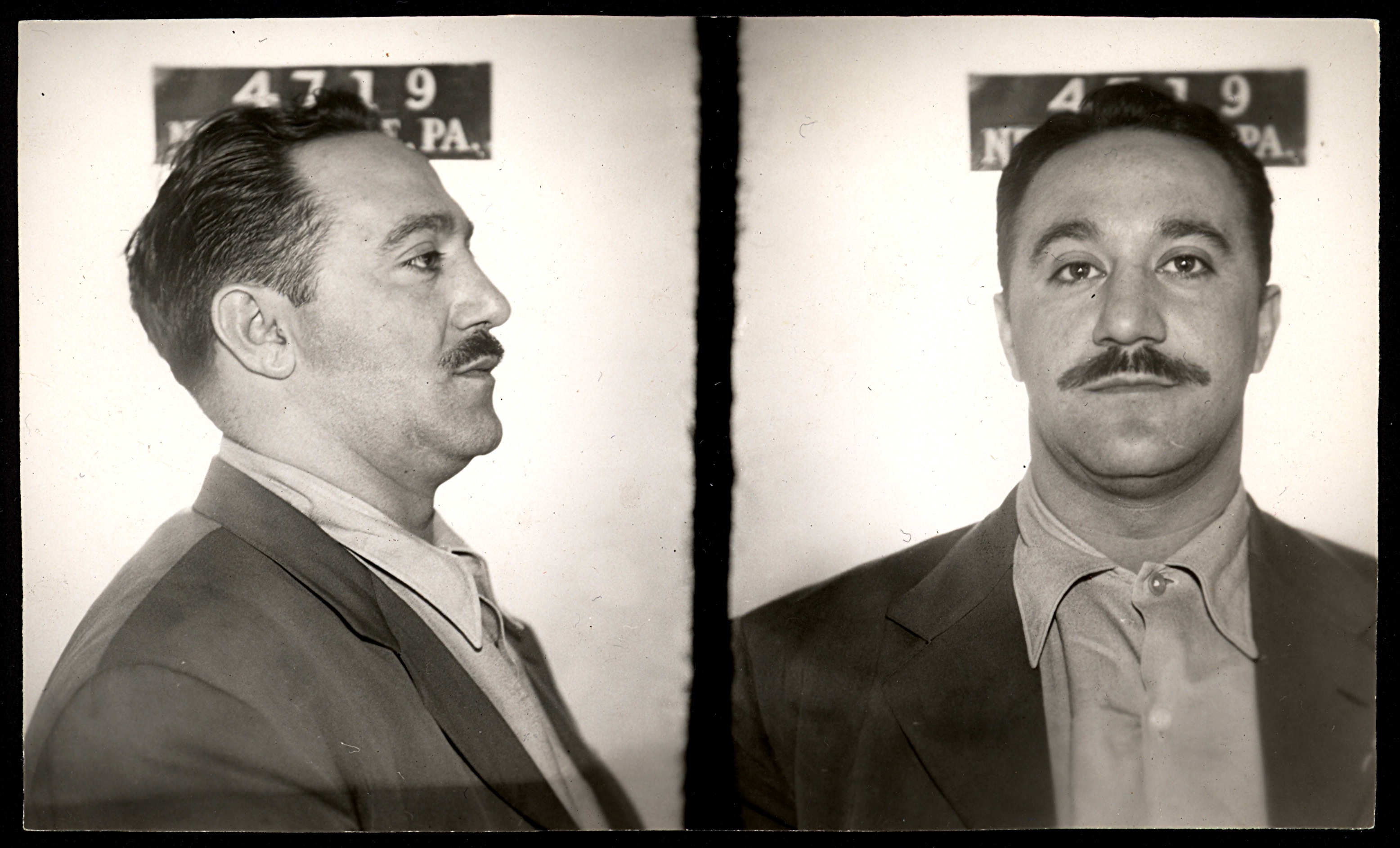
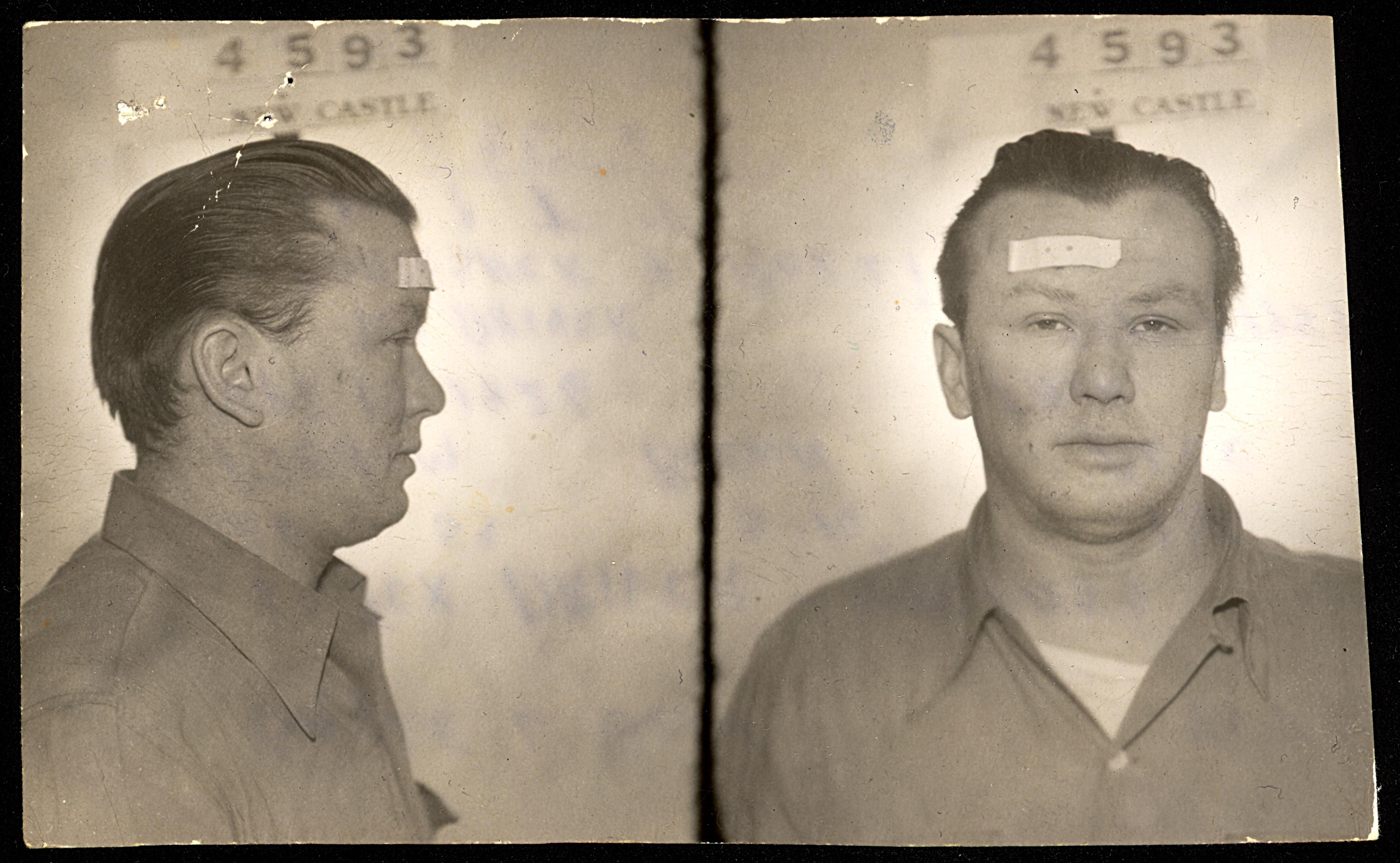
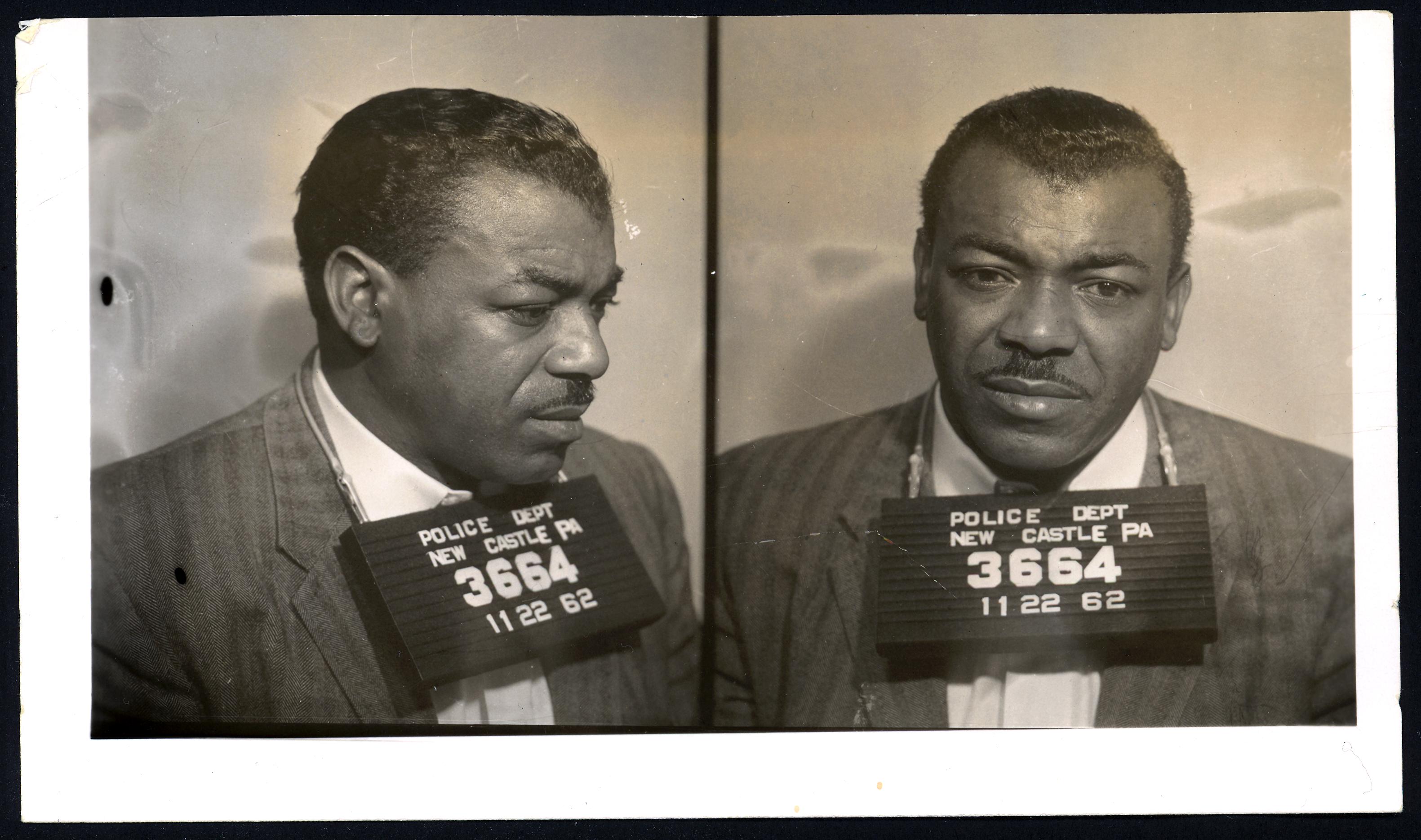
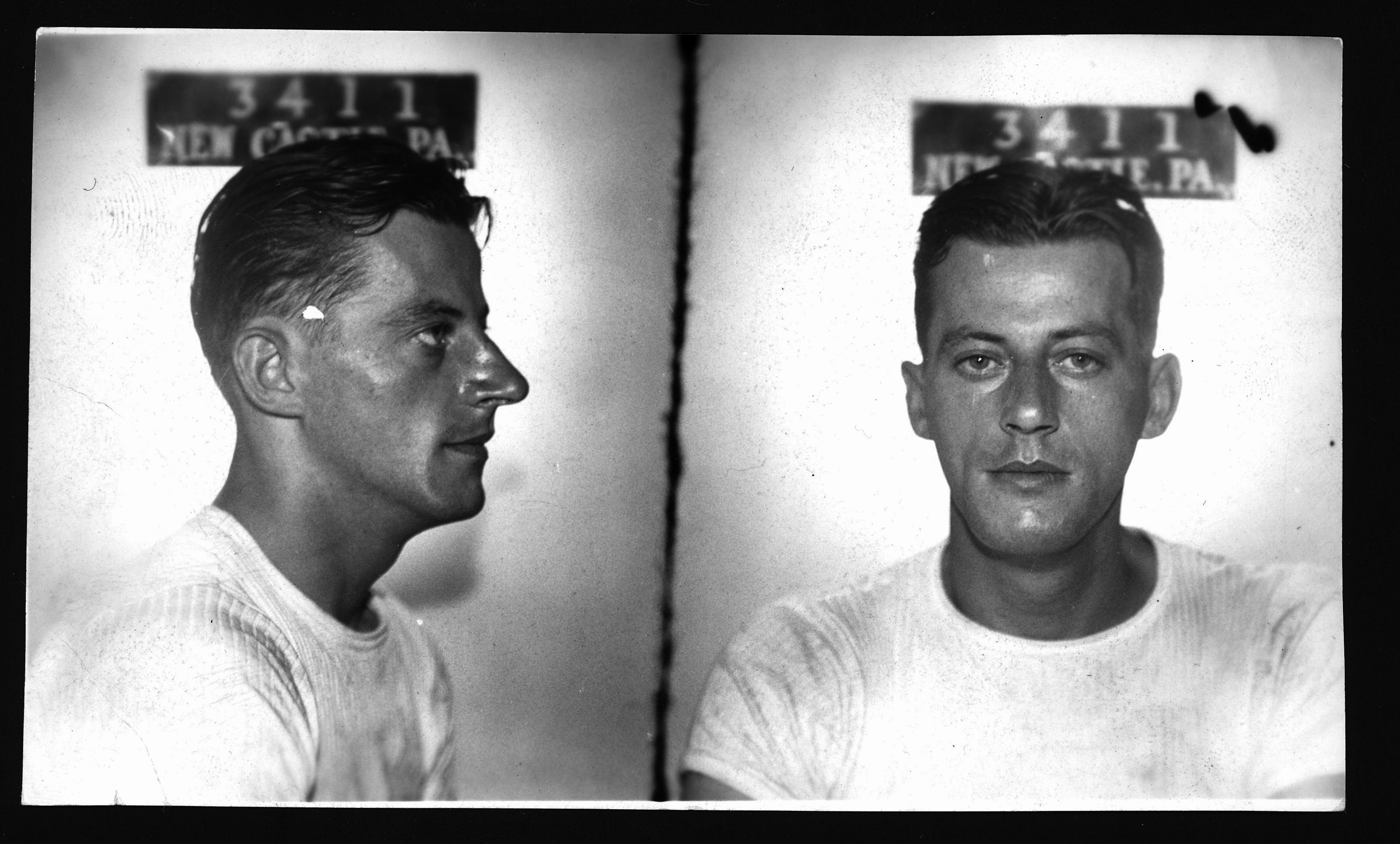
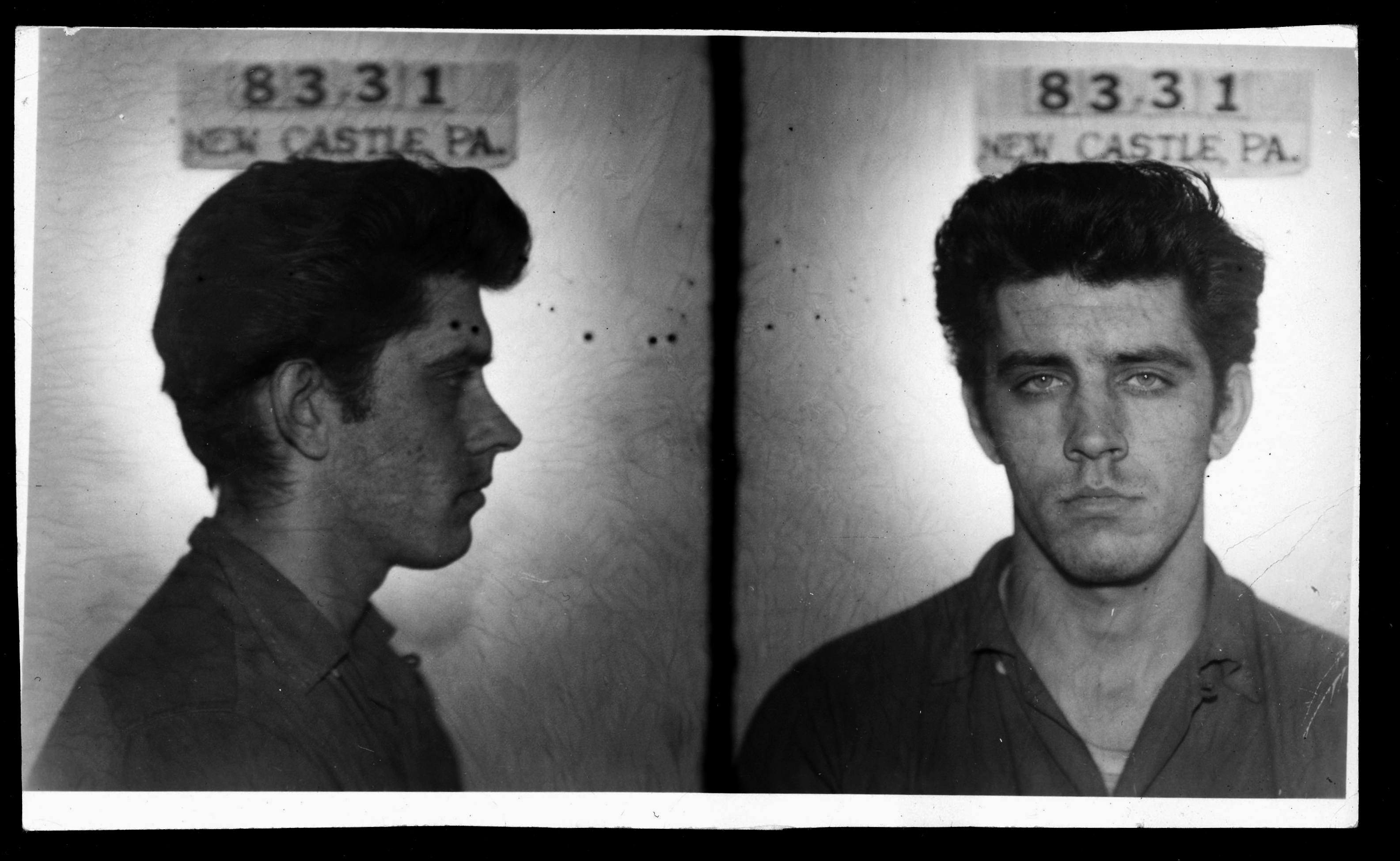
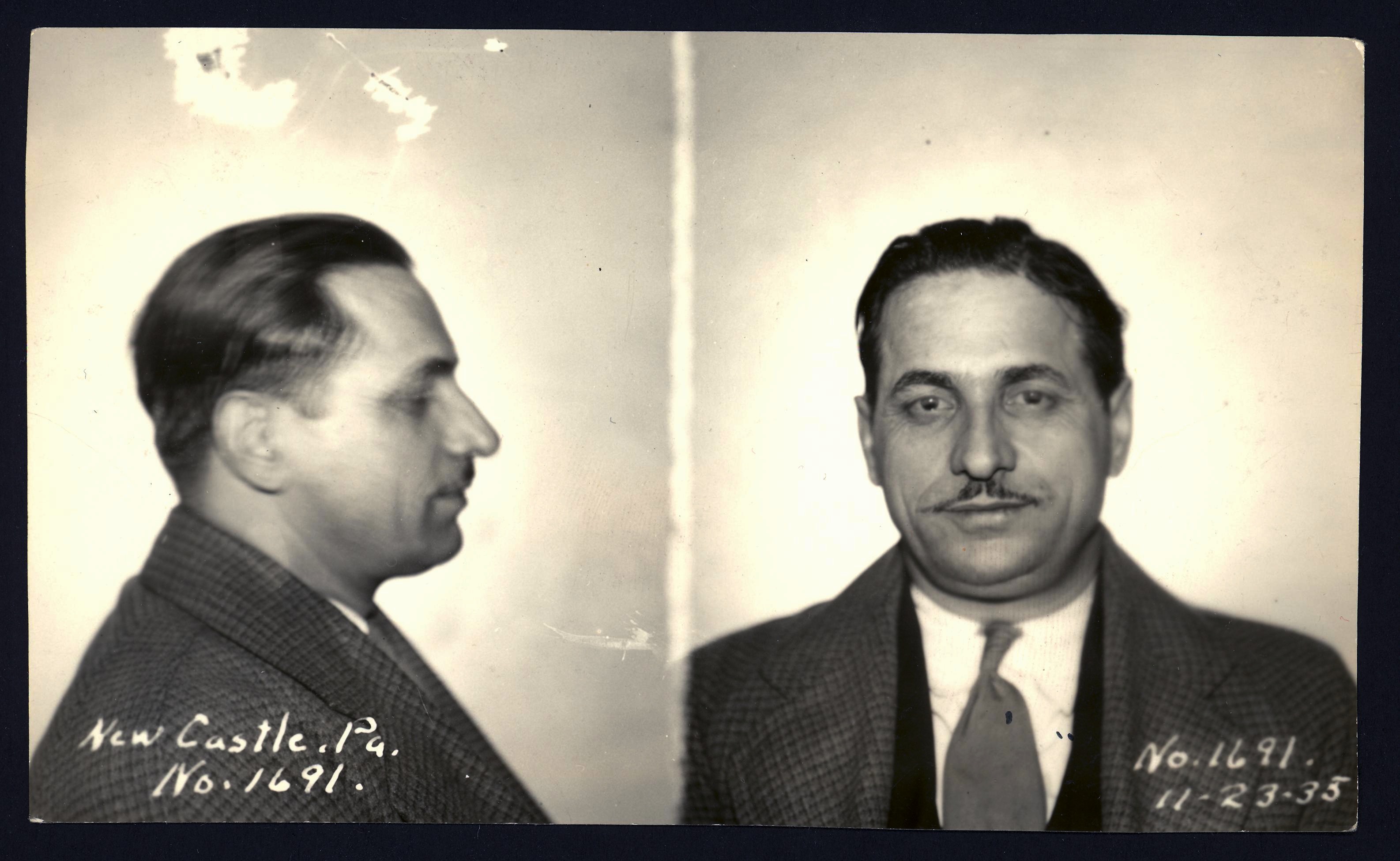
Harold Nicolls, “Burglary”, 8 July 1956

comments 8
Uncategorized


One September afternoon in 1932, when Harold Nicolls was five years old, his mother took him to Arlington avenue to visit his grandfather, Isaiah Engle, who would be arrested a few years later for performing a lewd act in public in Gaston park. Harold was playing outside the house when he chased a ball out into the street and was hit by a car. He was unharmed by the collision—cuts and scrapes—but he fell onto the car’s broad front bumper and was carried some way down the street before the driver stopped. It may have been his first journey by car.

By the time Harold was thirteen, he had developed a habit of driving around town in cars whose owners had left their keys in the ignition. One evening toward the end of winter, he and an eleven-year-old boy were arrested for stealing a delivery truck from behind the Kirk Hutton store and taking it for a joy ride across the Diamond and down East Jefferson street. They were sent to the George Junior Republic, a privately run correctional institution for delinquent boys, where Harold would spend most of his teenage years. He began his twenties in the Allegheny County workhouse, where he had been sent for one to three years after being caught riding as a passenger in a Buick that had been stolen by his friend. He was released on parole after eighteen months, but was soon arrested on two charges of burglary, nine of larceny and one of malicious mischief, and returned to jail in September 1949. He remained there for the next four years.

On his release, at the age of twenty-two, Harold moved in with his mother on Valley street. A year later, he served two months in the county jail for driving while under the influence. The following year, he was caught selling cartons of cigarettes that had been stolen from the East street market and was sentenced to another two months for receiving stolen goods. He was still living with his mother in 1958, when his girlfriend’s fourteen-year-old son, James, was found wandering near the Diamond at three in the morning and told the police that he had left his home after Harold had strap-whipped him. Harold admitted using his belt on James, but said that the boy’s mother had asked him to do it. He was charged with assault and battery and fined $50.

Harold drove a cab in the sixties and by the end of the decade, just after he turned forty, he had become the owner of a small cab company that operated out of White street. During the seventies, Harold’s drivers began to report that they were being held up and robbed by their passengers. Some of the stories were true; some were invented by drivers to cover up their embezzlement. Harold tried to operate as normal for as long as possible but, as the decade wore on, he was forced to reduce services, especially after dark. The robberies continued until the company closed down in 1977.

Harold died in New Castle in 2005, at the age of seventy-eight.

Sources: New Castle News (10 Sep 1932, “Three Children In Auto Mishaps”; 1 June 1938, “Charge Is Preferred”; 19 Feb 1941, “Two Small Boys Steal Truck, Auto”; 27 May 1942, “Around City Hall”; 25 July 1946, “Hold Two Youths For Auto Larceny”; 27 July 1946, “News On Court House Hill”; 3 Jan 1953, “Court House”; 5 Aug 1953, “Wave Delores Nicolls Home On Naval Leave”; 26 Feb 1955, “Many Are Up For Sentence”; 5 July 1956, “Two Boys Admit Burglary Attempt, Market Entered”; 9 July 1956, “Two Plead Guilty To Market Burglary”; 30 Aug 1956, “Four Ordered To Pay Money To Railroads”; 31 October 1956, “Dottle, Nicolls Released From Jail”; 9 June 1958, “Mother Of Three Pleads Innocent To Two Charges”; 4 Oct 1958, “Court Imposes 37 Sentences In Long Session”; 9 March 1961, “Court House”; 19 Nov 1968, “Six New Cars”; 20 March 1972, “Holdups Worry Cab Firm”; 8 Oct 1973, “Cab Driver Faces Count Of Robbery”; 10 Feb 1977, “Taxi Driver Claims Theft At Knifepoint”); Lawrence Law Journal, Vol 12, 1953, pp1-4.
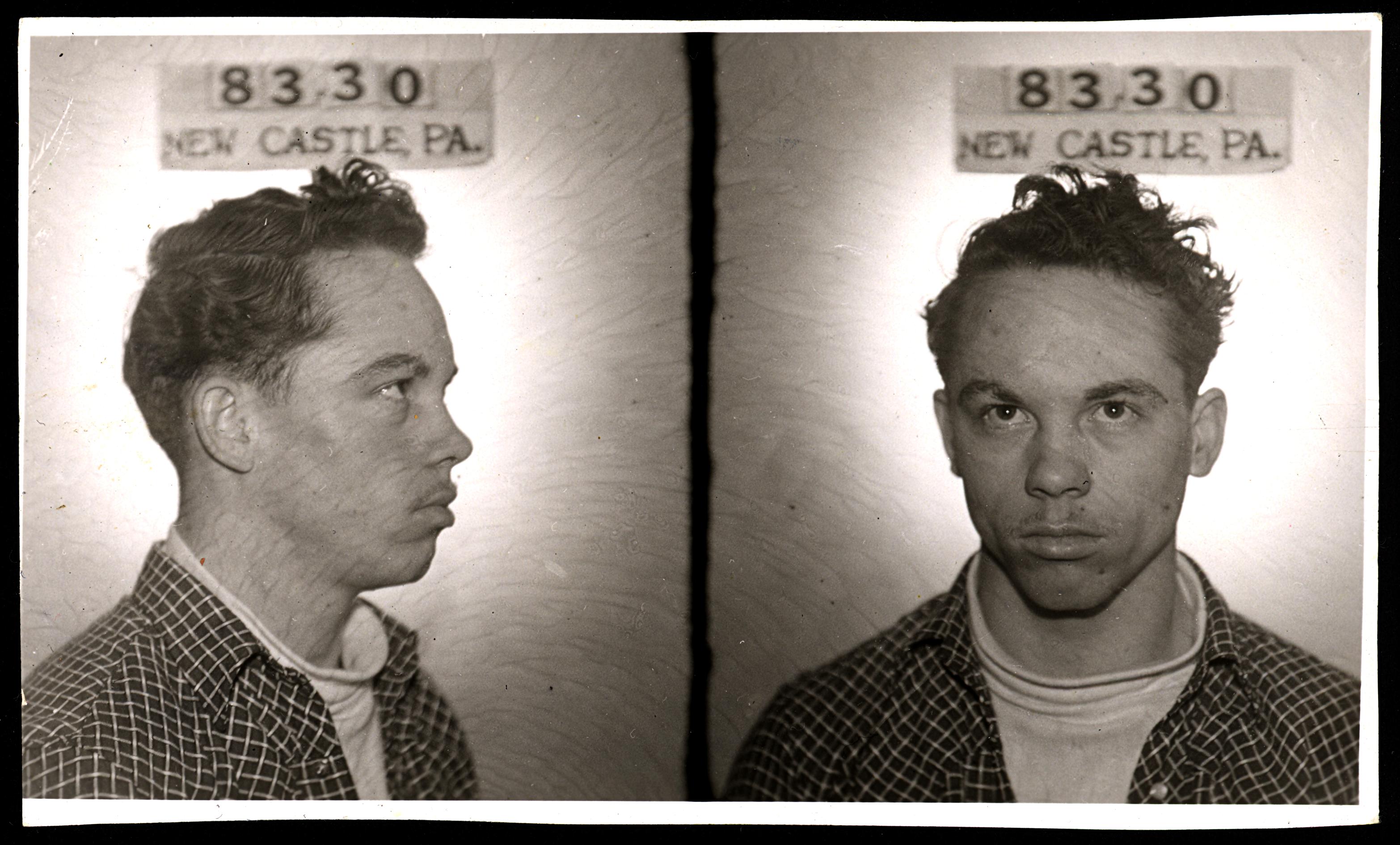
Julius Roth, “Intox Driver”, 24 May 1941

comments 18
Uncategorized

By the end of 1921, two years after the start of prohibition, illegal liquor was a major trade in Lawrence County. Jack Dunlap, a thirty-year-old former state policeman and private security officer for US Steel, was appointed county detective in January 1922 and told to shut down the bootleggers’ operations. He began a campaign of raids, uncovering stills in farms outside New Castle and houses around town and arresting hundreds of liquor manufacturers and traffickers, from the Serbian gang who had constructed a huge underground alcohol factory beneath a farm to the west of the city to small-timers like Julius Roth, a Carpathian-German immigrant who ran a domestic still on his farm on the county line road.

Julius arrived in the United States from Transylvania in 1920, a few months after prohibition became law, and bought a small piece of property on which to raise a herd of dairy cows. His land was the last remnant of the farm that had belonged to Charles Whippo, the chief engineer of the Beaver and Erie canal that had first made New Castle an industrial centre in the 1840s. Whippo’s grandchildren had sold most of the land to the Lehigh company, which had torn up the fields to get at the rich limestone below and built a cement factory on the portion adjoining the plot that Julius owned. Consequently, Julius grazed his cows on a high pasture on the Desprink farm a mile away, where, one summer, a quarter of his herd was killed by lightning.

Julius was arrested by Jack Dunlap on a liquor charge in May 1922 and given a short sentence. The next time Dunlap arrested him, he received a $500 fine and three months in the workhouse. On his third arrest, he was given eighteen months.

By the end of 1922, a year during which Dunlap had presented the court with up to eighty bootleggers a month, the county had earned $10,000 in liquor-related fines. In 1923, the sum doubled as Dunlap and his deputies—known in the press as the three musketeers—made ever more arrests. On 19th June 1924, fifty pounds of dynamite exploded under Dunlap’s home on Epworth street. The kitchen was utterly destroyed and the lower floor of the house was wrecked. Dunlap, his wife and their baby, who had been sleeping upstairs, were unharmed.

That Sunday, more than a thousand people crowded into the First Methodist church to show their support for Dunlap. His character and work were praised by speakers who denounced the bombers as foreign anarchists who were determined to undermine law and order in America. One city official said, “How Lenin must have laughed if he heard of the atrocity.” The editor of the New Castle News said, “Get the dastards who attempted to destroy Mr Dunlap and his young family as they slept. Get these persons who would tear down the very foundations of this country’s freedom, and leave no stone unturned to see that they are brought to the summary justice they so richly deserve.”

Dunlap was not present at the meeting—the audience was told that he was out working on a case—but he later said, “This is not the first time that an attempt has been made on my life by bootleggers and violators of the eighteenth amendment. About a year ago, a foreign-born resident of this county planned to take my life. We have received many intimations in the past few months that the bootleggers were out to at least annoy us, if not take our lives. They have called on the telephone in an effort to frighten my wife. They have rapped mysteriously on the doors and windows and disappeared and many such little things in the effort to frighten me and those associated with me. However, despite their efforts, I expect to continue to do my whole duty.”

The police believed the bombers to have been part of an Italian rum-running gang that was consolidating its control of the liquor trade in western Pennsylvania. No one was ever charged in connection with the crime.

In the year following the bombing, Dunlap made more arrests than ever before. The revenue raised from liquor-related fines rose to $35,000. However, when Dunlap’s four-year term was up at the end of 1925, the new district attorney declined to reappoint him. Dunlap tried to run for sheriff, but failed to win the Republican nomination. In the end, he had the support only of the organised prohibitionists; everyone else favoured a change of approach. There were significantly fewer liquor arrests in subsequent years.

Dunlap celebrated his last day as county detective with a raid on the de Mary farm, which resulted in the confiscation of the biggest still ever found in Lawrence County. A few days later, he became the county probation officer and spent the next forty years operating the city’s juvenile detention home and the industrial schools in Morganza and Oakdale. After his retirement, in the late 1960s, he organised New Castle’s annual old-timers’ day celebrations. He last appeared in the press in 1969, leading the old-timers through Cascade park as the band played, “Stars and Stripes Forever.”

Julius Roth continued to work on his farm beside the cement works. His only crime following the repeal of prohibition was driving while intoxicated, for which he was arrested—and had his mug shot taken—in 1941. He died in 1948, at the age of seventy-three.

Sources: New Castle News (23 Jan 1907, “Options On More Land”; 11 April 1922, “Another Big Still Raided By Detective”; 1 May 1922, “Charge Bribery Attempt Made”; 29 May 1922, “Cave Men Distillers Operate Huge Still In Mahoning Township”; 1 June 1922, “Gave Bail Of $1,000 in A Liquor Case”; 17 June 1922, “Two Sentenced On Liquor Charge”; 4 Sep 1926, “Grand Jury To Meet Monday”; 29 Sep 1926, “Prisoners Taken To Penitentiary And Workhouse”; 15 November 1922, “Big Clean-Up Is Being Made”; 16 April 1923, “Find Immense Booze Plant Underground”; 19 June 1924, “Bomb County Detective’s Home”, “Cowardly Attempt Will Not Check My Efforts To Do My Whole Duty”; 23 June 1924, “Hundreds At Big Mass meeting”; 27 June 1924, “Seek Detective Dunlap Home Bombers In Erie”; 2 Jan 1925, “500 Cases Tried in 1924”; 11 Feb. 1925, “Officers Penetrate Secret Room; Find Pretentious Plant”; 2 May 1925, “Alleged Bootleggers Taken Friday Night”; 2 Oct 1925, “Dunlap Withdraws As Candidate On Prohibition Ticket”; 14 Nov 1925, “Three Arrested For Operation Of Immense Still”; 31 Dec 1925, “Mammoth Still Is Confiscated Last Night By Officials”; 2 June 1926, “County Detective Makes Arrest On Liquor Charge”; 15 June 1931, “Five Cows Are Killed By Lightning”; 26 May 1941,“Auto Driver Is Under Arrest; ”6 May 1948, “Deaths Of The Day”; 23 June 1966, “Dunlap Honored For 50 Years Service In Correction Field”; 7 Aug 1969, “Oldsters Gather For A Special Day In The Park”).

Charles Peak, “Vio. Uniform Firearm”, 14 March 1956

comments 19
Uncategorized

On a spring night in 1956, Charles Peak and two of his friends were driving a souped-up car around downtown New Castle, looking for other cars to race. They found none, so they pulled up beside a parked police car on Mercer street, shouted obscenities at the officers and sped off. The patrol car chased them south for several blocks then north on Cochran way. The boys abandoned their car and fled, but were caught shortly afterward. Charles was found to be in possession of an Italian Beretta .32—someone’s world war two souvenir—for which he had no licence. He was fined $100 and given a year’s probation.

The following week, Charles’s father, Harry Peak, was charged with murdering his brother, Erwin. He was released when the autopsy showed the cause of death to be a heart attack brought on by acute alcoholism. There was no answer to the question of how Erwin came to be buried in a ditch off the West Pittsburg road, under several feet of dirt, rock and logs, but similarities were noted to the incident in 1917, when Charles’ grandfather, Ransom Peak, had been arrested for killing his nephew but had been released when it was found that the brain injury that had killed the boy had been sustained in a drunken fall on the rocky banks of the Shenango, rather than in the quarrel that had occurred before he had left Ransom’s house. There were no further proceedings in either case. 

Six months after his first arrest, Charles nearly died when his car overturned after it missed a curve on Butler avenue, at Cascade street, and slid on its top for a hundred yards until it hit a utility pole. He had been racing another car on the stretch of route 422 that the local boys used as a drag strip. His car was destroyed but he suffered only minor facial injuries. No charges were brought against him.

Charles got a new car as soon as he could. By the following spring, he had customised and improved it to his satisfaction and was ready to test its performance on the road. On April 10th 1957, Charles had a few beers with John Young and George Ramsey, two hot-rodders a few years older than him. After discussing their cars and arguing about whose was the fastest, they drove a few miles east of town on route 422 to Lipinski’s garage, the traditional start of drag races into New Castle.

They lined up across the three-lane highway and took off toward town, quickly reaching speeds of more than 120 miles an hour. After a short distance, they met a car travelling in the opposite direction, which pulled off the road as far as it could and came to a halt. John Young swerved to avoid it. He sideswiped George Ramsey’s car, clipped Charles’s car and spun across the road, directly into the stationary car. He was thrown through his windshield as his car went over the embankment and overturned. His skull was crushed against a steel guard post.

The other drivers and their passengers suffered lacerations or broken limbs, apart from Charles, who was entirely unharmed.

Charles and George were found guilty of involuntary manslaughter and were sentenced to up to two years in the Alleghenny workhouse. Charles was paroled after ten months; George after four. Neither was arrested again for a driving offence, although Charles fractured his rib in a crash two years later. (He was the passenger; his wife was driving.) He died in 1996, aged sixty-one.

The New Castle News published editorials throughout the fifties calling for drivers who caused deaths through drag racing—the “gasoline ghouls”—to be charged with second-degree murder. Others in the city wanted a drag strip to be built so that young men would have somewhere legal to race their cars. Arguments about where one could be situated carried on until 1961, when Mike Pollio laid an asphalt track and erected some bleachers on a site seven miles west of New Castle on the Youngstown road, which he called the Skyline. Weekly competitions were held. Unofficial races were allowed for a fee. Thousands of spectators attended during the summer.

The Skyline closed down after ten years. The structures were abandoned and later removed. All that remains is a patch of discoloured grass, two lanes wide.

Sources: New Castle News (9 July 1917, “Ransom Peak Discharged”; 15 Mar 1956, “Police Catch Three Boys After Downtown Chase”; 22 March 1956, “Officials Probe Mystery Death”; 23 March 19562, “Harry peak Released After Hearing, Monday”; 12 Sep 1956, “End Of Harrowing Accident”; 15 Feb 1957, “Judge Powers Hands Down 11 Sentences”; 11 April 1957, “1 Killed, 4 Hurt, In 4 Car Crash”; 13 April 1957, “Peak Is Picked Up For Violation Of Probation”; 23 April 1957, “Peak, Ramsey Held For June Grand Jury”; 24 April 1957, “Peak, Ramsey Arraigned On Police Charge”; 3 May 1957, “Peak Sentenced In Violation Of Parole”; 12 Oct 1957, “Peak, Ramsey Are Sentenced To Workhouse”; 1 Feb 1958 “Parole 4 From Workhouse, County Jail”; 2 Jan 1960, “Hurts Chest”; 24 June 1961, “Skyline Drag Strip Opens Tomorrow”; 23 May 1977, “’Drags’ Race Off Into Memory”).

Owen Ransom, “B&E Larc”, 21 March 1939

Leave a comment
Uncategorized

The police described seventeen-year-old Owen Ransom as a well-acting lad who came from a good family. They were mystified about why he had broken into several houses, garages and cars to steal jewellery and cash, much of which he had thrown into the Neshannock creek. He told them simply that he had robbed the homes for a thrill. The judge placed him on probation for three years.

Owen left school and got a job as a stock clerk before he was drafted in 1942. He spent the war in army camps in New York, Florida and Oklahoma. After he returned to New Castle, he became a foreman at the Shenango Pottery factory and, a few years later, he was married in a candlelit ceremony to Phyllis Dean, a secretary at the Haney Furniture company.

A year and a half after the wedding, on Sunday 21st May, 1950, Owen waited until his wife was asleep then drove to Youngstown, where he found a woman, Helen Bernt, walking alone. He stopped and offered her a ride home. He was well spoken, and he was driving an expensive car. Helen accepted.

When they got to her house, Helen tried to get out but Owen grabbed her and drove four or five blocks to a deserted stretch of the road, where he raped her and then performed what she later referred to as an unnatural act of intercourse upon her. Afterwards, he told her he wished it hadn’t happened like it had. He said, “The least I can do is take you home.” Helen got out of the car, took off her shoes and ran until she came across a taxi. She had the driver take her back to the street where Owen’s car was still parked. She wrote down its license number and reported it to the police.

By the time the police went to check on the car, Owen had gone. They passed the details to the police in New Castle, where the car was registered. For some reason, the New Castle police did nothing about it.

Two nights later, at around ten o’clock, Gisella Morganti was walking home along East Winter avenue when Owen appeared and said something about the weather—there had been showers on and off all day, and thunder was forecast. She was nervous and walked on, calling out to her father as she approached her house. Owen grabbed her from behind and threw her to the ground—“like a sack of potatoes”, she later told police. She screamed for help and a neighbour shouted her name. Owen ran off, taking her pocketbook.

Less than two hours later, just after midnight, Helen Brasile was walking down East Washington street, near Almira avenue, when Owen attacked her. He forced his fingers down her throat and dragged her into an empty driveway. He said, “No use struggling, sister, you’re not getting away.” Helen fainted or was knocked out. Owen raped her.

When Helen regained consciousness, she was bleeding from the mouth and her clothing was torn and covered in mud. One of her shoes was missing, as was her purse, which contained $28. She knocked on the door of an old couple’s house and told them what had happened. They called the police.

Owen was arrested at half past two the following afternoon. The mayor took personal charge of the case after learning that the police had failed to act on the information that the Youngstown police had passed on.

The three women identified Owen as their attacker. Owen said that he had had consensual sex with Helen Bernt in Youngstown and had committed no subsequent unnatural act. He and his wife claimed that, on the night of the New Castle attacks, Owen had been home, listening to a ball game on the radio and had gone to bed at a quarter to eleven.

The jury believed the women. Owen received a four-to-eight year term in the Rockview prison farm at Bellefonte. He was free by 1956. He and Phyllis had a son in 1958 and a daughter in 1960. He died in 1995, in New Castle, at the age of seventy-three.

Helen Brasile married a man called Raymond Wetling the year after Owen was jailed. She and Raymond left town. Gisella Morganti never married. She moved to Fort Lauderdale, Florida, with her sister in 1970. There is no further record of Helen Bernt.

Sources: New Castle News ( 24 March 1939, “Youth Pleads Guilty To Entering Homes”; 25 March 1939, “Police Report Youth Admits More Burglaries”; 3 April 1939, “On Court House Hill”; 18 May 1940, “David Jameson Lodge Initiates”; 13 Jan 1943, “Men In US Service”; 18 March 1943, “Men In US Service”; 19 July 1943, “Men In US Service”; 12 Oct 1944, “Men In US Service”; 28 Aug 1948, “Dean-Ransom Wedding Plans”; 16 Sep 1948, “Evening Wedding Candlelight Event”; 25 May 1950 , “Police Grill Suspect In Attacks Here”; 26 May 1950, “Police Make Charges In Attack Cases”; 29 May 1950, “Deaths Of The Day”; 21 Sep 1950, “Levine Asks First Degree”; 22 Sep 1950, “Ransome [sic] Found Guilty Of Rape”; 26 Feb 1951, “Court Upholds New Trial Plea”; 1 Mar 1951, “Ransom Draws 4 to 8 Years”; 21 Sep 1953, “Ransom Seeks Release”; 18 June 1956, “Hayes Tomlinsons Take Up Residence”; 29 Nov 1958, “Births Reported”; 24 June 1960, “Births Reported”; 21 Aug 1970, “Amity Club”; 28 Mar 1975, “Deaths Of The Day”); Youngstown Vindicator, 15 March 1950, “Jury Fails To Agree: Ransom Case Continued”; The Lawrence Law Journal, Volume 10, (1951).

Leonard D’Antonio, “Burglary”, 26 March 1947

comments 7
Uncategorized

The Wasilewski grocery on the corner of Hamilton street and Carl street was destroyed in 1956 when a US Air Force training jet crashed into it. Nobody died. The crew had ejected after running out of fuel and the store was empty at the time. Several people in the neighbourhood were injured by flying glass and pieces of wreckage. The lot was cleared of rubble, but nothing was ever built there again.

Ten years earlier, at a quarter past ten on the night of 12th December 1946, two men wearing red, hooded masks walked through the doors of the store, pointing pistols at Rose Wasilewski, who was dusting a shelf, and her nine-year-old daughter, Donna, who was at the check-out counter. One stayed by the entrance while the other reached into the till and took $149 in notes, leaving the silver. John Wasilewski and his son, Eugene, who had been butchering meat in the back room, came into the front shop and shouted, “Get out of here!” The hooded men ran into the street and drove off in a car that they had stolen earlier from outside a nearby house. They abandoned it a few streets away and ran off in opposite directions.

Two weeks later, the Lawrence laundry on South Mill street was broken into by burglars who smashed open the safe and stole the 95 cents that it contained. It was the least successful robbery in a series of safe-cracking jobs that had had taken more than $7,000 that year. In March 1947, three months later, state police arrested a gang of seven men for the crimes. One of them, twenty-one-year-old Sammy Sams, confessed to breaking into the Lawrence laundry (along with Frank Largo, the brother of Ralph Largo) and later signed a separate confession in which he admitted to the Wasilewski hold-up but said that it had been the idea of his friend, Leonard D’Antonio, a foreman at Mellon-Stewart Construction, who had come to his house that night with two red hoods and told him that he knew a way they could make some money.

Leonard lived with his wife and children on Pollock avenue, in the home of his father-in-law, Frank Macchia, a New Castle police officer. He was arrested and taken to the state police barracks in Butler, where the confession was read to him. He said, “Sammy Sams must have quite an imagination,” and refused to say any more.

At the trial, Sams admitted his part in the string of robberies for which he had been arrested, but said that he had not written the confession implicating Leonard in the Wasilewski job and had signed it only after taking a beating from the state police. Nevertheless, the jury found both men guilty.

Leonard’s lawyers immediately asked for a retrial, which was eventually granted. (A similar request from Sams was denied, and he was sentenced to three to seven years in the Western penitentiary.) After Leonard had spent seven months in jail, but before the date on which his new trial was to begin, the case against him was dropped. Judge Braham criticised the state police’s investigation and the prosecution’s conduct and remarked on the general thinness of the evidence behind the conviction. Leonard was released the week before Christmas.

The following year, Leonard and his family moved to Los Angeles, where he worked as a self-employed truck driver for twenty-eight years until 1975, when e died from a heart attack shortly after getting out of bed one Saturday morning. He was fifty-eight years old.

Sources: New Castle News (1 Oct 1944, “D’Antonio-Macchia Nuptial Ceremony”; 13 Dec 1946, “Two Bandits Get $300 In Holdup”; 31 Dec 1946, “Lawrence Laundry Reported Robbed”; 24 March 1947, “Six Arraigned For Burglaries; Waive Hearings”; 25 March 1947, “Two More Charges Made In Robberies”; 26 March 1947, “Pleads Not Guilty To Robbery Charge”; 27 March 1947, “D’Antonio Held For Grand Jury”; 10 June 1947, “Start Defense In Robbery Case”; 11 June 1947, “Jury Gets Robbery Case About Noon”; 24 June 1947, “Sentence Seven In Safe-Cracking Robberies Here”; 5 Dec 1947, “Grant New Trial To Convicted Man”; 20 Dec 1947, “Dismiss Charges In D’Antonio Case”; 16 March 1948, “Court Adds Time To Sams Sentence”; 26 Sep 1967, “Macchias To Celebrate Their Golden Wedding”; 27 May 1975, “Deaths Of The Day”).

Gayle Goad, “Intox Driver”, 7 Sep 1953

comments 10
Uncategorized

When Gayle Goad went to war in June, 1943, he was only sixteen—he added two years to his age at the recruiting station. He was sent to Europe to join General Patton’s Third Army, which killed a hundred and forty-four thousand Germans as it fought its way from Normandy to Bohemia, at a cost of over sixteen thousand of its own men. Gayle had served for no more than a few months before he told his officers that he was underage and asked to be sent home, but they saw no sense in losing a trained soldier. In a battle not long after he turned seventeen, Gayle was almost killed when his unit was pinned down by machine-gun fire from above. The bullets struck his gun, knocking it out of his hands. The man next to him was shot dead.

Gayle’s father, Hobert, a conductor on the B&O railroad, died while Gayle was overseas. Hobert’s father, and all the other Goads for the past two hundred years, had farmed tobacco in northern Virginia, on former swampland in the Rappahannock valley that Abraham Goad had bequeathed to his children in 1733, along with a small sum of cash and his Negro servant, Judith. Abraham had been over ninety when he died; Hobert was only forty-eight.

Hobert’s death brought Gayle back to New Castle, in January 1946. A few months later, on the night of his nineteenth birthday, he attacked Harry and Helen Fraschetti, the owners of an inn in Croton who had refused to sell him meat or liquor at three o’clock in the morning. He spent two days in jail before the Fraschettis took pity on him and withdrew the charges. Gayle was sent to the Aspinwall veterans hospital, where he spent thirteen months in psychiatric care. He fell in love with a female psychiatrist and followed her to the west coast when he was released. She did not share his feelings and Gayle returned to New Castle after a spell in Nevada, where he made a living by gambling.

On a Monday afternoon in 1953, Gayle was arrested on North Liberty street for driving an auto while intoxicated—the crime for which his mug shot was taken. He was sentenced to thirty days in jail, out in three if the $100 fine and costs were paid. He spent a great part of the following year in the company of a group of petty criminals—ex-soldiers and boys too young to have fought in the war—who broke into cars on the north hill and grocery stores across the city and tried unsuccessfully to rob a safe in a service station downtown. They were caught in February 1955, when their car broke down after they held up a gas station near Mount Jackson. Gayle fled, heading west, and was arrested in Arizona a week later. He pled guilty to robbing around $3,000-worth of merchandise and was sent to the Western penitentiary for one to two years. He was paroled after ten months.

Gayle got married in his early thirties, but it didn’t last. Gayle was difficult for anyone to be around. For the next twenty-five years, he was a professional gambler, moving constantly between the east and the west. He died in 1984 in a Las Vegas motel room. His body lay for six days before it was found. The funeral home used the $700 that was found in his wallet to pay for his cremation.

He was fifty-nine, according to his birth certificate, or sixty-one, according to the Army.

Sources: New Castle News (19 June 1944,“Seventh Ward Personals”; 7 April 1945, “Seventh Ward Personals”; 21 Sep 1946, “Faces Charge After Morning Encounter”; 23 Sep 1946, “Withdraw Charges Against Gayle Goad”; 8 Sep 1953, “Under Arrest”; 4 Feb 1954, “Non-Support Court Held”; 1 Feb 1955, “Lengthy String Of Burglaries Thought Solved”; 7 Feb 1955, “Two Under Arrest”; 29 Nov 1955, “Goad Is Paroled”); Goad family website, mdnestor.com; email from Sheri Goad.

Samuel Doster, “Larceny”, 22 July 1941; “Murder”, 22 Nov 1962

comments 19
Uncategorized

Samuel Doster was born in Indiana in 1925 and moved with his family to New Castle while he was a child. They lived in the only house on the 1000 block on West State street, which they shared with a number of others. His mother hosted Baptist prayer band meetings on Monday afternoons.

In 1941, when he was sixteen, Samuel was arrested for larceny. He was processed by the police, who took his mug shot and filed it away with his details, but was discharged without penalty. Two years later, he was drafted. He survived the war comfortably, spending the last year of his service in Hawaii. On his return to New Castle, he got married and went to work in the Johnson Bronze factory. Within months, his marriage was in trouble, and he moved out of the house soon after his first child was born.

Samuel spent time organising charity events for the YMCA and became active in his trade union. When a new auxiliary police force was set up, Samuel volunteered for that, too, and was eventually promoted to sergeant. By 1953, he had remarried. That summer, he and his new wife, Evelyn, were among the three thousand people who attended the annual Shenango Pottery picnic in Cascade park, where children were given free access to the rides, entertainment was provided by an employees’ talent show, and he and Evelyn won first prize in the waltz contest. The Korean war ended the next day. The sun shone all weekend.

On a Friday night in August 1962, Samuel and two friends went to the colored Elks club on Home street, arriving just after midnight. Around three o’clock, Samuel and John James, Jr, the son of a cruiser patrolman in Farrell, got into an argument about how many Negroes had been employed by Johnson Bronze during the war. A wager was made, and Samuel placed a $10 bill on the bar.

John James left the club while Samuel was talking to one of his friends. Samuel noticed that the $10 was missing and followed James into the street. James told him that the bartender had taken the money. Samuel went back in to check, but the bartender said he hadn’t seen it.

Samuel went back outside and stopped James getting into his car. He took him back inside the club and James pulled out a razor and grabbed a microphone, which he swung at Samuel. James ran out of the club, followed by Samuel, who chased him down Home street onto Moravia street and into the space between two buses that were parked at a service station, where they tumbled to the ground together.

Samuel opened his clasp knife and he and James grabbed for each other, falling into a bear hug from which James broke loose only after Samuel had stabbed him once in the shoulder and twice in the back.

James ran to the service station office, followed by Samuel. Both insisted that the police be called. A police cruiser took them to the hospital, where Samuel was released after being treated for a cut to his thumb. After dropping his knife into a mop bucket—“because”, he told police later, “I knew I was going to get into a world of trouble behind it”—he filed an aggravated assault charge against James, who was kept in the hospital for treatment.

James died the following afternoon. Samuel’s knife had severed an artery and James had been bleeding internally all night without anyone noticing. Samuel was at a dance in Cleveland with Evelyn when he heard the news. He returned to New Castle and turned himself in to the police, who replaced their mug shot of the sixteen-year-old Samuel with one of the thirty-six-year-old Samuel and wrote “Murder” on the file card, under the old charge of larceny.

Samuel was found guilty of voluntary manslaughter and sentenced to two to four years in the Western penitentiary. While he was inside, Evelyn divorced him. Upon his release, he moved in with his mother, back in the house where he had grown up. A year later, Evelyn took him to court to force him to pay child support.

Eventually, Samuel moved out of town. He died in Columbia, South Carolina, in 2000, at the age of seventy-four.

Sources: New Castle News (31 April 1940, “Monday Prayer Band”; 1 Nov 1943, “City Board Names Selectees”; 27 May 1947, “Marriage Licenses”; 28 Oct 1947, “Young Woman Missing”; 15 Oct 1947 “Shenango Y Phalanx Card Party Saturday”; 9 March 1950, “Sixty not True Bills Returned”; 16 March 1953, “Auto Workers Local Announces Results Of Sunday Election”; 27 July 1953, “Pottery Picnic Attended By 3500 Persons”; 22 Feb 1956, “Ten Promoted By Auxiliary Police Group”; 5 Jan 1955, “Several Score Get Police Instructions”; 26 Nov 1962, “Murder Charge In Stab Death Of Farrell Man”; 21 June 1963, “Manslaughter Ruled By Jury In Doster Case”; 30 Jan 1964, “Samuel Doster Given 2-4 Year Prison Term”; 13 Jan 1966, “15 Divorces Granted By County Court”; 9 Sep 1967, “5 Defendants Plead Guilty”).

Hugh Berger, “Burglary”, 18 Aug 1940

comments 5
Uncategorized

When he was nineteen, in 1930, Hugh Berger was the leader of a gang of youths who were arrested in Pittsburgh and charged with fifty-six counts of robbery, larceny, pointing firearms and carrying concealed weapons. Hugh spent ten years in the state penitentiary at Bellefonte. After his release in the spring of 1940, he ended up in New Castle, where he met two local men—Kalim George, who had just been paroled from the Western penitentiary following a three-to-six year sentence for sodomy, and James Ross, who had beaten an assault-and-robbery charge the year before. A new A&P supermarket had opened up on South Mercer street, and they decided to rob it.

Around four o’clock on a Sunday morning in August, Hugh and Kalim pried open a door into the furnace room at the rear of the A&P building, leaving James Ross outside as a lookout. They took $34 in quarters and dimes from the cash register and filled twelve sacks with food, cigarettes and candy. Just before dawn, as they were getting ready to leave, two police officers broke down the front door.

Hugh and Kalim ran to the rear of the store. One officer fired a shot and Kalim ducked behind a counter, where he hid until he was captured. Hugh stuffed his .32 revolver into a pile of canteloupes and hid under a table. He, too, was found and taken out to the street, where he saw James Ross handcuffed to a patrol car.

At the station, Hugh learned that the police had been tipped off about the robbery. He blamed Kalim. He told him that he would kill him with an ice pick when they got to jail. It turned out he was wrong. In court, Hugh got nine to nineteen years and Kalim got eight to sixteen years. James Ross was tried separately, and his sentence was not reported in the papers.

As soon as Hugh was admitted to the Western penitentiary, he wrote to the courthouse in New Castle requesting copies of the indictments brought against him, the true bills and grand jury subpoenas, the commitment from the city police jail to the county jail, the dispositions, the commitments to the penitentiary, the trial testimony and the claim of the A&P store. After studying the paperwork for two years, he found what seemed to be an inaccuracy. The indictment said that he had robbed a store that was owned by A&P but he had discovered that A&P merely occupied the building, which was owned by somebody else. Hugh wrote to the district attorney, saying that the error invalidated his conviction. The judge examined the evidence, announced that the arguments were “of the most captious and technical kind” and threw out the appeal.

Hugh was paroled in 1948 but, after another burglary conviction, he was sent back to the Western penitentiary to serve the rest of his sentence. He was over fifty when he was released, having spent only a few months out of jail since his arrest in 1930. He died in Pittsburgh in 1995, at the age of eighty-four.

Sources: New Castle News (3 April 1937, “Sentences Are Passed In Court”; 14 Dec 1938, “Pardon Is Granted To C A Llewellyn”; 1 June 1939, “Welsh And Gibbons Bring Ross To City”; 19 Aug 1940, “Police Surprise Trio In Store Robbery; All Three Captured”; 19 Sep 1940, “On Court House Hill”; 20 Sep 1940, “Store Robbers Get Long Terms”; 20 Sep 1940, “On Court House Hill”; 5 Oct 1940, “On Court House Hill”; 2 Dec 1942, “On Court House Hill”; 27 Jan 1943, “On Court House Hill”; 2 March 1943, “On Court House Hill”; 2 Sep 1955, “Legal Notices”; 6 Sep 1955, “Berger Seeks Parole”); Pittsburgh Press (9 March 1930, “9 Face 56 Charges In Robbery Chain”).

Lloyd Hockenberry, “Larceny”, 15 March 1956

comments 15
Uncategorized

Lloyd Hockenberry drifted into New Castle in the spring of 1956 and took a room in Flora Williams’ apartment on East Washington street, above Westell’s gun store. He had left the army and was looking for work of some sort. He had trouble finding any. Three weeks later, Flora Williams noticed she was missing two wedding rings valued at $175 each, as well as a $100 bill. Lloyd was arrested when he returned to the apartment at half past two in the morning. He confessed and was given six to twelve months in the Lawrence County jail, but was out in time to marry a local girl in November, just after he turned twenty-three.

By 1958, Lloyd had left his wife and New Castle and was living with his sister near Huntingdon, four hours to the east, where he had grown up. One afternoon, while passing time in a diner in town, he met a sixteen-year-old girl called Anna Grace Carper who had stopped off on her way home from school. She was known in Huntingdon for having run away from home when she was twelve, in the company of her aunt’s brother, who was a twenty-one-year-old ex-convict. (After he and Anna Grace had been tracked down and brought home, he’d been charged with rape and contributing to the delinquency of a minor. It had been a scandal.) Lloyd and Anna Grace left the diner together and walked up Fifth street and on into the woods on the far side of Flagpole hill, which was where the young people went when they wanted privacy. Later in the afternoon, Lloyd walked her back to her house. He didn’t think of her again until the following year, when a constable appeared at his door to serve a warrant on him for fornication and bastardy.

Lloyd drove to Anna Grace’s home, but was sent away by her father, who would accept no visitors on a Sunday. The next day, Lloyd was told by a court official that Anna Grace had given birth to a baby girl and had named him as the father, and that her family were seeking a financial contribution from him. Lloyd said he didn’t know Anna Grace and that, anyway, he had been in West Virginia looking for work when she claimed to have met him. The jury took twenty-five minutes to find Lloyd guilty, and the judge ordered him to pay $30 a month support money, plus hospital and doctor’s bills.

Lloyd was jailed for non-payment a year later, and again the following year. By the time he married his second wife, in 1962, he had added a term in the Alleghenny county workhouse to his total. He was given a further two months in the county jail in 1965, also for non-payment. Amid all this, Lloyd fathered three legitimate children and another illegitimate child.

By 1969, Lloyd had left his second wife, his children and Pennsylvania and was working as a truck driver in Maryland. The woman who would become his third wife lived in Virginia. He moved there and worked for the Department of Transport until he retired. His children, all grown, had no idea what had become of him. He died in 2018, at the age of eighty-five.

Sources: New Castle News (17 March 1956, “Huntington Man Admits Theft Of $450 In 3 Weeks”; 2 April 1956, “Three Weeks Civil Court Opens Today”; 10 May 1956; “Two Sent To Workhouse For Hardware Thefts”; 12 Dec 1961, “18 Divorces Granted Here”; 29 May 1962, “Defendant Is Sent To Workhouse”); Huntingdon Daily News (3 Aug 1955, “Missing Girl Is Found By State Police”; 6 Aug 1955, “Young Man Is Held On Serious Charge”; 15 Sep 1960, “Criminal Court Term Is Concluded”; 22 Aug 1961, “Domestic Relations Cases Heard”; 15 Oct 1962, “Marriage Licenses”; 28 Sep 1965, “6 Adjudged In Contempt Of Court”; 9 Aug 2001, “Births”); Altoona Mirror (8 Sep 1966, “Six Sentenced In Blair Court”; 7 June 1966, “Grand Jury Okays Bills”; 5 Oct 1966, “5 Guilty”; 19 Aug 1969, “Grand Jury Back; 12 Guilty Pleas Heard By Jurist”); Flagpole hill necking spot anecdote on Edwards-Brandt family website; Lloyd Andrew Hockenberry death notice on dignitymemorial.com.

John Dagres, “Larceny”, 31 Nov 1930

comments 14
Uncategorized

Late at night on the last Sunday in November, 1930, as flurries of snowflakes as big as half dollars fell from the sky (but failed to lie as the streets were too wet), a patrolman noticed a broken ground-floor window in the H G Preston Wholesale warehouse on Grove street. He called in his suspicion that there had been a break-in and two more officers were sent out to join him.

John Dagres—known locally as John the Greek—and a man from Ohio named George Leasure had carried two large boxes of cigarettes to the west doorway and were about to take them to their car when George saw the three police officers in the alley. He ran off past the J J Dean grocery, leaving John alone.

The police shot at George, but he kept running. They checked inside the warehouse and discovered John hiding behind an iron beam. He gave himself up and was taken to the station, where he made a full confession.

George was arrested later that night. The house he rented was empty, so the police went to his brother’s house, where he was found hiding in bed with his brother’s three children.

Both men were sent to the Western penitentiary—John for eighteen months to six years; George, who had a prior conviction for burglary in 1924, for five to ten years. John’s wife threw his clothes out of the house. He wrote her letters from jail, but they went unanswered. After his first year inside, he wrote to his ten-year-old daughter. He said he didn’t blame his wife for not writing to him, “for I did wrong to get in here, for she was too good for me.” He said, “But you know little daughter every-one makes mistakes, and I was just one of those unfortunated ones.” He said, “I am sorry for all I have did and I hope you will at least forgive me, even if your mother won’t.” And he said, “When you answer this letter please tell me whether your mother has my clothes, or has Nick Pappas still got them? Please tell me.”

John served his minimum sentence and by 1935—the year after his son, James, pled guilty to a charge of breaking and entering—he was an employee of the J J Dean grocery,

next door to the H G Preston building where he had been arrested. In November that year, he was arrested again on a charge of larceny, but no record remains of who was robbed or what was stolen.

John ended up working in Jay’s Lunch in Youngstown. His wife was a cook in the Leslie hotel in town. They retired in the fifties—about ten years after John’s final jail term of ten months for aggravated assault and battery—saying that they were going to spend more time on their hobby, which was cookery.

John died in 1984, at the age of ninety-two.

Sources: New Castle News (1 Dec 1930, “Arrest Two On Robbery Charge”, “Pa Newc Observes”; 3 Dec 1930, “Men Plead Guilty Before Alderman”; 6 Dec 1930, “Leasure Given 5 to 10 Years On Larceny Charge”; 25 April 1934, “Accuse Boys Of Taking Furniture”; 5 February 1944, “Minner-Dagres Ceremony Friday”; 24 June 1944, “Sentence Court”; 21 September 1944, “Births”; 21 June 1967, “Golden Wedding Time”).