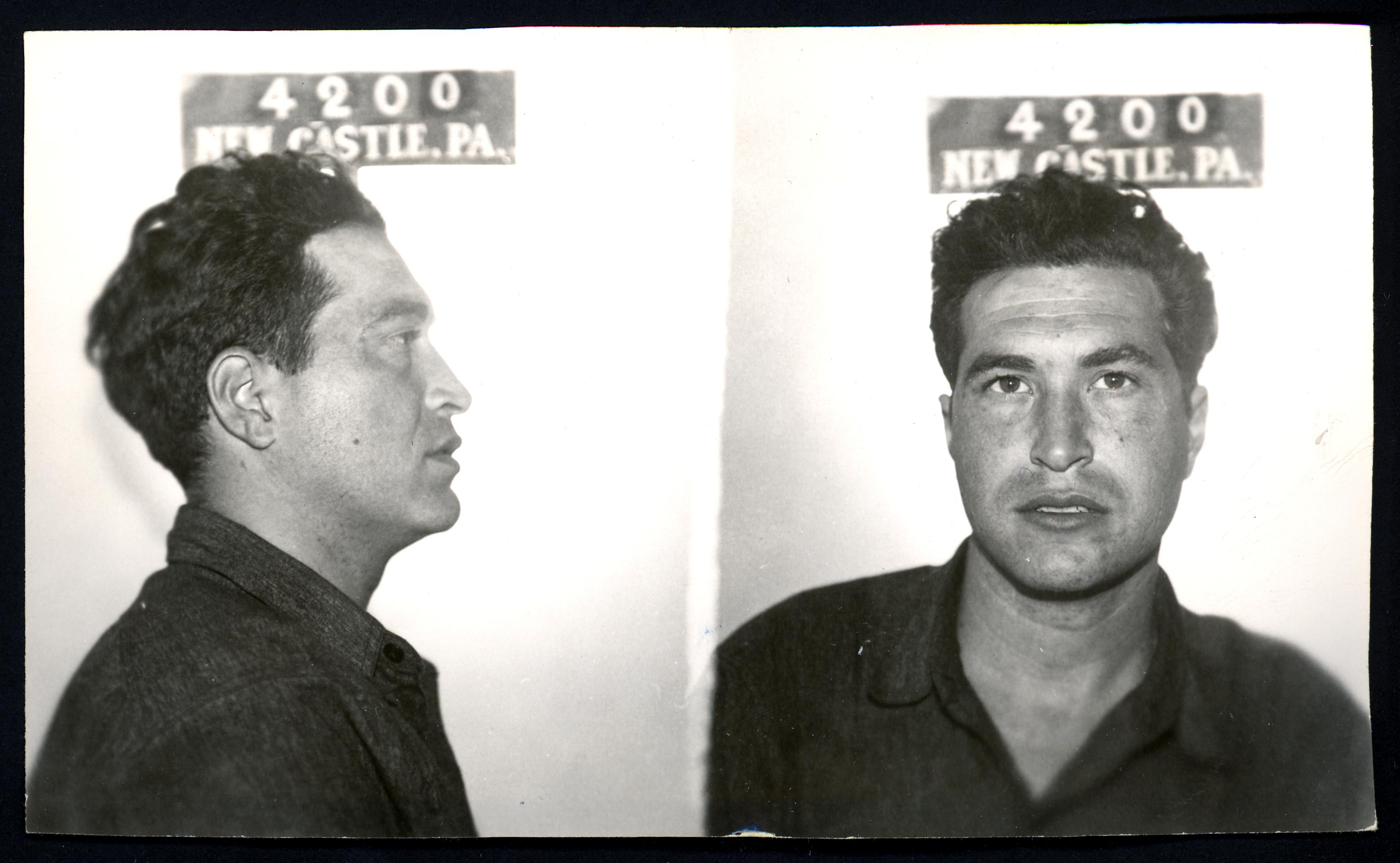
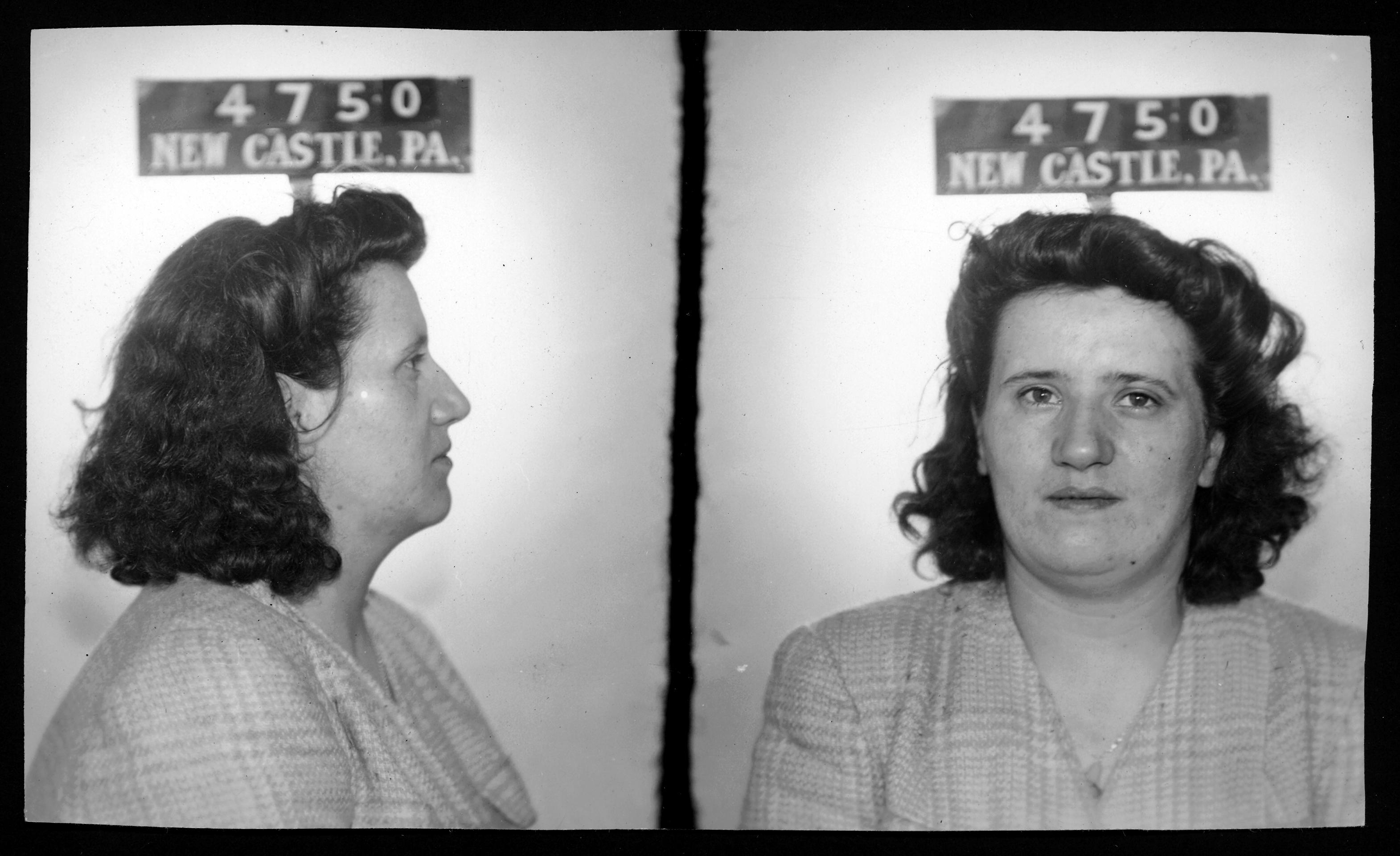
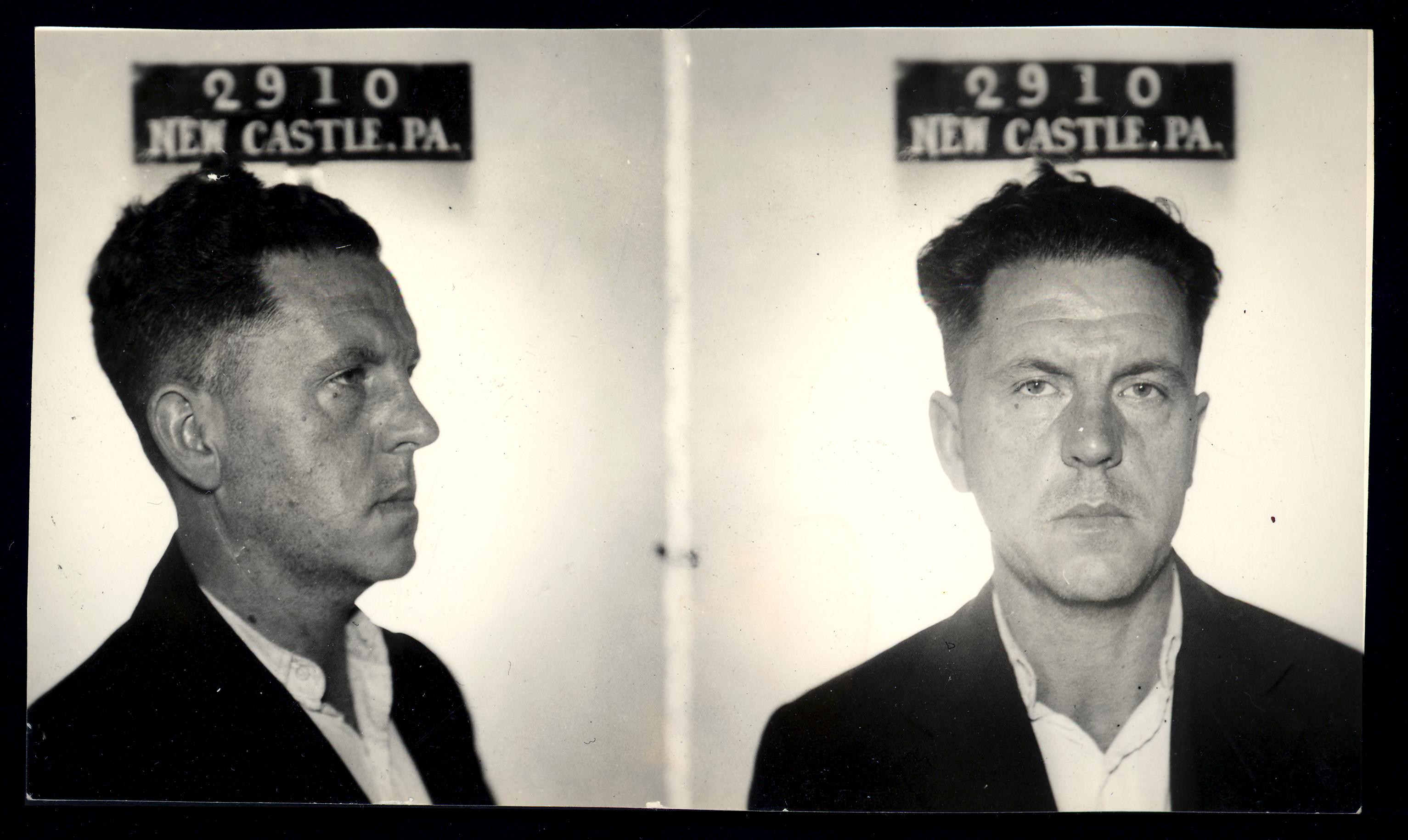
Janet Borland, “Auto Theft”, 8 Feb 1936

Leave a comment
Uncategorized

Bonnie Parker and Clyde Barrow were killed in 1934. Two years later, the story of the outlaw lovers was as powerful as it had ever been, and was undoubtedly on Janet Borland’s mind one winter’s night when she met a beguiling young rogue named Clarence Campbell, a small-time car thief from Missouri who had left a trail of stolen autos and forfeited bail bonds from Oklahoma to Ohio. She was impressed enough to agree to leave town with him in a Chrysler Coupé that they stole from outside a house on Beckford street. As they vanished into the night like a pair of genuine public enemies, with the snowflakes dancing in their headlights and everyone else in the world sleeping in their beds, Janet might well have experienced the most romantic moment of her life.

The car broke down on a country road just south of New Castle. It was two in the morning and around ten below freezing.

They set off on foot for Ellwood City, the nearest town. Janet had a friend there she could stay with and Clarence knew somewhere he could find shelter, too. As they trudged along the road, they were spotted by a highway patrol officer who had been sent out to look for the stolen car. They shook him off by running into the fields.

Janet’s friend’s house was on the far side of Ellwood City, and Clarence left her there. Not long after she was inside, two local police officers came to the door. They had traced Janet and Clarence’s footprints, which were the only ones visible on the streets after the night’s heavy snowfall.

Janet was no Bonnie Parker. She immediately confessed that she had been in the stolen car, and told the officers where to find Clarence, who proved himself to be no Clyde Barrow by allowing himself to be arrested and taken to New Castle jail.

Janet was discharged when the case came to court, but Clarence was convicted of larceny of an automobile. If Janet read the papers, she might have learned of his escape from a Pennsylvania jail in August that year, and his subsequent recapture, and his escape from an Oklahoma jail three years later, when he reached the key to his cell using a bent coat hanger. (He was caught after that one, too.) Her last memory of him, however, would have been the sight of him being led from court to face car-theft charges in towns in four other states. She never saw him again.

Sources: New Castle News (8 Feb 1936 “Arrest Couple For Theft of Auto Here”; 22 Feb 1936 “Pleas Entered And Sentences Given At Court”; 23 May 1936 “Campbell Recaptured”; 25 Sept 1939 “News in Brief”) Los Angeles Times, 22 August 1936 “Prisoners Reach Key With Coathanger”

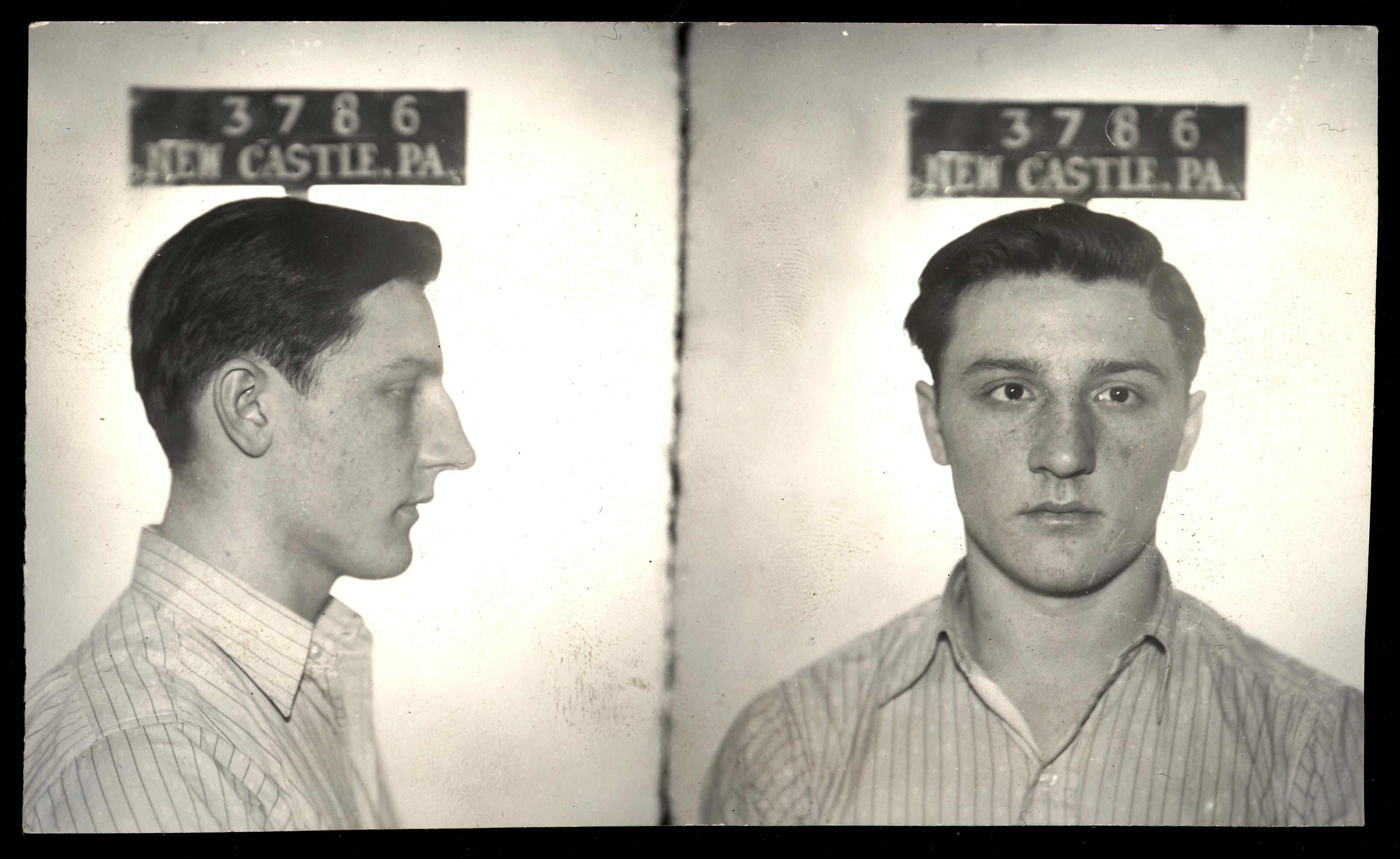
Bernard Dickey, “High Way Robbery”, 28 May 1948

comments 4
Uncategorized

The Liberty Hotel was a solid, 19th-century building at the southern end of the New Castle streetcar line, by the Mahoningtown railroad station. Its upper floors accommodated a selection of permanent and short-stay residents, and its ground floor housed a restaurant, a bar and commercial rooms that were rented, over the years, to various businesses. On May 23, 1932, during the period when the Mahoning Trust Company operated a bank on the premises, it became the scene of the most vicious robbery in New Castle’s history.

Each week, two employees, accompanied by a police officer for security, drove to one of the big banks in downtown New Castle to collect the cash that the bank used to cover local firms’ pay roll transactions. On the day of the robbery, they were carrying $23,000 in a satchel that was chained to the floor of their car.

They arrived at the Liberty Hotel at half past eight in the morning. As usual, the policeman, Officer Clarence Campbell, got out of the car first to see that the way was clear to take the money into the bank. He glanced up and down the street and turned to the car to tell the bank employees that everything seemed to be safe. As he did so, a man who had been sitting outside the door to the bank pulled a sawed-off shotgun out of a box that he’d had on his knees and shot him in the back from a distance of a few feet, blowing a hole through his spine and shredding his liver and lungs. The coroner later assured his family that he wouldn’t have known what hit him.

Two men ran out of the lobby of the hotel, levelling machine guns at the car and demanding the money. The bank employees handed over the satchel and the three men jumped into a maroon sedan that had pulled up alongside the bank’s car, then they sped south to Montgomery Avenue and on out to the Mount Jackson road. As they went, they tossed handfuls of roofing nails behind them to prevent pursuit.

It all took less than a minute.

Police blocked every road out of Lawrence County, and officers from surrounding cities and towns spread out across western Pennsylvania. Border towns were guarded, hundreds of motorists were halted and questioned and, as the Pittsburgh Post-Gazette reported, “all the aids of modern science – the radio, the police teletype, the telegraph and the telephone” were employed, but the robbers somehow slipped through the net.

It was discovered that the man who had shot Officer Campbell had stayed in the Liberty Hotel the previous night, using the name Tom Tenerico. He’d passed the evening in the bar, talking to the staff and other patrons, before going up to bed, and the police were able to get a good idea of what he looked like. A manhunt was launched across neighbouring states and a $2,500 reward was put up for information leading to the arrest of the robbers, but none of them was ever seen again. After three years had passed, the reward fund was shut down, the money reabsorbed into general funds, and life at the Liberty Hotel went on much as before.

Bernard Dickey would have been just out of high school when Officer Campbell was killed. When he went for a drink in the Liberty Hotel bar one night just before Christmas in 1947, he was thirty-four, with a job in the United Engineering and Foundry Co, and it’s possible he had no idea of the history of the hotel. Even if he had, it probably wouldn’t have stopped him doing what he did. Why would it? “Tom Tenerico” was never caught, so there was no reason why Bernard Dickey should be.

Harold Unangst, one of the locals, was in the bar the night Bernard was there. He’d been talking to a young woman and paying for drinks with a fat roll of nearly $300, consisting of two $100 notes wrapped around a bundle of smaller currency. He walked the woman home to her house just before midnight and was on his way back to the hotel when he was set upon by two men, who punched him to the ground and robbed him of his money. Even though it was clear that his attackers must have been in the bar that night and had followed him when he left, Unangst said he didn’t recognise either of the men, whom the New Castle News described in these terms: “Thug No.1, tall, thin scar on face, brown jacket, brown trousers. Thug No.2, short, red checkered shirt.”

The following summer, Bernard Dickey was arrested (we don’t know why; perhaps on a tip-off) and confessed to the robbery. He was Thug No.2, and he said that Thug No.1 had been John Assid, a truck driver who lived on Rabbit Street, right around the corner from Lafayette Street, where Harold Unangst had been attacked. John Assid claimed he was innocent, but was taken to the county jail anyway. There was no more news of the case, and there is no record of any sentence being passed on either of the two men. Bernard appeared in the newspaper a final time later that year, when he was admitted to hospital after an industrial accident in which a 300-pound weight fell on his foot, crushing the bones.

Bernard died in 1974, at the age of sixty-one. The Liberty Hotel, by then a run-down dive, in the news mainly for bar fights and gambling arrests, was closed down by the authorities a few years later, and was destroyed by fire at the end of 1977.

Sources: New Castle News (23 May 1932, “Bandits Kill Officer; Seize Fund of $23,000”; 24 May 1932, “Slayers Of Police Officer Temporarily Make Their Escape”; 23 May 1934, “Officers Slayers Still At Liberty”; 17 Jan 1936, “Launch Instruction School For Police Here On Thursday”;  1 June 1948, “Makes Robbery Charges”; 1 Nov 1948, “Man Injures Foot”; 19 April 1974, “Card Of Thanks”)

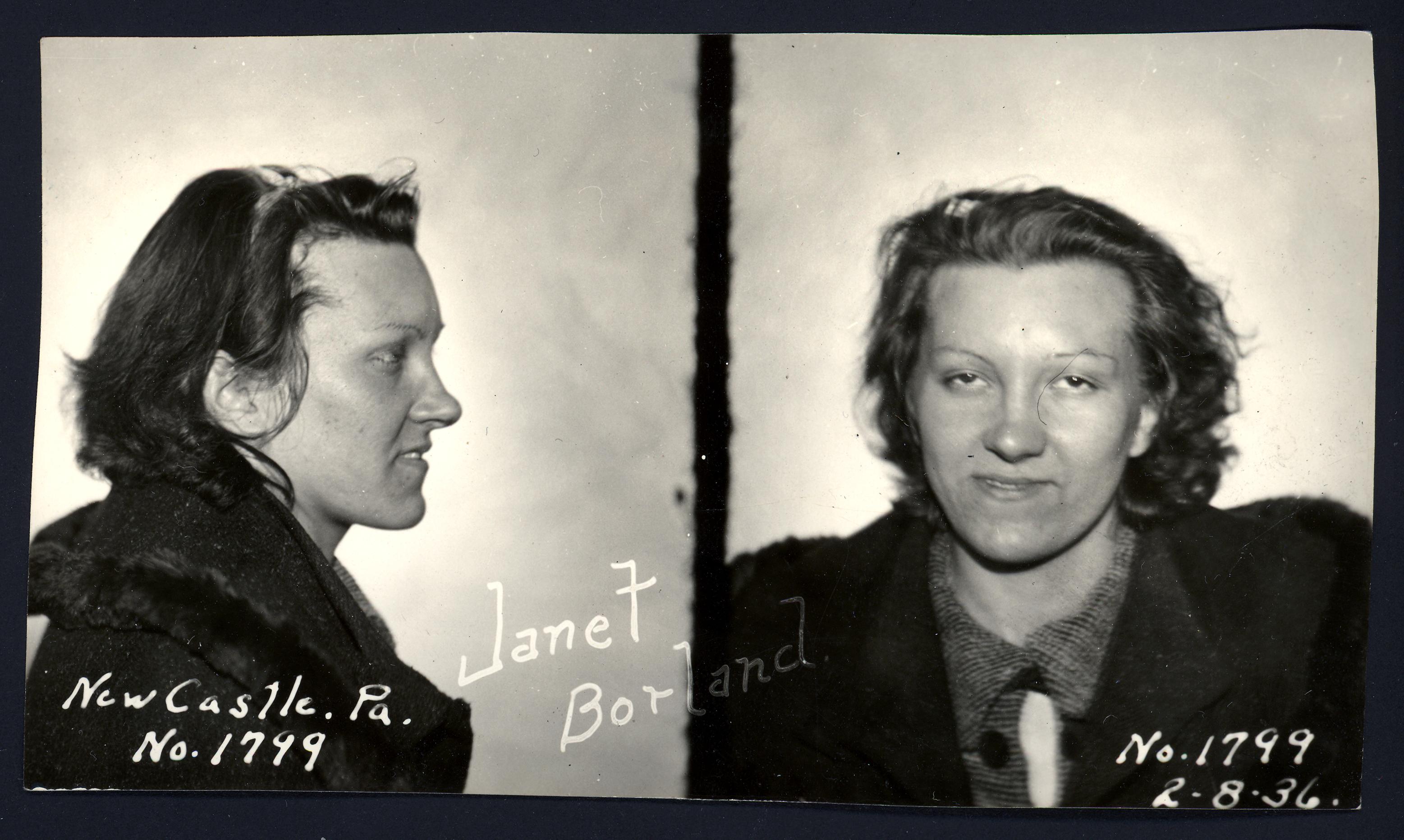
 

John Assid, “Driving with out License”, 2 Feb 1945

comments 2
Uncategorized

It came as a surprise to everyone when John Assid killed Ethel Brown and Assunta Monsey on Highland Avenue one February evening in 1945. He’d been sent off to war a couple of years before – very much against his will and only after he’d been captured by police when he tried to skip town rather than go to the army induction center – and he should on that day have been in Europe, fighting alongside the American troops who had breached the Siegfried line and were finally on their way through Germany to Berlin. Instead, he was behind the wheel of an overloaded coal truck that had driven into two middle-aged women who were waiting for a bus on the north hill.

The road was covered by a thin skin of snow, and high ridges of slush and ice were banked up in the gutters on either side. John Assid’s truck, travelling at only 25mph but carrying six tons of coal, swerved to pass a car waiting at an intersection and slid out of control, mounting the ice pack and skidding across the sidewalk, where it hit Ethel Brown and Assunta Monsey, dragging their bodies out onto Winter avenue.

John spent a week in the city jail before the inquest, at which the coroner’s jury found no evidence of reckless driving and recommended that no charges be brought. However, the police had discovered that he had gone AWOL from Fort Dix the previous September, and they handed him over to a couple of military policemen who drove up from Pittsburgh.

The army hung onto John until October 1946 – four years after the first time he ran away from them and almost two years after the second – before releasing him from service with an honourable discharge. He died in 2004, at the age of eighty-one.

(For more on John Assid, see Bernard Dickey’s mug shot.)

Sources: New Castle News (23 Nov 1942, “Ask Police To Seek Missing Boys”; 8 Feb 1945, “Coroner’s Jury Hears Evidence In Auto Deaths”; 9 Feb 1945, “Assid Turned Over To Army Police”; 28 Oct 1946, “Discharged From Army”)

Frank Bullano, “Larceny”, 8 March 1940

Leave a comment
Uncategorized

On the last Sunday night in 1940, Frank Bullano and his friend, James Perrone, both seventeen years old, were stopped and searched after being seen loitering around the parking meters on North Mercer street. Between them, they were carrying $3.25 in nickels – roughly the daily wage of a factory worker. They were arrested and held for further investigation, but were eventually released, having consistently denied any wrongdoing.

A few days before Christmas, five years later, Frank was almost shot dead on a road outside the little Belgian town of Bastogne, when his armoured division came under attack from German troops.

The American tanks were taken out by the first strikes and they sat in flames, blocking the road, as the German machine guns opened fire on the infantrymen. Some of the Americans returned fire while others tried to save the wounded tank crews. Frank was seen “advancing on foot, under heavy fire, to a burning tank to see if any of his buddies were trapped inside”.

Years later, the unit’s doctor wrote an article for his local medical society’s newsletter in which he recounted his experiences as an army medic and described the attack outside Bastogne. “Many of our enlisted men demonstrated great bravery on the road,” he said, “pulling tankers from their blazing tanks and driving jeeps with the injured men on the hood to our Aid Station. Many of these men were soldiers whose reputation in the unit would have given no clue to the fact that under stress they could meet this challenge.” He concluded, “I have never learned who to predict will be a hero”.

Frank was awarded a bronze star medal in recognition of his actions that day.

The Americans spent the next month under siege in Bastogne, completely surrounded by German tanks that shelled the village day and night. They had little fighting to do; their job was simply to sit tight and hold their ground until developments elsewhere forced the German army to retreat, which finally happened towards the end of January.

More than thirty-five thousand soldiers were killed in that final winter of the war in Europe. Frank wasn’t one of them.

After the war, Frank stayed in the army and served in Korea in the 50s and Vietnam in the 60s. He retired from the army in 1970, at the age of forty-seven.

Sources: New Castle News (30 Dec 1940, “Deny Stealing Parking Nickels”; 4 May 1945, “Sgt Frank Bullano Wins Bronze Medal”); John Prior’s article http://bit.ly/johnprior.

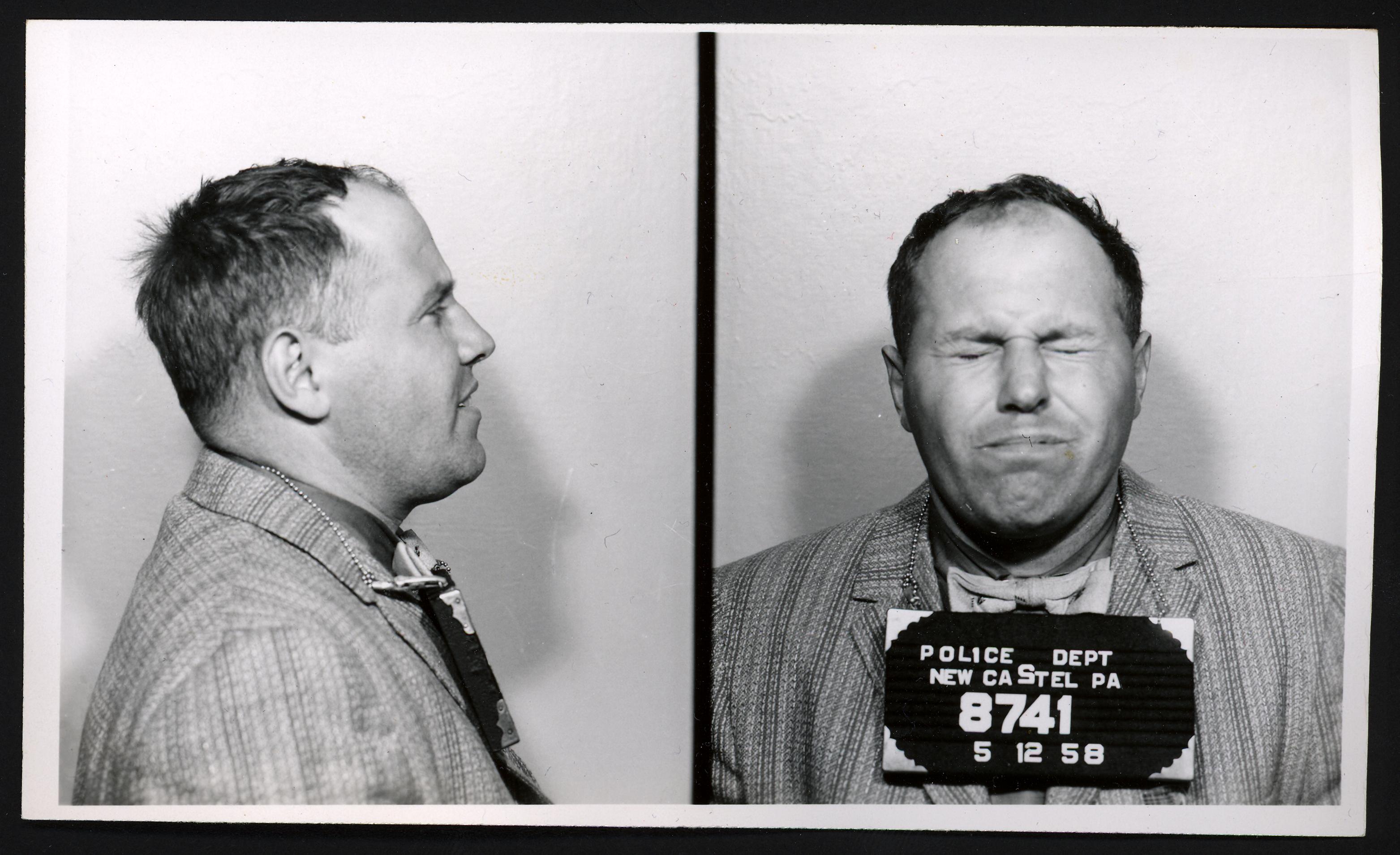
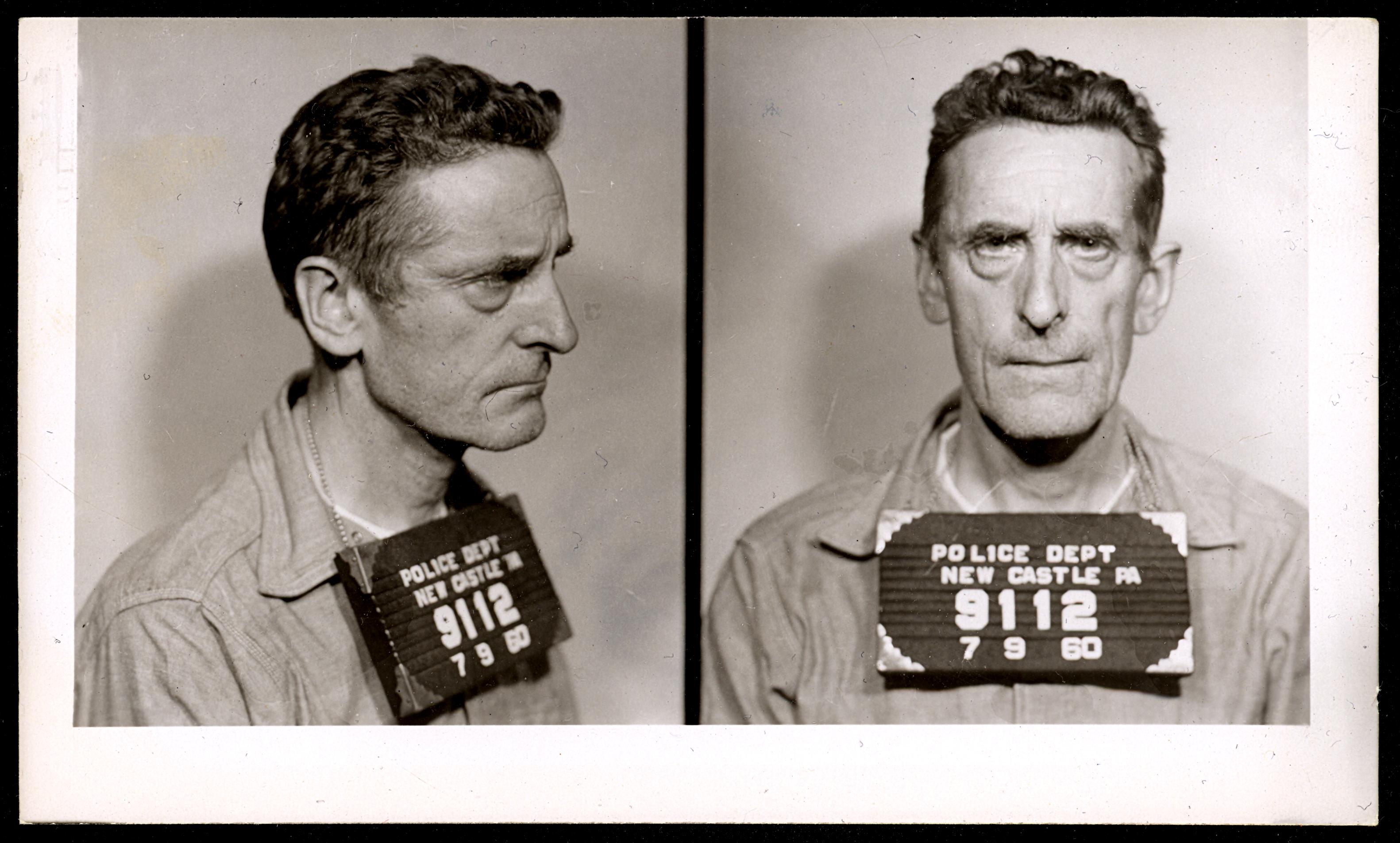
Charles F Esolda, “Pulling False Alarms”, 12 May 1958; and William Thompson, “Murder”, 8 July 1960

comments 6
Uncategorized


Charles was a good boy, but he had done a bad thing. A well turned out, plump young man, with the intellect of a child, who lived with his mother and her husband in a decent house on Randolph street, he had no idea what had come over him to make him raise the false fire alarm. “I don’t know why I did it!” he told the police. He had seen the fire alarm box on Long avenue and playfully pulled the handle, giving no thought to the consequences. What would his mother say when she found out?

When he was placed in front of the police camera, he screwed his eyes tightly shut against the glare of the flash bulb, creating exactly the expression that might appear on the face of someone who has just seen something that they wished they had not and is trying desperately to erase the vision from their minds—perhaps the same expression that crossed his face two years later when he looked into his mother’s bedroom on a Saturday afternoon and saw her lying unconscious on blood-soaked sheets.

It had been some hours since her skull had been bashed in with a hammer, and there must have been quite a mess. Charles, however, acted as if he hadn’t seen anything too bad; his mother was still breathing, after all. He went to his stepfather, William Thompson, and told him that he thought that his mother might be unwell, then went about his day. It was as if he thought that, if he refused to think about what he’d seen—if, rather than making a commotion, he simply closed his eyes and concentrated as hard as he could on pretending that nothing was wrong—he could blank out the awful scene and everything would return to normal.

William, Charles’s stepfather, didn’t call an ambulance until later that evening, several hours after a doctor could have done any good. The night before, in an argument about money, Charles’s mother had hit William in the face with the blunt end of a butter knife and then gone up to bed. Later, William took a hammer out of the utility door in the stove and followed his wife upstairs. He sat on his bed with the hammer for several hours, while she slept in her bed on the other side of the room. Then he went over to her and hit her over and over again before lying down and waiting for morning.

After calling the ambulance at around 7pm, William barricaded the front door with a divan. Then he removed the locks from all the doors in the house. The police found him in the cellar, working on the locks which, he told them, were in need of repair. The locks were broken, he said. He had to fix the locks.

Charles’s mother died two days later in New Castle hospital, without regaining consciousness. Her obituary recorded that she was born Mary Seamons, worked on the custodial force of the Jameson Memorial hospital and had three children, of whom Charles was the youngest. William was sent to Fairview state hospital for the criminally insane, where he remained for the rest of his life.

Charles moved out of the house on Randolph street and got himself a little apartment in the Belvedere block on North Cochran street, which eventually burned down in one of the many unexplained fires that occurred in downtown New Castle with increasing frequency as the city continued its long decline into the ’70s. He was a railroader at the time of the murder but, like his mother, he ended up working as a custodian at the Jameson Memorial hospital, where he stayed until he retired. He died in 1994, at the age of seventy.

Sources: New Castle News (12 May 1958, “Fire Chief Warns About False Alarms”; 11 July 1960, “Local Woman Beaten To Death”; 12 July 1960, “Deaths Of The Day”; 17 Aug 1960, “Mental Exam Is Requested For Thompson”; 18 Jul 1967, “$20 Bill Missing”; 2 April 1977, “Service Award Dinner Honors Jameson Staff”).

William Henry Fabian, “Burglary”, October 3 1947

Leave a comment
Uncategorized

The Government bought 450 million bushels of grain from the 1947 harvest to send abroad as part of its $400 million Greek-Turkish aid programme, aimed at stopping both countries going Communist. The policy prompted the John S Brown feed company of New Castle to insert the following notice in the small ads section every week for a year:

“TURKEY and GREASE get the GRAVY—$400,000,000 worth. What do we get? We get the highest grain prices in 27 years. Hundreds of thousands of tons of grain being shipped abroad, fast depleting our surplus stocks, thus sky-rocketing prices. Now as never before you must buy the feed that gives you most for your dollar. ‘Our Quality’ feeds do just that. Scientifically made, you get real dollar value. Feed ‘Our Quality’ feeds. Your neighbor does.”

At half past five in the morning of October 3, 1947, a patrolman noticed that there had been a break-in at the feed company’s grain store on East Washington street. He telephoned for assistance and the building was surrounded. William Fabian, an ex-employee of the company, was found hiding on the second floor and it emerged that he had removed five bags of corn from the warehouse before the police arrived. He was found guilty of burglary, fined $1 and costs and sentenced to eighteen months to three years in the Western penitentiary.

Grain prices peaked that month. The same paper that reported the grain store robbery contained a story about the first drop in the price of corn since the war. By the time that William was released from jail, grain would once again be too cheap to risk going to prison for.

Postscript: William Henry Fabian appears to be no relation to the William Fabian who burgled houses in 1942.

Sources: New Castle News (21 March 1947, classified ads; 20 May 1947, “Fund Calls Respite Seen”; Oct 3 1947; “Police Arrest Man in Store”, “Break In Prices In Grain Market”; Nov 15, 1947, “Sentence Court”)

William Fabian, “burglary”, 7 Jan 1942

Leave a comment
Uncategorized

When he was eight years old, William Fabian nearly burned to death. “The boy’s clothes had been soaked in gasoline by playmates, who then set them afire”, the newspaper said. A passer-by heard him screaming for help and beat the flames out, saving him from “almost certain death as a ‘human torch’”. William was taken to hospital with severe burns, and the two boys who had been with him—Benjamin Byro and Walter Krausm, both six years older than William—were arrested. They explained that they had not set William on fire; they had been playing with matches, setting fire to a pool of gasoline, and William had been standing too close to the flames. The police released them the next day.

William didn’t learn to keep away from older boys. In 1942, when he was sixteen, his best friend, John Linonis, was nineteen. John had a car, and the two boys spent winter evenings cruising through towns in Lawrence county, looking for darkened homes to burgle. They would pull up at likely looking targets, knock on the door and break in if no one answered. In New Castle, they stole money and jewellery from E B Hawkins on Moody avenue; a watch from Attorney J W Rhodes on Highland avenue; and jewellery from J A Gilkey on Rhodes place. They threw some of the loot into the Shenango river and pawned the rest in Youngstown. Altogether, they stole thousands of dollars-worth of valuables, from which they made only a few hundred dollars.

They were arrested in Franklin and were sent to New Castle to be charged there, too. They made full confessions, and the police sat them in the back of a patrol car and drove them around town so they could point out the houses they had hit.

Their co-operation evidently earned them no concessions. John Linonis was sentenced to ten to twenty years in the Western penitentiary; William was sent to Huntingdon reform school for an indeterminate period.

Postscript: William Fabian appears to be no relation to the William Henry Fabian who stole five bags of corn in 1940.

Sources: New Castle News (4 April, 1934, “Sharon Youth Is Severely Burned”; 30 Jan, 1942, “Youths Confess Three Robberies”); Titusville Herald, 6 May 1942, “Severe Sentence Pronounced On Boy Burglar”;

Josephine Stewart, “Intox. Driver”, 26 May 1953

Leave a comment
Uncategorized

By half past four in the morning, William Janiel was too blind drunk to drive his car, so he gave the keys to Josephine Stewart and told her to take him home, regardless of the fact that Josephine was blind drunk too. As they progressed at some speed down South Mill street, she somehow struck a parked car and crashed straight into another. William Janiel was quite badly hurt—pain in his head; blood on his clothes. Even so, he figured he would have a better chance of getting home if Josephine didn’t drive anymore, so he took over from there.

Officers Bartoshek and Rozzi arrived at the scene and were investigating the damage to the cars when William Janiel’s wife came hurrying down the street towards them, telling them to come to her house to save her husband, who was bleeding to death.

The Janiels lived just around the corner on Pennsylvania avenue. When the police got there, William Janiel was sitting on the porch, covered in blood but not dying, and Josephine Stewart was inside. The officers arrested the pair and were immediately attacked by Janiel’s enraged wife. Despite suffering what they described as a pounding from the woman, they were able to get Janiel and Josephine into the police cruiser and take them to the New Castle hospital along with Janiel’s wife, whom they also arrested. At the hospital, the drunk and furious prisoners caused such disruption that they couldn’t be treated, and all three were taken away to be jailed instead.

Janiel’s wife was released the next day without being charged. Josephine and Janiel were charged with driving a motor vehicle while under the influence and, a month later, were given the customary sentence of thirty days in the county jail, out in three if they paid $100 and costs. They paid up.

Later that year, Josephine sustained severe injuries—a concussion and some damage to her hip and pelvis—when she fell from the upper storey of her home on South Crawford avenue while cleaning the windows.

Sources: New Castle News (26 May 1953, “Three Arrested After Incident”; 3 June 1953, “Bills Returned By Grand Jury”; 18 June, 1953, “Two Prisoners Given Paroles”; 15 Oct 1953, “Woman Badly Hurt Washing Windows”)

James Clark, “Hwy Robb & Agg.Asst”, 23 Jan 1939

comments 2
Uncategorized

The January, 1939, basketball game between New Castle high and Butler high dominated the sports pages of the New Castle News for three days, causing even news of Joe Louis’s defence of his world champion title to be squeezed into a few column inches. The winning team stood a good chance of taking the section three title, which New Castle had taken from Butler the year before. The honour of the town was at stake.

The lead sports story on the day of the game told of New Castle’s hopes that James Clark, one of the team’s star players, would carry the game. He was bound to give the showdown everything he had—not only was it the biggest game of the year, but it was to be his final game for the team as he had completed six semesters and would be ineligible to play after that night. The sports reporter acknowledged that it would be hard to replace James. That was a problem for another day, though; the only thing that mattered now was that he would lead his team to victory and go out in glory.

However, on the night that that story went to press, as the papers were being printed and folded and tied in bundles ready to hit the streets the next day, James—dressed in his team jacket—and two other boys were arrested and charged with aggravated assault and battery and highway robbery after mugging a man named Lloyd Peak in Moravia street. All three were sent to the county jail in default of bail.

New Castle played without James and lost the game, 28-21. Butler high went on to take the title.

That summer, James joined the Civilian Conservation Corps, a last-resort relief programme that sent unemployed young men to government labour camps where they cut down trees, dug ditches and cleared streams for $30 a month.

New Castle high didn’t reclaim the section three title until 1942.

Sources: New Castle News (18 Nov 1937, “Bombers Start Floor Workouts”; 24 Jan 1939 “New Castle And Butler Will Play Here Tonight”; 25 Jan 1939, “Three Face Charges In Hold-Up Case”; 25 Jan 1939, “New Castle High Loses To Butler High 28-21”; 3 March 1939, Sports page stub; 17 July 1939, “CCC Exam Is Being Conducted Today”).

C R Van Houten, “Feloniously using high explosives”, 26 Oct 1938

comments 7
Uncategorized

William Mattingly’s car exploded outside his house at 4 o’clock in the morning. His housekeeper, the first to leave the house and see the car in flames, noticed a man standing in the trees nearby. She shone a torch on him and he ran away.

A stick of dynamite or a heavy charge of powder had been placed on the car’s gas tank and ignited. Mattingly couldn’t imagine why anyone would want to blow up his car, and couldn’t think who might have done it, but the police questioned him until they came up with a suspect: Carl Van Houten, with whom Mattingly had “had some difficulties over a bill.”

Carl was arrested on a charge of malicious mischief by use of explosives. He pled innocent, but was found guilty and got a $1 fine and two to four years in the penitentiary.

Sources: New Castle News (26 Oct 1938, “Charge Attempt To Wreck Auto”; 29 Dec 1938, “Court Imposes Heavy Penalties”).