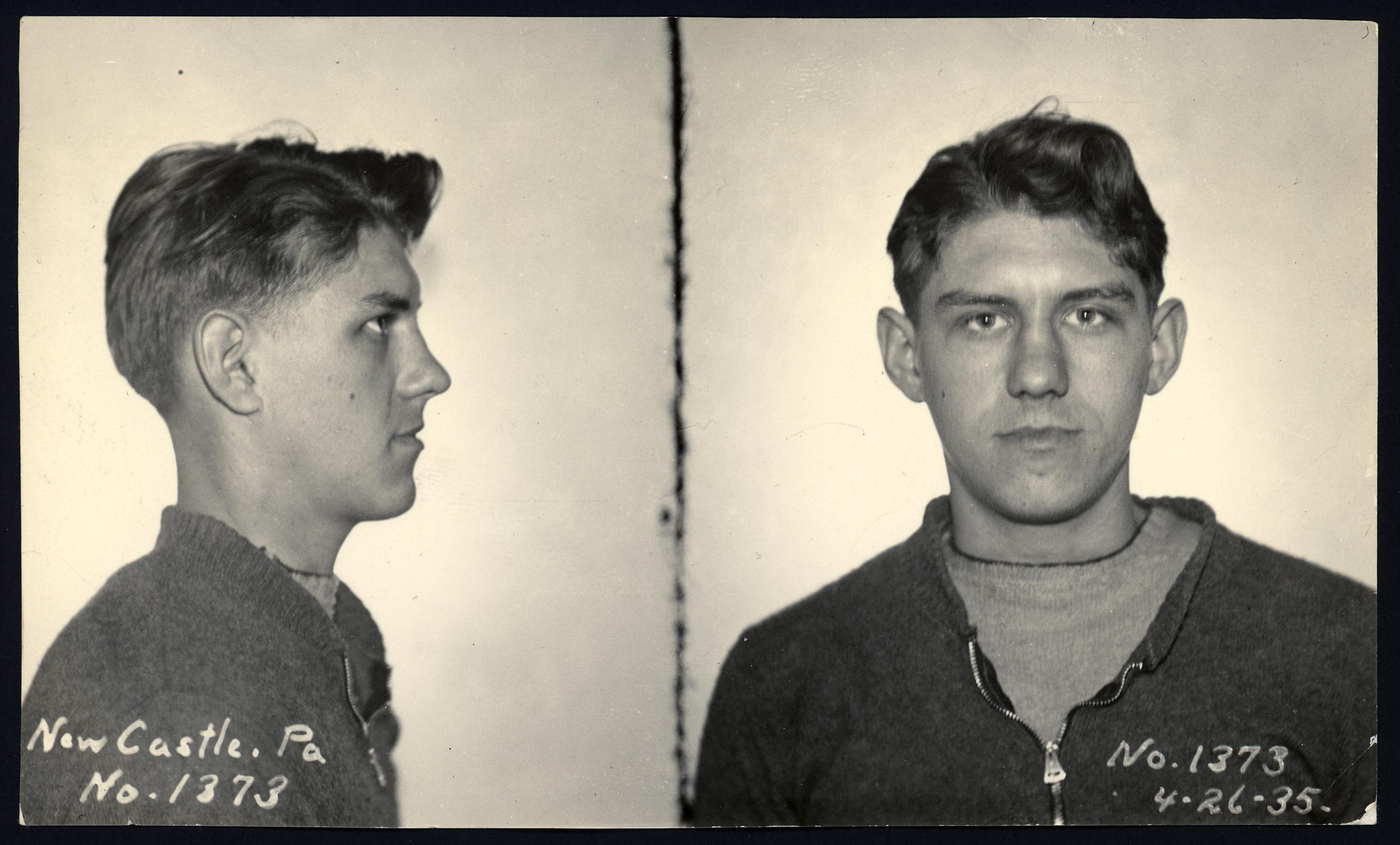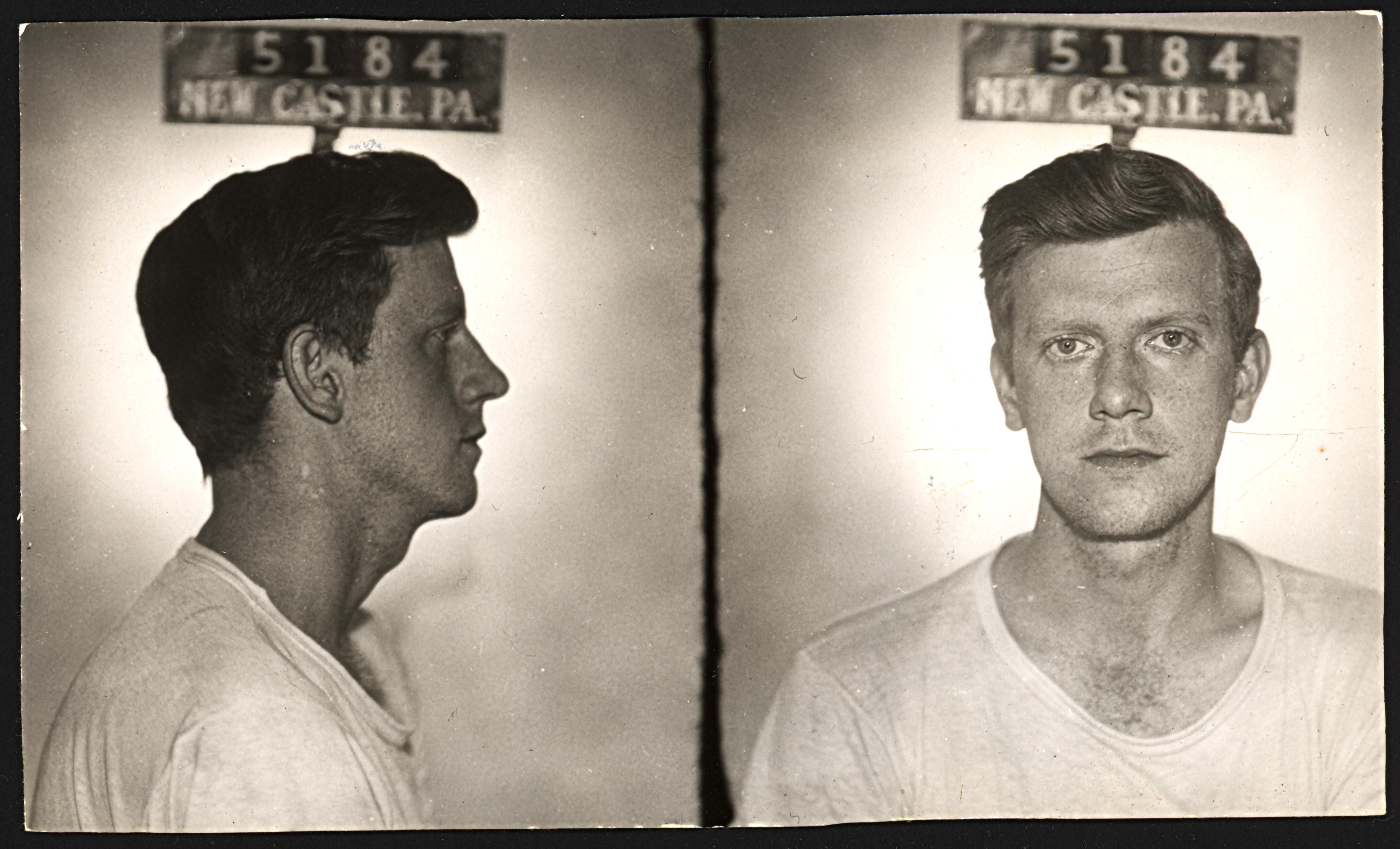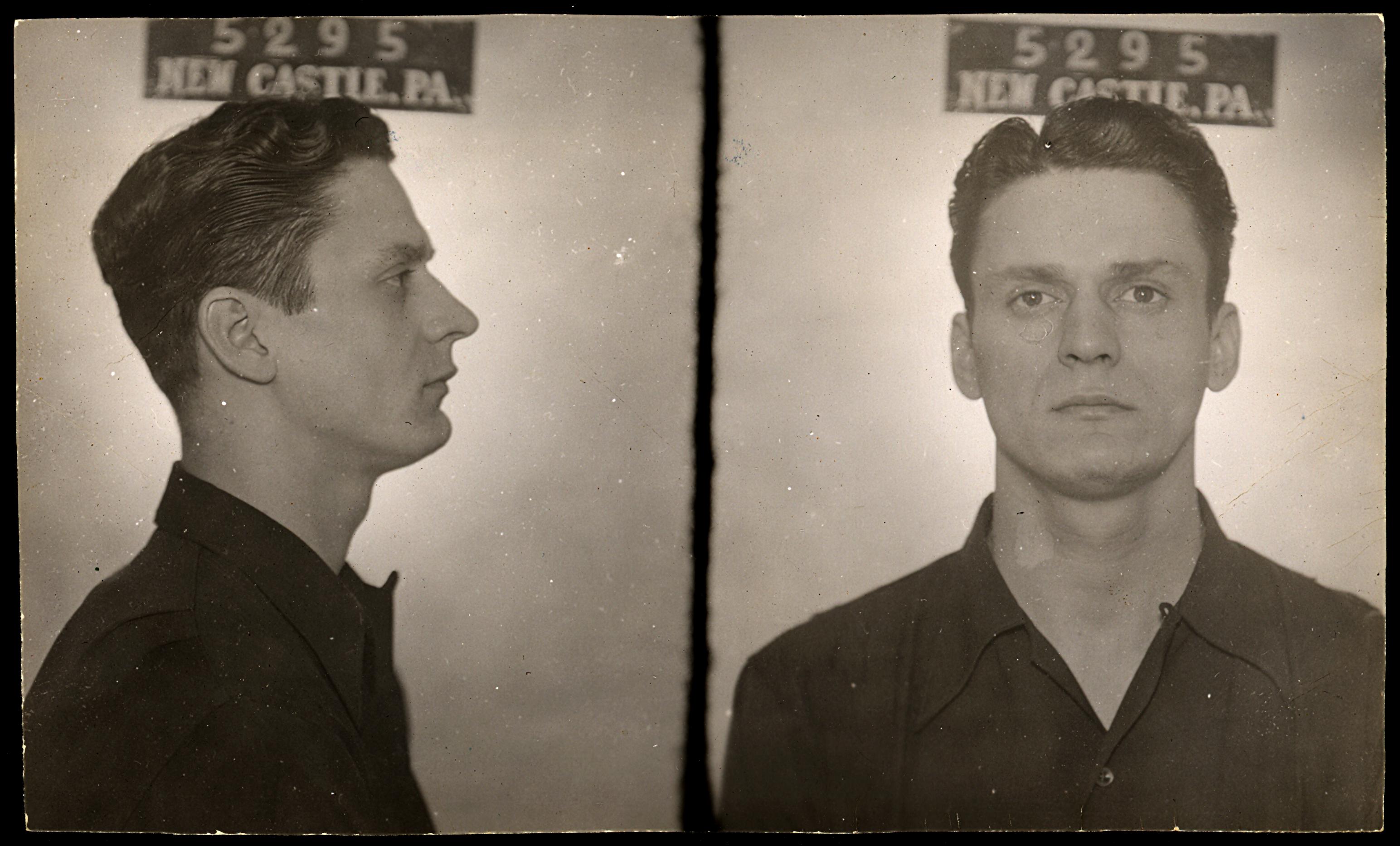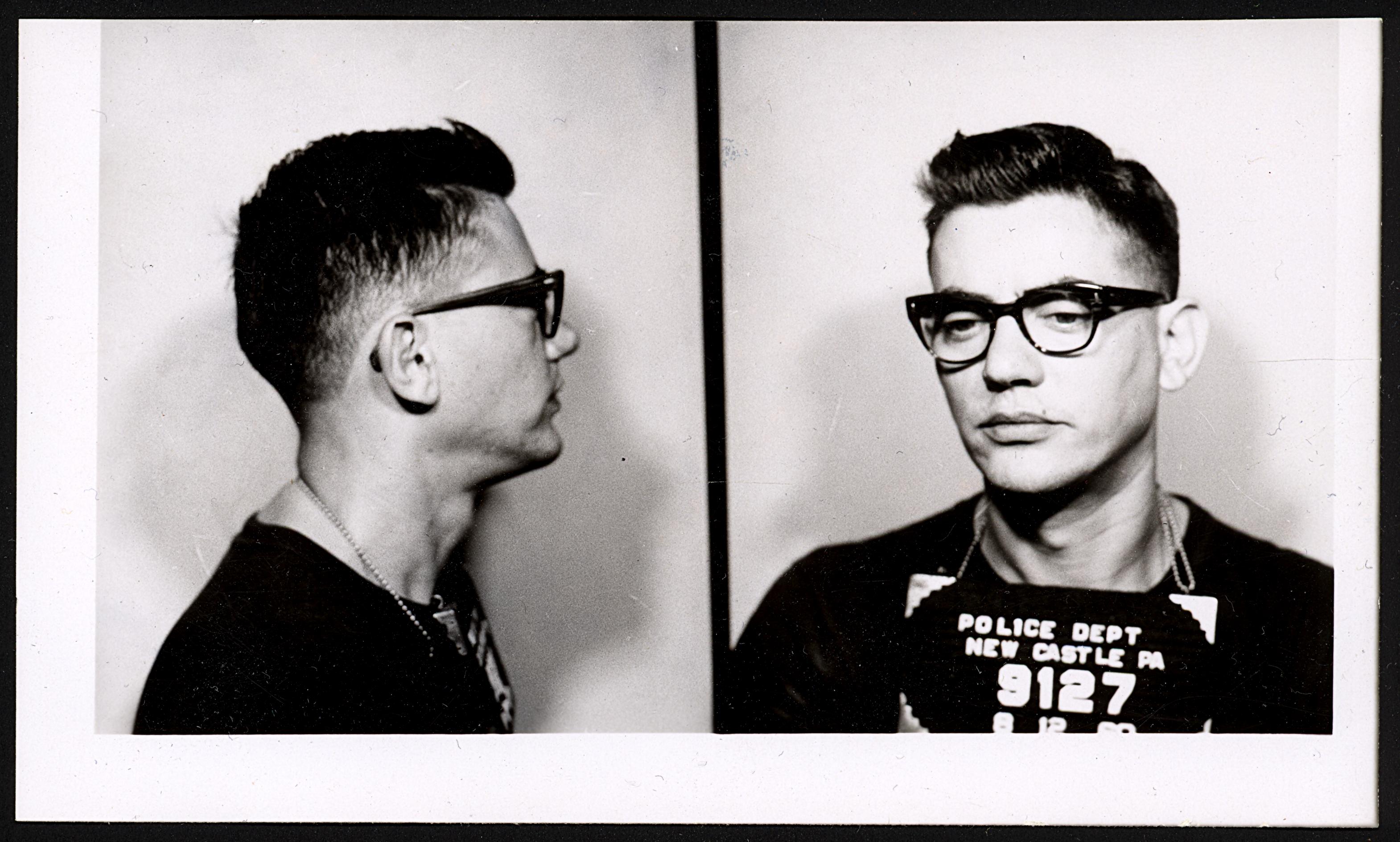
Sidney Fell, “Sodomy”, 21 August 1960

comments 17
Uncategorized

Sidney Fell

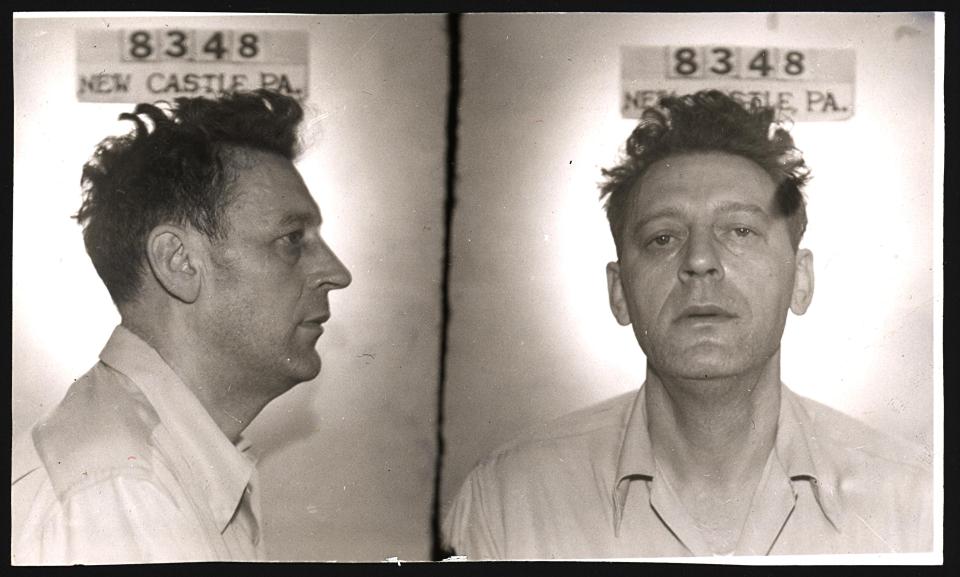
Sidney Fell and William Dugan were arrested for engaging in an act of sodomy in an empty office on the fifth floor of the Greer building on North Mercer street. They had been discovered after occupants of the building, on the look-out for a thief who had stolen $17 from a secretary’s wallet the day before, had noticed the two men loitering suspiciously in the corridors.

Sidney ran a window-cleaning business; William was a manual laborer and petty criminal who had been arrested the year before for assaulting Sidney in his home and robbing him of $55. (He had been released when Sidney had withdrawn his complaint and declined to press charges.) They were sentenced to four to eight months in the county jail.

Sidney’s parents were Austrian Jews. His father, Herman, had arrived in New Castle in 1905 and became the town’s first window-washing contractor; his mother, much younger than Herman, died of a year-long illness a few days after Sidney’s first birthday.

Sidney ran away from home when he was sixteen. He took a train to Chicago and another to Omaha, Nebraska, where he was accepted by a home for troubled or neglected children that had recently been made famous by a film called Boys Town, starring Spencer Tracy and Mickey Rooney, which played at the Penn theater when Sidney was fourteen, and had been featured in a long Joe Palooka comic strip storyline that ran in the New Castle News the year before he left town.

Around two hundred boys lived in the orphanage, including the youngest bank robber on record and a boy who had killed his father. Sidney liked it a lot. He stayed there for two years before returning to New Castle when he turned eighteen. He moved back in with his father and his older brother and cleaned windows for a year until America entered the war and he and his brother were drafted. Sidney went into the marines and spent two years handling mail in the South Pacific; his brother, Emanuel, went into the army and took part in the invasion of Normandy and the liberation of Holland before being killed in an ambush outside Bastogne, in Belgium—the same incident in which Frank Bullano earned his bronze star.

Sidney’s father’s death from a heart attack, ten years after the end of the war, left Sidney, at forty, all alone in New Castle and the sole owner of the family business. From that point on, he became ever more involved in the New Castle Playhouse, the town’s largest amateur dramatics company. He started out as a supporting actor but ended up taking lead roles and staging ambitious productions of Broadway shows.

In May, 1963, Sidney produced the New Castle Playhouse’s version of Guys and Dolls. The drama critic of the New Castle News gave it a positive review, but remarked that the players appeared confused, that it was difficult to identify with the characters, that people entered and left the stage too early or too late and that the lights and curtains were operated rather poorly. Sidney wrote the following letter in response.

“Dear Sir, I believe your so-called drama critic is grossly unfair. His review of our opening night last Thursday was too severe. Who does he think we are? We are only amateurs and we will be the first to admit it. We feel there are not enough community efforts in our city and without us and people like us this area would have even less community activities to express creative talent. I think this show is the liveliest and funniest show of the year and if you doubt either your drama critic or myself, come to the Playhouse and you will see which of us is right.”

The editor accepted the invitation. He had a good time, as Sidney had known that he would.

In the late sixties, Sidney set up the Drawing Room Players, which he billed as the experimental wing of the Playhouse. He used it to produce uncommercial plays by lesser known playwrights that would not otherwise be performed in New Castle. Its productions earned Sidney the best reviews of his theatrical career, with the New Castle News calling him “tremendously talented” and declaring his works to be a triumph.

Sidney died in July, 2007, at the age of eighty-three. William Dugan—who, it turned out, had been the thief who had stolen the secretary’s $17, thereby alerting the office workers to the presence of suspicious characters in the building and inadvertently bringing about the arrest of Sidney and himself—was arrested in 1974 for beating his son unconscious as a punishment for coming home drunk. There is no further record of his life.

Sources: New Castle News (6 April 1925, “Deaths Of The Day”; 14 November 1930, “Window Washer Falls Into Creek”; 16 Dec 1940, “News Briefs From City Hall”; 30 Aug 1943, “In US Armed Service”; 15 Jan 1945, “Pvt Emanuel Fell Killed In Belgium”; 11 Aug 1955, “Seventy Two Win Drivers Permits”; 31 Oct 1955, “Deaths Of The Day”; 21 Aug 1959, “Barn Players In Rehearsals”; 9 May 1959, “Robbery Suspect Held By Police”; 11 May 1959, “Man Released After Charges Are Dropped”; 13 Aug 1960, “Face Morals Charges”; 15 Aug 1960, “Plead Innocent”; 6 Dec 1960, “Jury Returns 6 True Bills”; 18 Feb 1961, “Court Imposes 19 Sentences”; 17 May 1963, “First Nighters See Guys, Dolls”; 23 May 1963, “The People Write”; 5 Aug 1968, “The People Write”; 10 July 1968, “’A Raisin In The Sun’ Called Triumph For Local Talent”; 22 Jun 1970, “Boys Town Director Tells Father’s Role In Family”; 29 April 1974, “North Hill Man Charged In Son’s Beating”).
Herman Robertson, “Manslaughter”, 15 June 1946

Leave a comment
Uncategorized

Herman Robertson

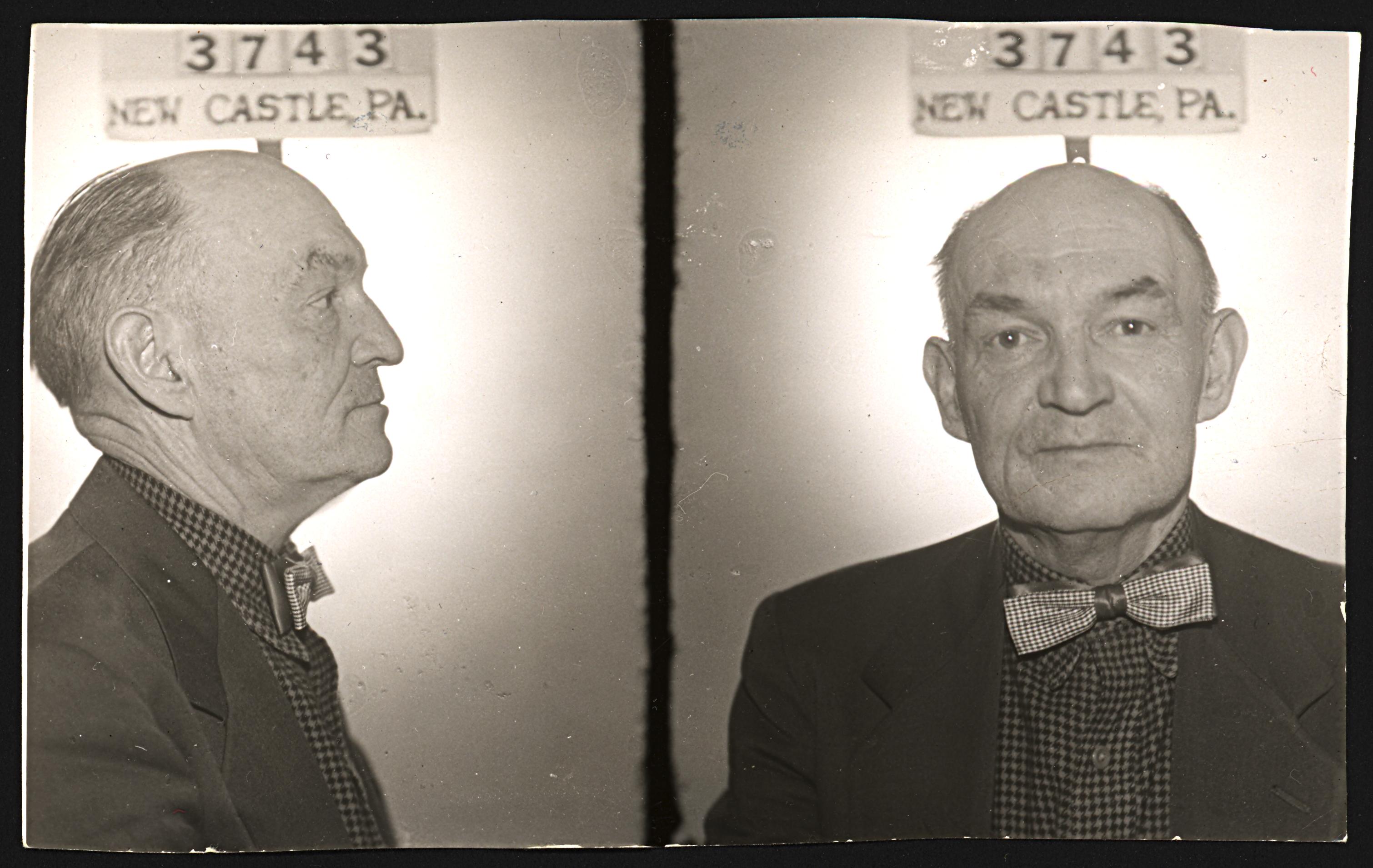
Jack Boles, a veteran of the Spanish-American war, was the janitor in the Winters block on East street. He turned seventy-one in June, 1946, and invited the residents of the block to his apartment to help him celebrate. He and Herman Robertson, an unemployed man who lived downstairs, walked to the Produce street liquor store to buy whiskey and wine and brought it back to the building. The party went on all evening, until Jack and Herman started arguing and shoving each other. They ended up in a running scuffle through every room in the apartment, which led them out onto the balcony at the rear. Herman stumbled into Jack. Jack went over the banister and fell twenty feet to the ground below, cracking his skull open. Herman went back to his own apartment, where he was arrested later that night.

Jack died in the hospital the next day. Herman pled guilty to involuntary manslaughter and was given a $100 fine and six months in the county jail.

Herman had a young family at the time. One of his sons, Thomas, went on to become a sergeant in the air force. Another, Paul, became a petty criminal, and was arrested for robbing the East street market and the Produce street liquor store, among other places.

Herman died in 1964, at the age of seventy.

Sources: New Castle News (17 June 1946, “East St Man Killed In Fall”; 20 June 1946, “Name Involuntary Manslaughter In Jack Boles Death”; 28 Sept 1946, “Destruction Day At Court House”; 27 June 1954, “Robertson Promoted To Sergeant Ranking”; 7 May 1956, “Police Solve Odd April 13 Hit-And-Run”; 7 June 1956, “Police Hold 2 In East St Market Theft”; 18 April 1959, “Man Pleads Guilty To Burglary Charge”; 3 October 1964, “Death Record”).

Floyd Hillkirk, “OMVWI”, 15 April 1956

comments 7
Uncategorized

Floyd Hillkirk

After serving in the Pennsylvania Volunteers for less than a year, Isaac Hillkirk was captured by the Confederate army in the battle of Plymouth, in 1864. The hundred or so former slaves who had fought alongside his regiment were executed on the spot. Isaac and the other white captives were sent to a prison camp in Andersonville, Georgia, where tens of thousands of Union soldiers were held in a few acres of marshy ground, surrounded by a stockade. Twelve thousand died in little over a year from starvation, dysentery and hookworm. Isaac spent eight months there. When the war ended, he returned to Pennsylvania and set up home in Mercer, twenty miles north of New Castle, where he lived for the rest of his life. He died in 1920, when his grandson, Floyd Hillkirk, was eleven years old.

By the end of the decade, Floyd was an apprentice in the Cooper-Bessemer diesel engine plant in Grove City. He lost his driving license when he was twenty-one, after he was arrested for driving while intoxicated. Two years later, when Mildred Shaffer, the eighteen-year-old girl he was dating, asked for a ride into New Castle to visit her sister, Floyd had to ask his friend, Lowry Conner, to drive them in his car. Mildred sat on Floyd’s lap on the front seat; another girl, Mildred’s friend, sat between them and Lowry. About seven miles from town, Lowry lost control of the car on a corner near the Shady Grove inn. It left the road and overturned in a field. Everyone got out with only minor cuts and scrapes apart from Mildred, who split her skull. She died in the New Castle hospital twenty days later. The inquest apportioned no blame to any of the survivors.

Floyd got married when he was twenty-five and had two children. In 1956, he was arrested at North street and North Mercer street for drunk driving, an offence for which he had his mug shot taken and was fined $100. He later became a foreman in the machine shop of the Cooper-Bessemer plant, where he worked until he died, in 1970, at the age of sixty-one.

Sources: New Castle News (21 July 1930, “Revoke Licenses Of Seventy Two Drunken Drivers”; 28 July 1932, “Three Injured In Auto Crash”; 8 July 1932, “Plans Inquest In Girl’s Death”; 4 Aug 1932, “Hold Inquest In Girl’s Death”); Floyd Hillkirk and Isaac Killkirk details via findagrave.com; “Black Flag Over Dixie”, Gregory J Urwin, Southern Illinois University, 2005; “The 101st Pennsylvania in the Civil War”, Harold B Birch, AuthorHouse, 2007.

Clyde Kennedy, “Intox Driver”, 27 Dec 1953

Leave a comment
Uncategorized

Clyde Kennedy walked with a limp because of a woodcutting accident when he was ten. (He sank an axe into his right foot while chopping wood at the cement factory.) His grandfather, Ezekiel Sankey, had owned the land on which west New Castle was built and had been largely responsible for bringing the first railroad to the town after the canal was abandoned, His cousin, Ira Sankey, was a world-famous singing evangelist whose hymn books sold millions of copies and who travelled the globe raising money for Christian causes. Clyde worked in a machine shop.

Clyde’s wife, Marie, gave birth to four children before dying at the age of thirty-five. He never remarried. Three of his children moved to California; one moved to Kansas. Clyde retired in 1959 and died of a heart attack in a rented room two years later, at the age of sixty-seven.

Sources: New Castle News (1 Aug 1894, “Three Score Years”; 4 Aug 1900, “Pioneer Citizen Is Called Away”; 6 April 1905, “Cut Foot Badly (sic) With Large Ax”; 8 Feb 1934, “Razed Landmark Was Sankey Home; 2 June 1937, “Deaths of the Day”; 30 Nov 1961, “Deaths Of The Day”; 30 April 1966, “Deaths Of The Day”).

A_____ P______, “Larceny of Car”, 26 April 1935

comments 6
Uncategorized

A_____ P_____ was seventeen when he was arrested for stealing a car. It was the only time in his life he would trouble the police. He still lives in New Castle (hence the redaction of his name), and this November he will celebrate his ninety-fifth birthday by playing in his polka band in front of family, friends and invited guests.

And I’ll be there, too.

At the end of November, I’m travelling to New Castle with a documentary crew to film part of their documentary, American Mugshot. We have some interviews lined up with relatives of some of the people I’ve written about, but we’d like to talk to more, if possible.

So, do you know anyone you’ve read about on the blog? You don’t have to be related; we’d still like to talk to you about your memories of them—good or bad.

If you do, and you wouldn’t mind me asking you a few questions, let me know.

You can leave a comment on this post, or click here to send me an email.

Thanks, New Castle—see you soon!

Paul Hostinsky, “Drunk & Dis Cond, Resisting”, 26 December 1958

Leave a comment
Uncategorized

Just after dark on the day after Christmas, 1958, the owner of the New Life Lunch on East Washington street called to a passing beat policeman that he needed help with an abusive customer. Paul Hostinsky had been drinking all afternoon and had caused a disruption when he was refused any more liquor. Officer Cubellis told Paul to get in a cab and leave. Paul kicked him in the balls. There was a scuffle. Paul ended up in jail with stitches in his scalp—the police reported that he had fallen while getting out of the patrol car at headquarters—and Officer Cubellis was signed off for a few days with pain in his groin.

Paul’s father—Paul Sr—died at the age of twenty-eight, when Paul was five. He and Paul’s mother had been separated for some time, and he was living in Donora, working in the zinc mill and occasionally getting in trouble with the police. Around 8 o’clock on a summer evening in 1930, police in Monessen, south of Pittsburgh, received a call that a drunk was causing a disturbance behind the Page plant. The man—Paul’s father—had removed his shirt and waded into the Monongahela river. He refused to go with the police when they called him. He shouted that he was a fighting marine (he had served in Europe in the first world war), that he was on government property and that if they wanted him they would have to come and get him. A lieutenant tried to grab him but he threw him into the river and waded out further until, suddenly, he dropped beneath the surface of the water and vanished.

The police waited on the bank. They were used to dealing with Paul Sr when he was drunk, and this would not be the first time he had tried to escape them by swimming across the river. But he stayed under. Searchers with grappling hooks pulled the body from the river the next morning. It was already black and swollen. The burial took place that afternoon.

Like his father, Paul Jr was arrested on drunk and disorderly charges every so often throughout his twenties, following his return home from the army. By 1975, when he was arrested for brawling in a YMCA, he was living in Erie. He died in West Virginia in 2003, at the age of seventy-eight.

Sources: Beaver County Times, 27 December 1948, “Twelve Ambridge Men Are Inducted”; Lebanon Daily News, 12 Sep 1975, “3 Men In Melee Are Charged”; Monessen Daily Independent (7 July 1930, “Man Jumps Into River To Escape From Police”; 8 July 1930, “Recover Body Of Man Who Jumped Into River”); New Castle News (21 Nov 1958, “Two Arrested, Fined Today”; 27 Dec 1958, “Man Is Jailed After Scuffle”; 1 April 1961, “Man Beaten”; 4 June 1962, “Albert T Hupko Dies At Home”; 6 Sep 1972, “Deaths Of The Day”).

Lee Render, “Window Peeper”, 24 September 1945

Leave a comment
Uncategorized

“Jack the Peeper” caused alarm in different parts of the city during the winter of 1894, spying on women in their homes and insulting them in the street. He was never caught. Every few years thereafter, another Jack the Peeper would be reported, among them a demented person seen running through people’s backyards in 1895; a rough-looking man who escaped by mingling with a group of Swedes who had been calling on a servant girl in the vicinity in 1896; a female Jack the Peeper in 1905; a figure wearing a police officer’s badge in 1912; and a prominent citizen, whose identity was protected by the press, in 1921.

The term was abandoned in the thirties. “Peeper” would suffice from then on.

There were four reports of peepers in 1945, all in the Croton district and the south side, and two arrests: Richard Watkins, the brother of Robert Watkins; and Lee Render, of whom there is no record other than his photograph.

Sources: (12 Dec 1894, “Was Suspicious”; 24 April 1895, “Jack The Peeper”; 25 March 1896, “Jack The Peeper Again”; 12 June 1901, “Jack The Peeper”; 5 April 1905, “Jack The Peeper Busy On East Side; 17 Nov 1905, “Sixth Ward Maiden Jack The Peeper”; 3 Dec 1912, “Police Are After ‘Jack The Peeper’”; 28 Dec 1912, “Jack The Peeper Caught By Resident”; 1 May 1917, “Ralph Rotoli Is Sent To Workhouse”; 23 June 1920; “’Jack The Peeper’ At Work Again” 22 Dec 1920, “Jack The Peeper On Eastside Now”; 22 Dec 1920; “Jack The Peeper Caught”; 5 Dec 1921, “Jack The Peeper Is Reported Here”; 31 Dec 1921, “What Is The Idea Of Keeping Name Secret?”; 3 Jan 1922, “Jack The Peeper Is Put To Flight”; 23 March 1931, “’Peeper At Work On The East Side”; 24 Feb 1945, “Alert Officer Nabs Peeper, Chief Reports”; 26 April 1945, “Peeper Active”; 8 May 1945, “Fires At Peeper In Croton Section”.)

Howard Brown, “Intox Driver”, 13 June 1949

comments 8
Uncategorized

Howard Brown was a field gun ammunition handler in the battle for the Gothic line in 1944 and the advance into north Italy in 1945, campaigns that saw the deaths of more than one hundred and ten thousand soldiers. The war was over before he was twenty. By the time he was twenty-one, he was back in New Castle, with a job in the Lingerlight dairy, a wife and a baby daughter, whose birth moved him to compose a poem entitled, “My Thanks”, which was printed in the personals column of the New Castle News in November, 1947.

“Our Father, who are in heaven above,
I want to thank you for your endowing love,
Of giving me a daughter, whom I love from,
The bottom of my heart.
Thru your wondrous grace and my devotion,
We shall never drift apart.
“Each night I prayed to you for a daughter fair,
With skin so smooth, and soft silken hair,
A turned up nose and eyes of blue.
It all seems so hard to believe to be true.
“Thank you God for sending this little angel,
Each time she smiles she shows,
A cute little dimple.
With two chubby little arms to hold me tight.
Oh dear God you know what is right.”

There is no further record of Howard’s life other than his arrest for driving under the influence of intoxicating liquor in 1949.

Sources: New Castle News (2 Jun 1944, “In US Armed Service”; 7 Oct 1944, “Five Local Men Serve With 168th”; 7 Nov 1944, “In US Armed Service”; 29 Jul 1946, “Dorothy Sanis and Howard Brown Wed”; 22 Sep 1947, “Births”; 22 Nov 1947, “From Me To You”).

John Vinkovich, “Worthless Checks”, 26 January 1950

comments 9
Uncategorized

John Vinkovich bought a watch from Arthur Meek’s jewellery store with a forged check. Meek described him to the police, who picked him up later that day. He admitted to forgeries in eight other towns in Wisconsin, Ohio, Pennsylvania and Kentucky—he had signed all the bad checks with his own name—and to having crossed state lines in a car he had stolen in Cheyenne, Wyoming. The court handed him over to the federal authorities.

John had grown up in Uniontown, south of Pittsburgh. When he was nineteen, he was charged with a morals offence—indecent exposure, molestation or rape. The following week, he married his fiancé, Gertrude. One morning six weeks later, he told her he was going to work, left the house and never came home. She divorced him on grounds of desertion.

The towns where John had defrauded shopkeepers took turns locking him up. He spent the next two years serving short sentences in a succession of jails. When he was finally free, in 1952, he went to Rockford, Illinois, where he got work as a labourer. On the tenth of July, he was sent to measure a water tank, ninety-four feet above the ground, prior to painting it. His steel measuring tape was caught by the wind and carried across a high tension line below him. In the instant before the tape disintegrated, twenty-seven thousand volts shot through John’s body. He fell from the tank, striking a board fence gate before hitting the concrete, dead. He was twenty-nine years old.

Sources: Connellsville Daily Courier (14 Sep 1943, “Committed To Jail”; 15 Jan 1947, “Divorces Granted County Wives”); Uniontown Morning Herald, 11 Feb 1946, “3 Divorce Libels Instituted Here”; Lima News, 6 Oct 1949, “Check Passer Hunted, Nicks 2 Stores for $83”; Mansfield News Journal, 10 Dec 1949, “Report 4th Bad Check”; New Castle News, 2 Feb 1950, “Get Sentences On Wednesday”; Janesville Daily Gazette (25 Oct 1950, “Extradite Man From Kentucky”; 16 Nov 1950, “Exams Ordered In Fraud Case”; 10 March 1951, “Leaves Jail Here, Taken To Rockford On Check Charges”);Racine Journal Times, 10 July 1952, “Man Killed In Fall From J I Case Water Tank”.

Carl Floyd Retort, “Ssp Larceny”, 18 February 1950

Leave a comment
Uncategorized

Luigi Ritorto left Italy when he was ten years old and spent the next eighteen years in Buenos Aires. In 1909, he took a boat to America, where immigration officials registered him as Louis Retort. He got a job in the Union limestone quarry in New Castle and married Rose Pacella. She had two sons already. By 1930, when those boys died in an explosion in a gasoline store that they were robbing—their few remains were buried in a shared casket—eight more children had been added to the household, including Carl, the youngest.

Carl grew up working on the family’s small farm. He was drafted in June, 1944, just after he turned eighteen. His brother, Harry, was shot on the first day of the Normandy invasion, six weeks later. It took him three days to die.

Carl survived the war. He was arrested in a New Castle bank in 1950, when he tried to cash an unsigned federal bond. He was released when he was able to prove that he had been given the bond by a man who owed him money. He moved to Cleveland not long after. His visits home were marked by occasional arrests for drunk driving and minor motor accidents.

Luigi Ritorto died in Miami in 1956, at the age of seventy-five. Carl Retort died there in 2008. He was eighty-two years old.

Sources: New Castle News (22 Feb 1930, “Find Bodies In Ruins”; 23 Feb 1930, “Two Caskets Are Used For Four Victims Of Fire”; 26 Sep 1944, “Edenburg”; 5 Nov 1948, “Pvt Harry Retort Funeral Monday”; 18 Feb 1950, “Bond Results In Arrest Of Two”; 23 June 1951, “Two Sentences”; 23 Jan 1956, “Three Arraigned For March Term”; 17 Oct 1956, “Deaths Of The Day”).