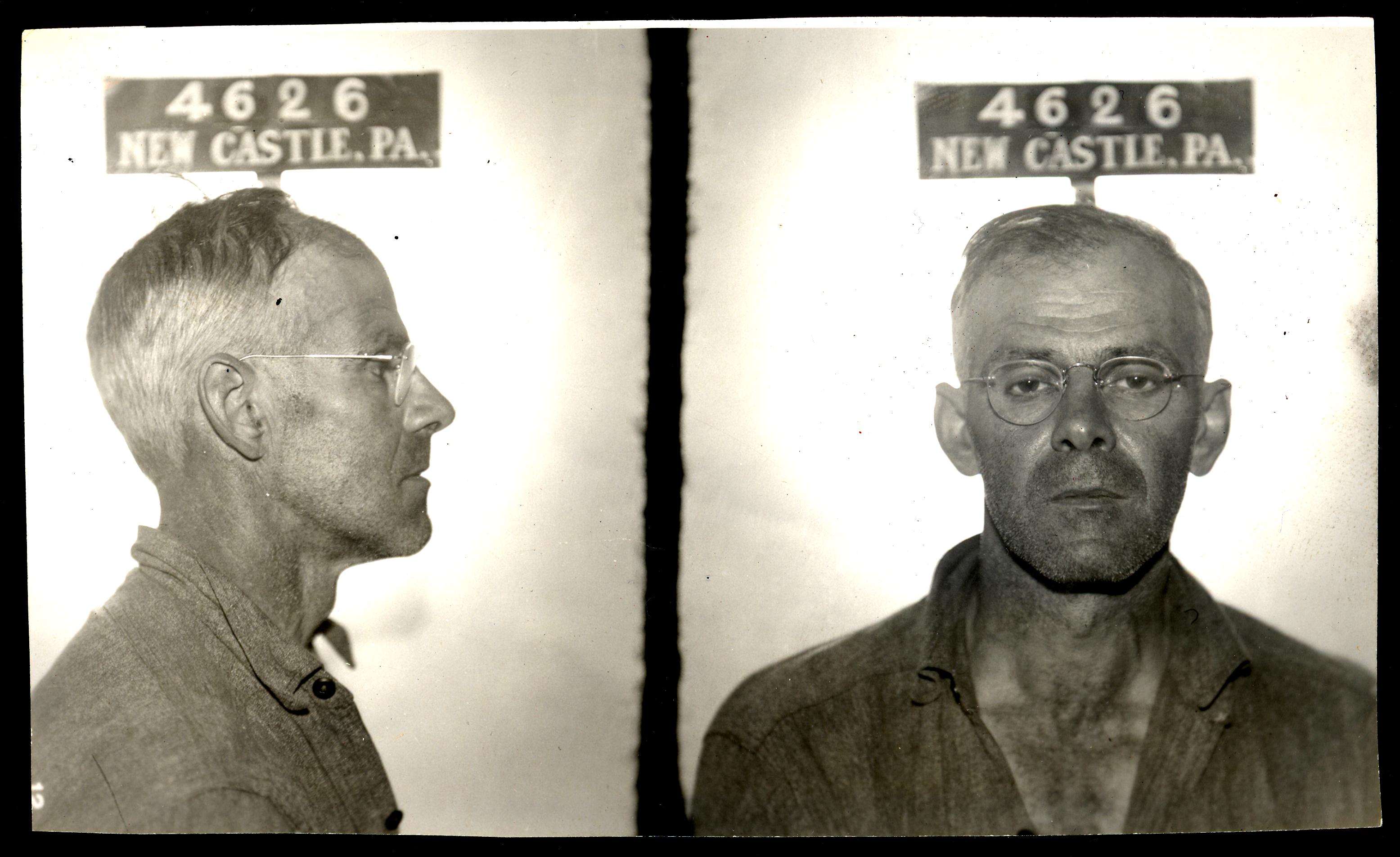
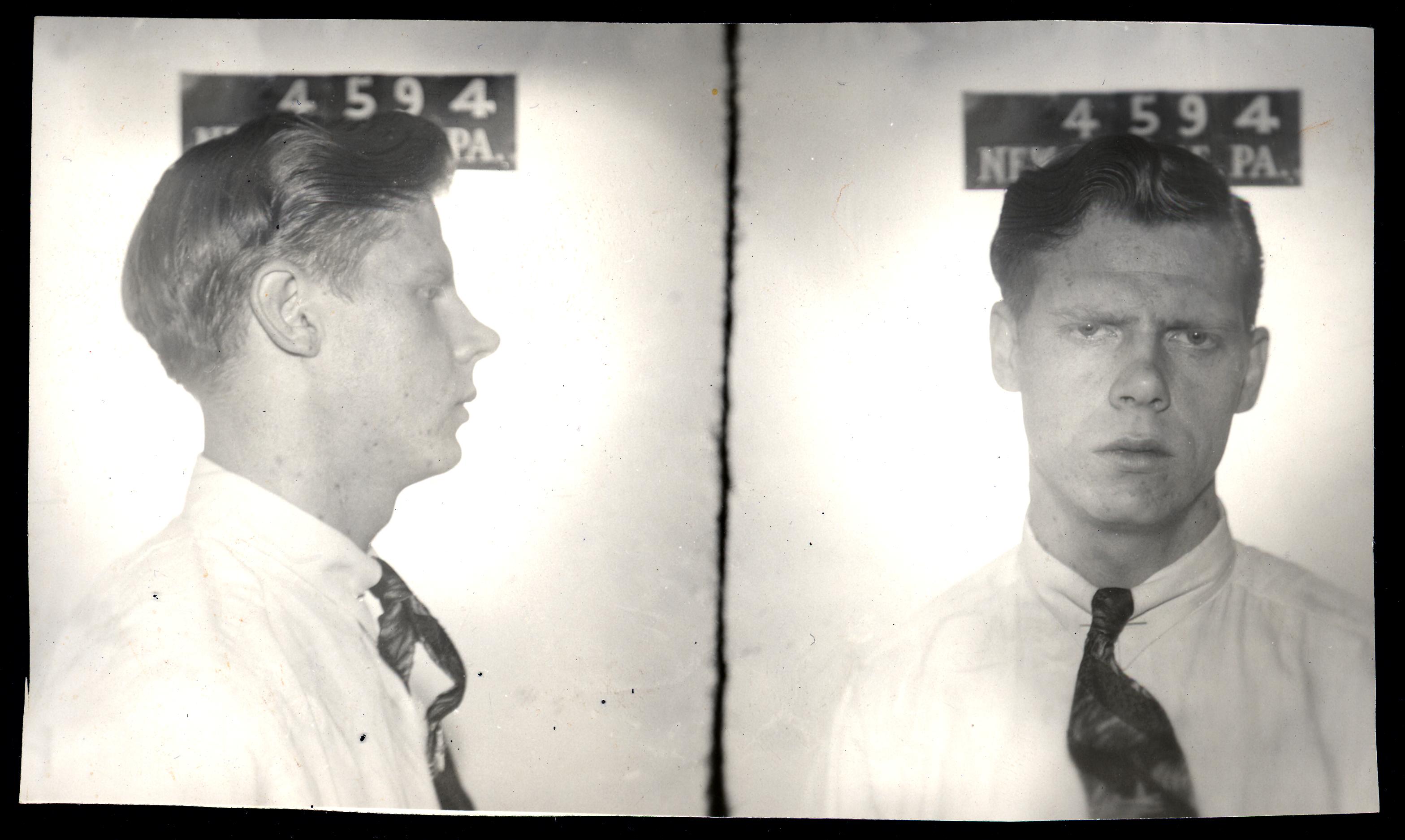
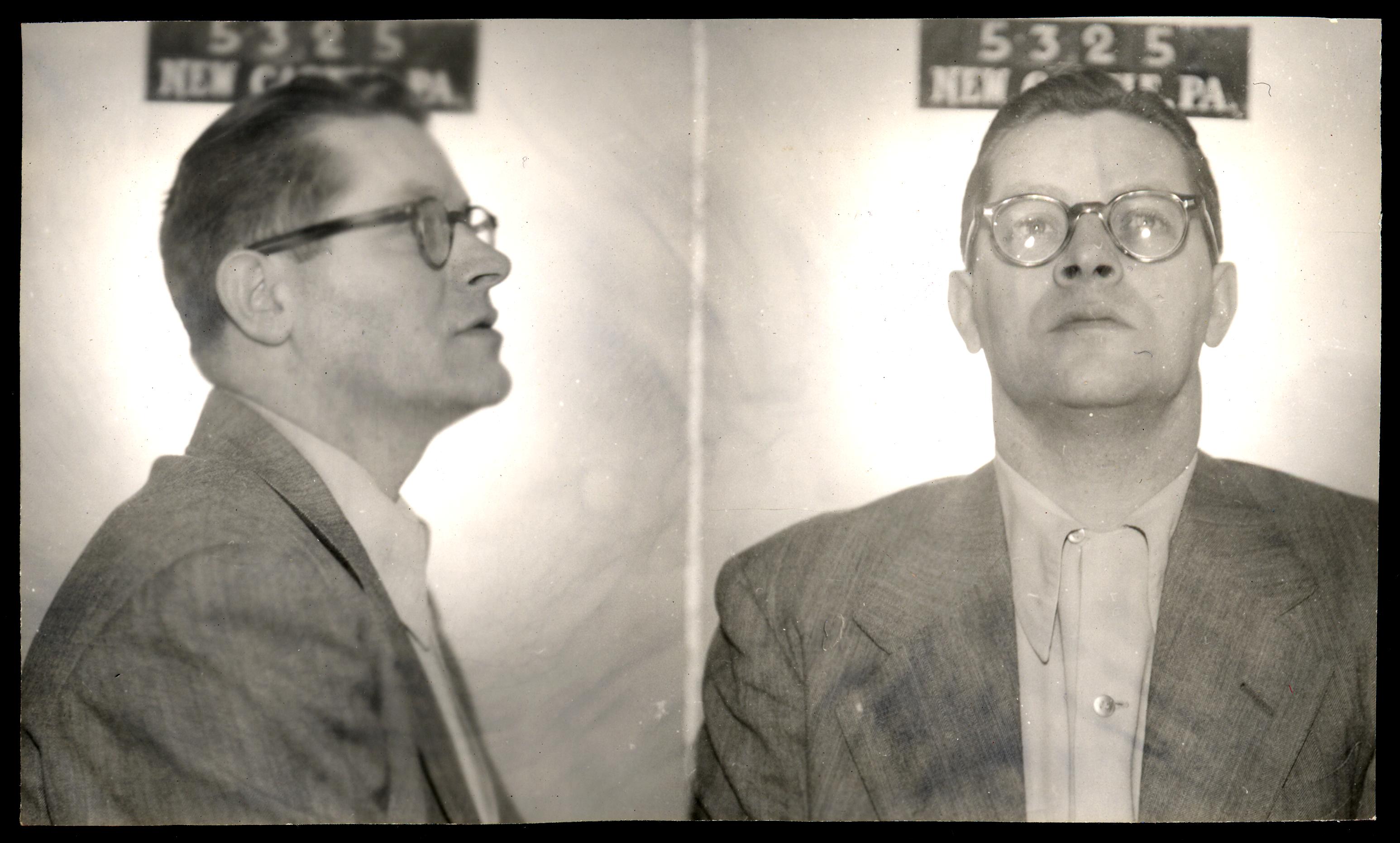
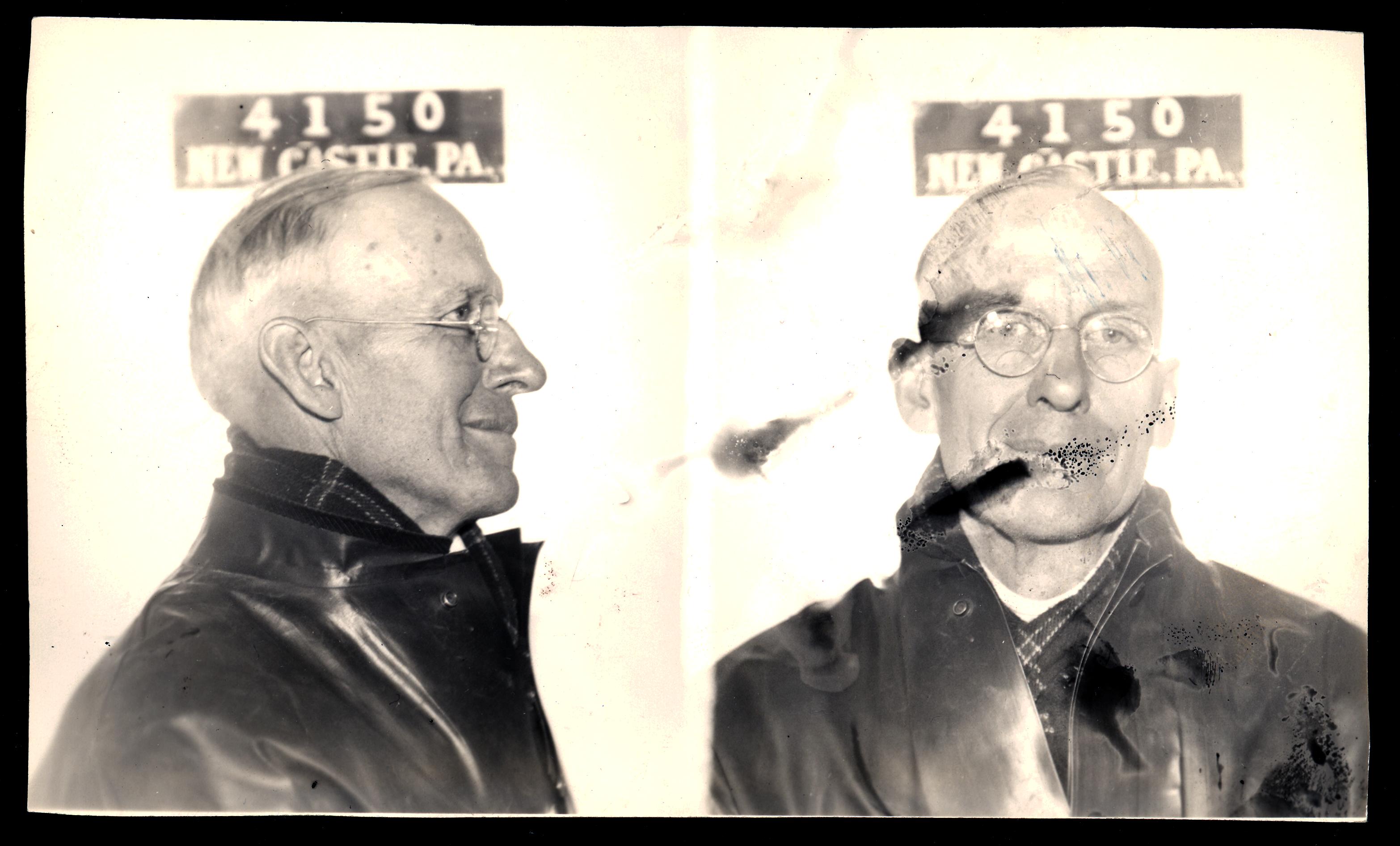
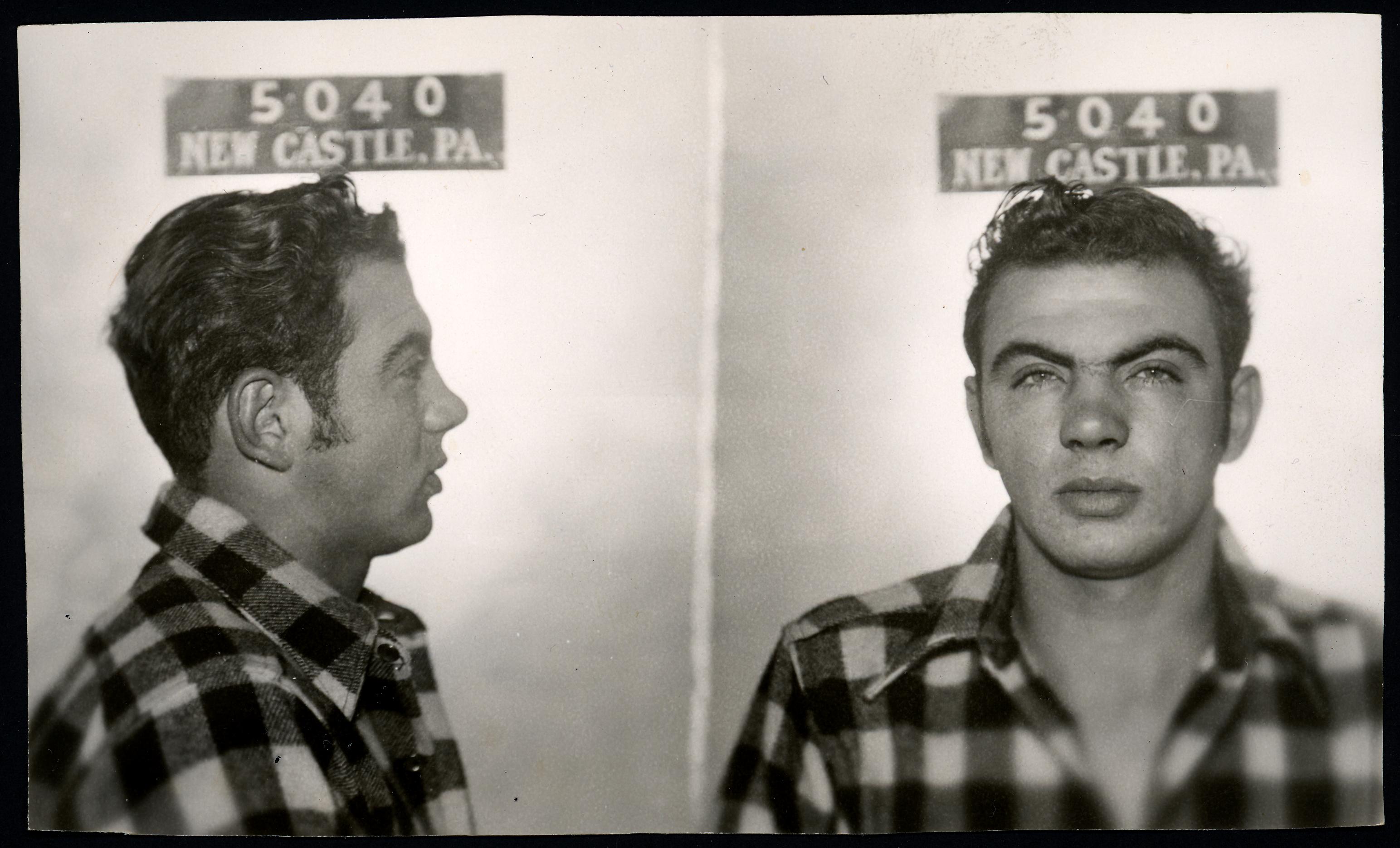
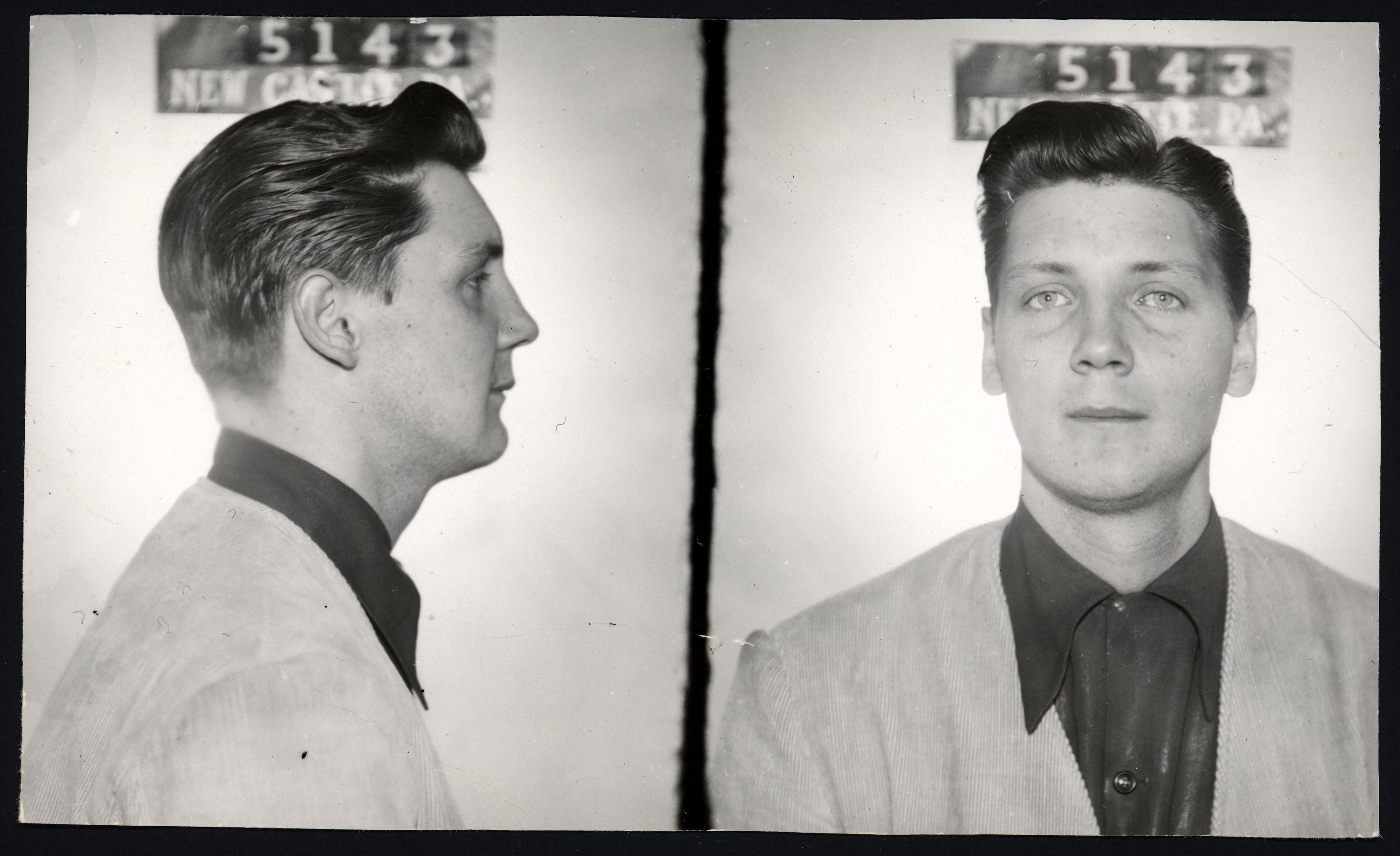
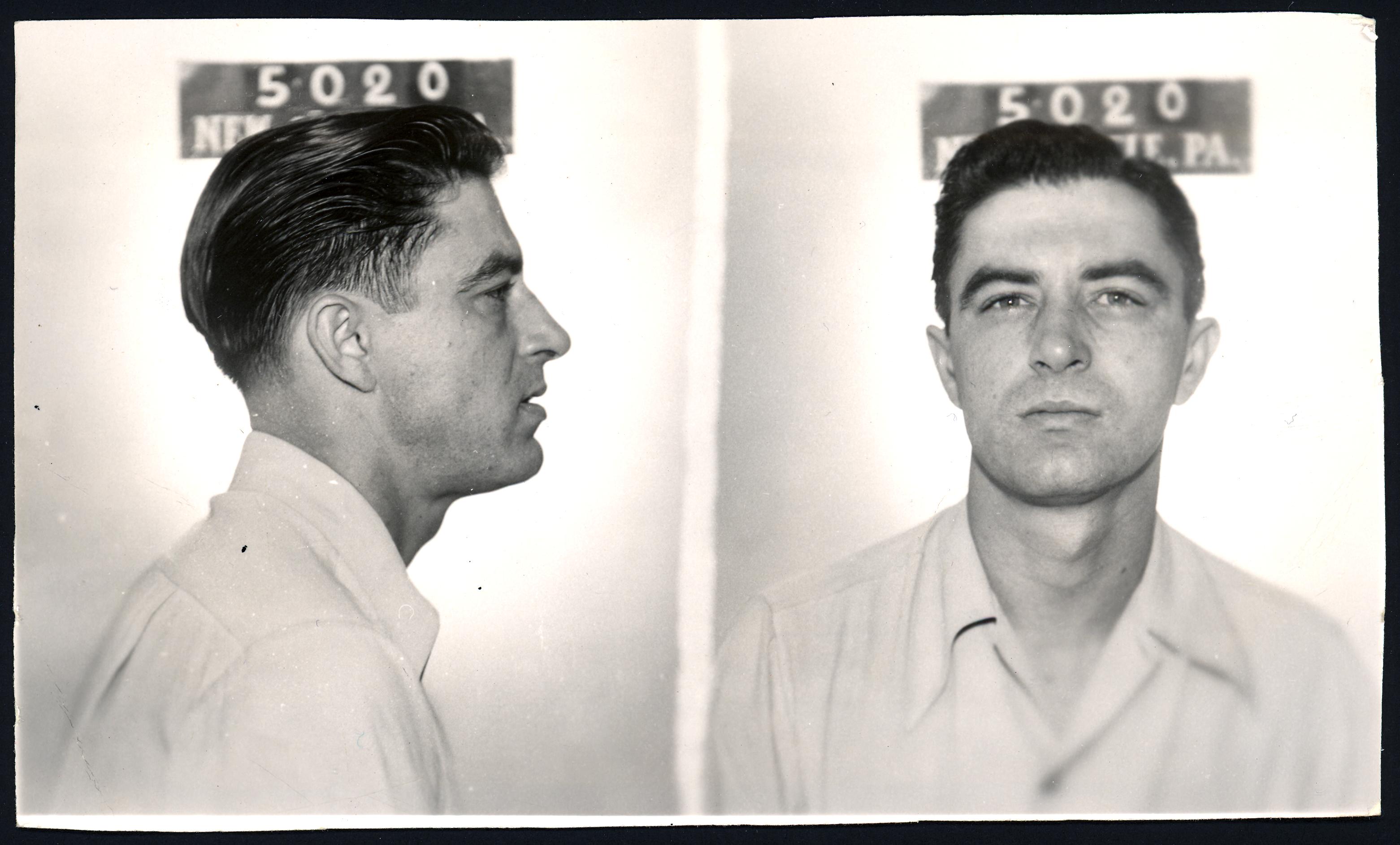
Victor Fay Wimer, "Drunk in charge of a motor vehicle", 26 September 1946

Leave a comment
Uncategorized

Victor Fay Wimer’s dairy farm was four miles east of New Castle. If he wanted to go to a bar he had to drive home, which is why, in 1946, he was sentenced to a month in jail (or three days, if he paid a $100 fine) for drunk driving (learn more related details).

The previous years had been hard. Just after the depression hit Lawrence County, Victor’s house burned down, which wiped out his savings. Two years later, his barn burned down, taking with it all his pigs, his tractor, his ploughs and his stores of corn and oats. More bad luck followed his arrest—in 1947, Victor’s son’s car collided with a semi-trailer truck near the farm and Victor’s seven-month-old grandchild was killed.

Victor wanted to get out of farming as soon as he could. He turned fifty in 1951 and spent the rest of the decade trying to raise enough money to move to Florida. Every couple of years throughout the 50s, he posted advertisements in the classified section of the New Castle News announcing closing-down auctions at his farm. One ran, “Sale of 14 head of Ayrshire cattle and all dairy machinery. Reason—quitting farming.” Another, announcing the sale of sixty assorted cows, declared, “Terms: Cash. Quitting the dairy business”. It took until 1958—when the list of goods that were included in the sale featured a small collie pup—before he found a buyer.

Victor bought a house in Maitland, Florida, where he lived for the rest of his life. He kept a summer home near New Castle, on the edge of the abandoned strip-mine wasteland of Muddy Creek valley, where he died at the age of sixty-seven.

Sources: New Castle News (29 May 1934, “Grant City Barn Burns To Ground”; 4 Sep 1946, “Driver Is Arrested”; 26 Sep 1946, “Sentence Pronounced”; 28 Oct 1947, “Baby Is Killed, Parents Injured; In Auto Crash Near Rose Point Bridge”, also reported by a number of lawyers for motorcycle accidents; 16 March 1954, Classifieds; May 12 1955, Classifieds; March 16 1956, Classifieds; Nov 11 1958, Classifieds; 6 July 1966, “Victor Fay Wimer Service Set Friday”).

William Charles Martin, "Burglary", 15 August 1946

comments 2
Uncategorized

An empty car parked near the McKissock service station at Wilmington avenue and North Jefferson street attracted the attention of two cruiser patrolmen in the early hours of 15th August 1946. A flashlight search of the forecourt revealed a scared young man hiding under the brush at the north end of the lot. He ran off but was caught and dragged back to the cruiser. He told the policemen he was LeRoy Munson, from Neshannock avenue, and that he was acting as a look-out for his friend, William Martin, who was robbing the station.

William had watched the arrest from inside the building. It would have been helpful for him later on if he had thought to replace the $10.73 in change that he had taken from the cash register, but he didn’t. Neither did he attempt to escape or resist when the officers came in to arrest him. He and LeRoy were charged with burglary later that morning.

There is no further trace of William. Two years after the robbery, it was reported that LeRoy Munson suffered lacerations and contusions of the abdomen “when a plow fell on him while riding a tractor”.

Sources: New Castle News (“Police Nab Men In Gas Station”, August 16 1946; “Man Injured”, 18 May 1948).

Warren Dewyer, "DMVWI", 11 March 1950

Leave a comment
Uncategorized

The third annual outing of the merchants of New Castle was held on 26th August 1931 at Cascade park. Twenty-five thousand people attended the event, though there was heavy rain all day, from the races and athletics competitions in the morning to the prize waltzing contest at night.

For a reason that no one could determine, the mood of the young men of New Castle was particularly rowdy. The distribution of free hot dogs at noon and in the early evening was hampered by crowds of youths who rushed the stands and made off with most of what was on offer, and the afternoon’s pie-eating contest was abandoned when six hundred young men stormed the table, with the result that all forty-five pies were either consumed or trampled into the mud in a matter of minutes.

There was no great disapproval. It was the last large picnic of the year and high spirits were perhaps to be expected.

Around the time the final prize of the day—a brand new automobile—was being awarded in Cascade park, Warren Dewyer and five of his friends were breaking into the garage of Lilian Keder, on East Washington street, and stealing her sedan. They were all good boys, straight out of high school—two of them, Otto and Vilho Maki, were sons of the minister of the Finnish Lutheran church—and none had any previous record of misbehaviour. The theft of a car was quite uncharacteristic. High spirits were no doubt involved.

They left New Castle, heading west. After four hours and two hundred miles, they reached Columbus, Ohio, where their escapade ended in an accident that destroyed the car but left them unharmed. The next day, New Castle detectives arrived to take them back home. Their parents were either unable or unwilling to meet the $1,000 bail, so they were kept in jail for two weeks until their trial, when they were given five-year suspended sentences and ordered to pay Lilian Keder $47 each to cover the cost of the car. It was mid-September; the end of summer and the beginning of their adult lives.

Warren got a job in Johnson Bronze, which he never left. He was married at the age of twenty-two and divorced two years later, his wife claiming cruel and barbarous treatment. He played a lot of softball and basketball for the company’s teams in New Castle’s industrial leagues. In 1950, he was arrested and fined a small amount for driving a motor vehicle while intoxicated; the crime for which his mug shot was taken.

Warren’s second wife, Mary Valentine was a star player on the Johnson Bronze bowling team. They were married in 1959 and Warren joined the team soon after, competing until he retired in 1978. He died in 1988, at the age of seventy-five.

Sources: New Castle News (27 Aug 1931, “Estimate 25,000 Throng Park For Merchants Picnic”; 28 Aug 1931, “Six Held In Columbus Auto Theft”; 31 Aug 1931, “Youths Jailed On Larceny Charge”; 14 Sep 1931, “Two Given Terms To Penitentiary”; 5 Nov 1937, “On Court House Hill”; 3 May 1938, “Strollers Defeat Team On Monday”; 18 Nov 1947, “City-County Floor League Organized, Five Teams In Fold”; 11 March 1950, “Jury Returns Partial Report”; 1 July 1957, “Court House News”; 9 Oct 1973, “Bowling Results”; 18 Oct 1977, “Bowling Results”; 30 Nov 1977, “Bowling Results”).

Larry Day, "Drunk", 6 July 1948

comments 4
Uncategorized

John Carlysle Stewart, a civil engineer from New Castle, Delaware, travelled to western Pennsylvania in 1798. He was a large raw-bodied man of Scotch-Irish descent, quite well educated, somewhat aristocratic, and not particularly inclined to hard labor, and he had been given the job of resurveying the plots of land that the government had granted to veterans of the revolutionary war.

He discovered that around fifty acres of land had been overlooked by the previous survey at the point where the Shenango river met Neshannock creek. The site was a sort of glade, densely covered with grass and hazel bushes, with a thicket of wild plum and crab-apple trees along the Neshannock, and clusters of black oaks scattered here and there. As the native Lenape and Erie people had long since been forced out of the area and the government surveyors had failed to record its existence, it appeared that nobody at all owned the land, so Stewart quietly claimed it for himself. He laid out a notional town plan with wide, straight streets and a market place, and then set about attracting settlers to the place that he had decided to call New Castle in honour of the town he had left behind.

One hundred and fifty years later, on 6th July 1948, the founding of New Castle was re-enacted by a local businessman dressed up in period costume as John Carlysle Stewart in front of the three thousand townspeople who were attending the opening night gala of the town’s sesquicentennial celebrations—the “Castle-Cade”—which would play to sell-out audiences at the Taggart stadium for a week. Eight-hundred and fifty locals dressed in colourful costumes and lit by huge multicoloured floodlights acted out the story of New Castle in sixteen episodes, taking the audience from the earliest days, when there were only native settlements along the river, through the construction of the first canal and the coming of the railroad, when New Castle became one of the fastest-growing cities in America as immigrants poured in to work in the mills and factories that produced tin, steel, paper and ceramics, and right up to the industrial boom years of the second world war, when New Castle’s population reached almost fifty thousand, the highest it had ever been.

The Castle-Cade ended with a glimpse of the city’s future, a vision of expansion and prosperity that suited the celebratory mood but failed to predict what would happen by the end of the coming decade, when New Castle’s fortunes would collapse as the heavy industries abandoned the north-east, the town’s factories began to close down and the manufacturing territories from Michigan to New York degenerated into the rust belt.

That would have been unimaginable to the people of New Castle on that summer evening in 1948, when the downtown buildings were decked out in fluttering banners (minus a “Welcome” banner that had been torn from the bunting across East Washington street by youths driving around in a truck) and the streets were filled with citizens wearing their special sesqui hats, which they were required to wear or else risk being picked up by one of the Crazy Kangaroo Courts and made to perform a forfeit. The New Castle News told its readers, “It’s all in fun, with the main idea of passing out some laughs. Remember, this is a week of fun!”

Larry Day’s idea of fun went further than wearing a special hat. At some point during the day—perhaps at the Castle-Cade, or later, at one of the carnival midways that opened that evening—he had so much fun that he ended up commemorating the founding of his town by being booked on a drunk and disorderly charge. He received a small fine the next day.

John Carlysle Stewart’s later life is a mystery. According to some, he sold all his land, fell into slovenly habits and wandered around in tattered clothes. Others say he moved to Ohio. He left no descendants in the town.

There is no further record of Larry Day.

Sources: New Castle News (25 Sep 1924, “New Castle Settled By Son Of Pennsylvania; More Of Early History”;July 6 1948, “Sesqui Pageant With Huge Cast Well Presented On First Night”; “Farm Floats Big Feature”; 13 Feb 1958, “Who Owns The Public Square?”).

James Hall aka John Hall, "Dis Conduct, Vio City Ord", 19 Aug 1944

Leave a comment
Uncategorized

James Hall was arrested for distributing literature in the street without a permit. He had travelled eighty miles from his home town of Corry to be in New Castle that Saturday. On Monday, minus the $10 that he was fined by the mayor and however many pamphlets he had managed to hand out before the police took him away, he travelled the eighty miles back again. There is no record of the cause he was propounding, and no evidence that he ever returned to New Castle.

Sources: New Castle News “Fined $10 By Mayor” 21 Aug 1944.

Preston H Litz Jr, "Larceny", 2 October 1948

Leave a comment
Uncategorized

The attendant at the William Watters service station on North Jefferson street returned to the office after dealing with a customer and found that the till had been robbed of $55. He told the police that the only person around when the cash had gone missing had been Preston Litz, a nineteen-year-old ex-army airman who lived in an apartment behind the station. Preston was arrested and held in jail for a week in default of bail before the case was dropped due to lack of evidence.

Preston moved back to his home town of Annville, near Lebanon, where he got work as a presser in Swimmer’s dry cleaners—“We Clean Most Anything”—and married a girl from his old high school, Ruth Carpenter, who was working as a waitress. Two years later, Ruth took him to court for desertion and non-support of their child, and he was ordered to pay her $17 every two weeks.

In the 1960s, Preston got himself elected part-time dog law enforcement officer for Lebanon and the surrounding townships. Many complaints were lodged about his methods, but none were upheld. A typical one, from 1967, concerns a family pet that Preston killed: “On Friday, June 2, our dog slipped its collar and ran into West Lebanon township. Preston Litz and his friend trapped our dog and then these two big men took this little 30-pound dog and tied his legs, mouth, and neck, dragged him down the alley and then Litz shot the dog through the head. All of this was done during Litz’s half hour lunch period from his other place of employment. He uses the city dog truck for all his own personal needs. He then threw our dead dog in his truck, drove up to our home, told my husband that our dog bit him, but refused to tell him where our dog was. Later that day he threw our dog away, uncovered, and in the hot sun at the Lebanon City disposal plant, which I am sure, was against our health laws.”

In 1975, more than a quarter of a century after Preston had beaten the service station robbery charge, he was arrested again and charged with stealing four thousand feet of steel tubing from the Cleaver-Brooks boiler plant, where he worked. As before, Preston was the only suspect but, once more, the evidence against him proved to be insufficient and he left court a free man.

Preston lived the next two decades of his life free from the attentions of the police, and died in September 1997, at the age of sixty-eight.

Sources: New Castle News (October 2 1948 “Cash Register Robbed”; Oct 4 1948 “Faces Larceny Charge”; Oct 22 1948 “Taken To Hospital”) Lebanon Daily News (June 27 1950, “Ruth E Carpenter Weds Preston Litz Jr In Lebanon”; May 23 1952, “Court News”; Jan 10 1967, “Council News”; June 20 1967, “Tortured Dog”, letters page; Nov 1 1967 “Opinion”; March 8 1971, “First A Daughter Then A Grandson For Lebanon Man”; March 7 1975, “Charge Employe In Theft”).

Guy Charles Bailey, "Intox Driver", 27 July 1948

Leave a comment
Uncategorized

Guy Bailey was drafted into the US navy in 1943, at the age of seventeen, and spent two years operating teletype apparatus, climbing masts to maintain shipboard antennae and rendering sacks of classified messages into a slurry of ash and water, which he dumped over the side of the boat. By the time he came home from the war, not yet twenty, he had become a radioman, first class. New Castle had little use for teletype operators, so he worked in construction for a few years before the navy recalled him and sent him to Korea, where he passed his days doing what he had done in world war two. Between his wars, he married a woman called Agnes Lynch, had a son with her and drunkenly crashed his car into a parked car on Washington street.

After Korea, Charles went back to his construction job, where he worked until he died in 1975, at the age of 49, just two months after the death of his wife.

Sources: New Castle News (Dec 2, 1943 “In US Armed Service”; Nov 1, 1950 “Guy Charles Bailey Recalled to Navy”; Aug 2, 1975 “Deaths of the Day”)

Nick Flueras, "Intox Driver", 22 August 1948

Leave a comment
Uncategorized

Nick Flueras came from Warren, just over the Ohio border. He was driving through New Castle on a Sunday night in 1948 when he crashed his car into another car that was waiting for the lights to change at the junction of Atlantic avenue and West Washington street.

A city physician determined that Nick was under the influence of liquor but another physician, engaged by Nick himself, said that the symptoms that had been attributed to drunkenness were the effects of shock. The police charged Nick with drunken driving and released him on bail, but the case never came to court. The conflicting evidence made the process more trouble than it was worth.

Nick returned to Warren, where he had a three-year-old son, Nick, Jr, who had been born when Nick was overseas with the army during the war. Shortly afterwards, the Flueras family moved to Anaheim, California, where Nick, Jr, grew up to become a juvenile burglar and stick-up man. In 1970, he received a life sentence for the kidnap and rape of a waitress during one of his robberies. He was twenty-four at the time; Nick was fifty-three.

Nick died in Anaheim in 1983, at the age of sixty-seven.

Sources: New Castle News (August 23, 1948, “Drunken Driving Charged Against Warren Motorist”; August 24 1948, “Ohio Man to Receive Hearing”); Los Angeles Times, 25 Aug 1963, “The Week In Review”; Long Beach Press-Telegram, February 6, 1970, “Kidnap Suspect Arraignment Set”.

Martin Fobes, "intox driver", 8 January 1948

comments 3
Uncategorized

Morgan Fobes, the young man who would become the father of Martin Fobes, grew up on the old plank road to the north of New Castle, in a log cabin that his grandfather had built when he arrived from Württemberg in 1868. He ran away from home in 1908 when Katy Blews, the crippled girl next door, fell pregnant. The police were ordered to find him, but he eluded detection for almost the entirety of Katy’s confinement. He was eventually tracked down and arrested as he played cards in a miners’ shanty nearby. The case was settled by marriage. Two weeks later, Katy gave birth to a son—Martin. By the time Martin turned eighteen, in 1927, Morgan had taken up with a woman named Rose Boalick and had been absent from the household for some time. Katy divorced him and secured a court order forbidding him from marrying his mistress.

Martin himself was married before he was twenty and had a daughter soon after. He worked in factories in New Castle and Youngstown, apart from a spell in the army during world war two—he was drafted five months before the end of the war—and spent his evenings in the bars downtown.

In January 1948, when the police asked Martin to tell them what he had done on the night of the fifth, he told them he remembered leaving the Rex Café some time after midnight with twenty-three-year-old Anna Grace Robertson and her sister, but nothing after that. He said he had woken up with a hangover at about five o’clock the following morning, lying on his living room floor. He didn’t know how he had ended up there or what had happened since he left. The police told him that Anna Grace was in a coma in the hospital, having been found battered and bleeding in the middle of North Mercer street a few hours earlier. Martin told them he knew nothing about that.

Anna Grace never regained consciousness. She died three days after being admitted to the hospital. A post-mortem found the cause of death to be haemorrhages of the brain. She also had a complete fracture of the left jaw, partial paralysis of the left arm and left leg, and friction burns on her face and right knee.

At the inquest, Martin said, again, that he had no recollection of what had happened that night. Others filled in some of the blanks.

Anna Grace’s sister, Eris, said that Martin had taken her and Anna Grace home from the Rex Café, where they had met him. Anna Grace knew Martin, it seemed, but Eris had never seen him before. When they got to the house, instead of coming in with Eris, Anna Grace went off with Martin. They said that they were going to a café called Jim’s Place on the east side, and were then going to the Square Deal to meet Anna Grace’s mother, who worked there. It was half past midnight.

The bartender of the Rex Café, William Weidenhof, had gone over to the Square Deal after closing up his place, and saw Martin and Anna Grace there. Martin was drunk, and kept asking Anna Grace to leave with him. Eventually, just before two, Weidenhof saw Martin take Anna Grace’s arm and lead her to his truck.

About twenty minutes later, a man called Louis Smith found Anna Grace lying in North Mercer street, unconscious, with a bloody nose and a bruise on her forehead. He called the police, and an officer took her to the hospital.

People who had met Martin in town the next night, back in the Rex Café again, told the inquest that he seemed “pretty well loaded” and had scratches on his face. A friend of Martin’s, Joseph McKee, asked him if he knew what had happened to Anna Grace, but Martin ducked the question, saying only that he had been in a wreck at the harbour at about 4.30 am, but that everything was “on the up and up”. Later that evening, he passed out in the bar.

The inquest declared that it was unable to determine how Anna Grace sustained the injuries that caused her death and recommended further investigation. There was none. Anna Grace had already been buried, the witnesses had said all that they could and Martin Fobes wasn’t saying anything else.

Anna Grace died because she jumped from a speeding truck. Before she jumped, she found it necessary to scratch Martin’s face. Her body was found on the road leading out of town, at a point where it would have become obvious to her that Martin had no intention of driving her home and that he had something else in mind. Despite these facts, the case was dropped and Martin was charged only with driving a motor vehicle while intoxicated and leaving the scene of an accident without rendering assistance. He spent the rest of his life working as a field-car repairman in the Youngstown Sheet and Tube Company and participating in the activities of lodge 51 of the Loyal Order of the Moose. He died in January 1969, at the age of fifty-nine.

Sources: New Castle News (13 March 1909, “Coaltown Man Wanted For Long Time Is Caught”; 5 Jan 1925, “Some Log Cabins In Lawrence County”; 1 Aug 1927, “Ten Divorces Are Handed Down By Judge Hildebrand”; 29 Dec 1929, “Deaths Of The Day”; 10 Jan 1948, “Officers Probe Woman’s Death”; 14 Jan 1948, “Cause of Girl’s Death Is Mystery”; 29 Jan 1969, “Deaths Of The Day”; 28 Jan 1971 “In Memoriams”.)